CPG sustainability reporting only becomes useful when ESG teams can turn scattered operational data into a trusted, repeatable management system. In consumer packaged goods, that means reporting across packaging formats, manufacturing sites, logistics networks, suppliers, and product portfolios without losing control of definitions, ownership, or review cycles.
For most ESG teams, the challenge is not deciding whether to report. It is building a reporting framework that supports compliance, investor questions, retailer requirements, and internal action at the same time. Leaders need more than a static annual disclosure. They need operational cockpits, structured management reports, and an AI assistant that helps people consume sustainability information faster.
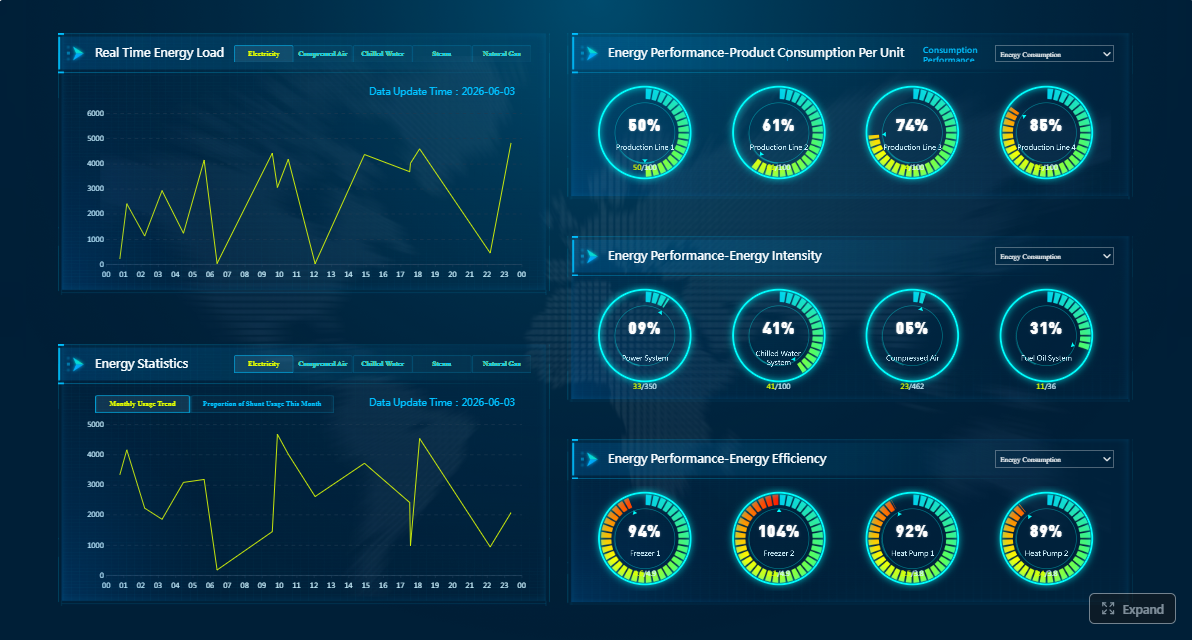
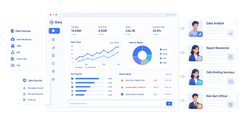
With FineReport + Dora, teams can ask for a report summary in chat, generate structured narratives from trusted report assets, receive scheduled briefings, and push exceptions to the right owner. FineReport provides the reporting foundation for ESG dashboards, formatted reports, review workflows, and management cockpits. Dora adds the enterprise Data Agent layer that helps teams query, summarize, monitor, and follow up on sustainability metrics through governed AI workflows.
Click To Try The Dashboard
All reports in this article are built with FineReport
That breadth is exactly why ESG teams need a clear reporting framework. If packaging teams define "recyclable" one way, procurement tracks supplier emissions another way, and factories report water and waste with different calendars, the result is an inconsistent report that is hard to defend internally or externally.
A strong framework should define the reporting boundary across:
Owned brands and regional business units
Internal plants and contract manufacturers
Warehouses and transport flows
Direct materials, packaging inputs, and selected upstream suppliers
The reporting period, organizational scope, and consolidation rules
This matters because CPG companies usually report for several audiences at once:
Compliance teams need defensible methodology and documentation.
Investors want comparable year-over-year trends and risk visibility.
Retailers increasingly request packaging, emissions, and sourcing data.
Internal leaders need decision-ready views on hotspots, cost implications, and intervention priorities.
For ESG teams, the goal is not to measure everything at the same level on day one. The goal is to prioritize the environmental topics most material to CPG operations and build reporting maturity over time.
Core KPI framework for CPG sustainability reporting
Below is a practical KPI structure ESG teams can standardize in their reporting workflow.
Packaging performance Definition: Metrics on material mix, weight, recycled content, recyclability, and packaging reduction across SKUs and formats. Business value: Supports regulatory readiness, retailer expectations, cost optimization, and circular packaging strategy. AI use:Dora can summarize portfolio-level changes, explain material shifts, and include packaging exceptions in scheduled ESG briefings.
Emissions performance Definition: Scope 1, Scope 2, and relevant Scope 3 emissions from manufacturing, purchased energy, logistics, ingredients, and packaging. Business value: Supports target setting, supplier engagement, energy strategy, and climate disclosure. AI use:Dora can explain emissions spikes by site or source, highlight high-impact categories, and answer natural-language questions on methodology and trend changes.
Water performance Definition: Water withdrawal, consumption, discharge, reuse, and site-level water stress exposure across operations and sourcing regions. Business value: Helps identify operational risk, cost pressure, continuity concerns, and reputation exposure. AI use:Dora can flag facilities in high-risk basins, summarize intensity changes, and push periodic water-risk updates to ESG and operations owners.
Waste and circularity performance Definition: Waste generation, diversion, destination pathways, scrap, food loss, and by-product recovery across facilities. Business value: Supports cost reduction, landfill avoidance, efficiency improvement, and circularity programs. AI use:Dora can generate structured waste summaries, compare diversion rates by site, and alert users when landfill or non-recovered waste trends worsen.
How to measure packaging performance across the product portfolio
Packaging is one of the most visible parts of cpg sustainability reporting because it sits at the intersection of brand claims, retailer scrutiny, regulatory obligations, and operational complexity. For many CPG companies, packaging data is fragmented across packaging R&D, procurement, co-packers, product teams, and regional business units. That is why the first step is boundary discipline.
Set packaging data boundaries and categories
To avoid inconsistent reporting, ESG teams should separate packaging into:
Primary packaging: the packaging in direct contact with the product
Secondary packaging: grouping or protective packaging around the product unit
Tertiary packaging: transport and distribution packaging such as pallets, wraps, and cartons
This structure helps teams avoid mixing shelf packaging with transport packaging and ensures that redesign claims are tied to the correct category.
A practical packaging dataset should include:
Material type by component
Total packaging weight
Recycled content percentage
Virgin plastic use
Recyclability claim and local qualification logic
Product unit and reporting unit
Region-specific packaging variation
Supplier or co-packer source of packaging data
Choose packaging metrics that support reporting and action
The best packaging metrics support both disclosure and operational follow-up.
Packaging intensity per unit sold Definition: Total packaging weight divided by units sold or product volume. Business value: Shows whether packaging reduction is improving relative to commercial output. AI use:Dora can compare intensity trends across brands and explain where new formats increased packaging per unit.
Percentage recyclable Definition: Share of packaging designed to be recyclable under the company’s defined reporting criteria. Business value: Supports public commitments, retailer programs, and compliance preparation. AI use:Dora can summarize non-recyclable components by brand or region and generate follow-up lists for packaging teams.
Recycled content rate Definition: Percentage of recycled material in total packaging material used. Business value: Indicates progress in circular material sourcing and reduced dependence on virgin materials. AI use:Dora can highlight categories with low recycled content and prepare structured management narratives for quarterly ESG reviews.
Material reduction over time Definition: Change in packaging weight or material use compared with a baseline period. Business value: Measures redesign impact and potential cost savings. AI use:Dora can identify whether reduction came from primary packaging, secondary packaging, or transport optimization.
Data gaps are common in this area, especially when contract manufacturers, co-packers, and regional packaging variations are involved. FineReport helps ESG teams create standardized data entry forms, exception lists, and validation reports so that missing packaging fields are visible before reporting deadlines. Dora can then act as a Report Researcher or Daily Briefing Secretary, reminding teams which regions or partners still have unresolved packaging inputs.
How to measure emissions across operations and the value chain
Emissions reporting is often the most complex part of cpg sustainability reporting because data comes from many systems and external partners. ESG teams need a practical inventory that balances completeness with operational usability.
Build a practical emissions inventory
Start by organizing emissions sources into a structure that business users can understand and maintain:
Scope 1: on-site fuel combustion, company-controlled vehicles, process emissions where relevant
Scope 2: purchased electricity, steam, heating, or cooling
Relevant Scope 3: purchased goods, packaging, ingredients, upstream transport, downstream logistics where included, waste treatment, and selected supplier categories
For each emissions category, ESG teams should document:
This governance layer is critical. Without it, month-to-month changes may reflect methodology shifts rather than performance shifts.
Focus on the emissions indicators ESG teams use most
A practical emissions reporting cockpit should include the following indicators:
Total emissions Definition: Aggregate greenhouse gas emissions across the selected reporting boundary. Business value: Provides the headline climate metric for management and disclosure. AI use:Dora can summarize period-over-period movement and explain which categories drove the change.
Emissions per product unit Definition: Emissions normalized by product output, unit sold, or production volume. Business value: Helps separate growth effects from operational efficiency. AI use:Dora can answer chat-based questions such as which product lines improved carbon intensity and why.
Facility-level emissions trends Definition: Site-by-site emissions performance over time. Business value: Supports intervention at plant level and identifies operational outliers. AI use:Dora can detect sites with unusual increases and send exception pushes to plant and ESG owners.
Purchased energy impacts Definition: Emissions associated with electricity and other purchased energy sources. Business value: Guides energy procurement and efficiency strategy. AI use:Dora can compare market-based and location-based electricity views where relevant and summarize the strategic implication.
High-impact suppliers or categories Definition: Suppliers, ingredients, or packaging categories contributing heavily to upstream emissions. Business value: Helps procurement and supplier engagement teams focus effort where it matters most. AI use:Dora can produce follow-up lists for supplier review meetings and recurring climate-risk briefings.
For multinational CPG companies, market-based and location-based electricity reporting may both matter. FineReport can present them side by side in management reports and operational cockpits, while Dora helps translate that comparison into a chart-based answer for executives who need a fast explanation rather than a methodology spreadsheet.
Water reporting is especially important in CPG because it is both an operational resource and a risk exposure. Manufacturing plants may depend on reliable water access, while agricultural sourcing and supplier operations can create additional vulnerability.
Identify where water data matters most
ESG teams should map water data across two layers:
Operational water use: direct water withdrawal, consumption, discharge, and reuse at owned or controlled facilities
Dependency and exposure: supplier regions, agricultural inputs, or production areas located in water-stressed basins
This distinction matters because a company may show stable internal water intensity while still facing upstream risk in sourcing regions.
Select water metrics that show both volume and context
Total water use Definition: Total water withdrawn across the reporting boundary. Business value: Establishes the base level of operational dependency. AI use:Dora can summarize total changes by facility, region, or business unit and explain the main operational drivers.
Water intensity Definition: Water use per unit of product, output, or revenue. Business value: Indicates efficiency improvement independent of business growth. AI use:Dora can highlight which plants improved intensity and which fell behind target.
Discharge quality indicators Definition: Relevant wastewater quality metrics tracked under the company’s reporting framework. Business value: Supports compliance oversight and environmental risk management. AI use:Dora can flag threshold breaches or recurring issues and include them in a periodic risk summary.
Reuse rates Definition: Share of water reused, recycled, or recirculated in operations. Business value: Reflects efficiency and resilience in water-constrained contexts. AI use:Dora can compare reuse performance across sites and identify leading practices for management review.
Exposure in high-risk basins Definition: Operational or sourcing footprint located in high water stress areas. Business value: Connects raw water data to continuity, cost, and reputation risk. AI use:Dora can act as a Risk Alert Officer, surfacing facilities or sourcing regions where water constraints may require escalation.
This is where reporting should move beyond simple totals. A site using moderate water volume in a high-stress basin may deserve more management attention than a larger site in a low-risk area. FineReport helps teams combine KPI reporting with map-based or facility-level operational cockpits, while Dora can explain why a site is considered a priority in plain business language.
How to measure waste, circularity, and diversion outcomes
Waste data is often more inconsistent than teams expect. Definitions vary by facility process, country, service provider, and disposal route. For cpg sustainability reporting, the goal is to make waste streams and destinations visible enough to support both external reporting and operational improvement.
Separate waste streams for more reliable reporting
At minimum, ESG teams should distinguish:
Hazardous waste
Non-hazardous waste
Food loss or product waste
Production scrap
Packaging waste
Wastewater-related residues
They should also record destination pathways such as:
Recycling
Composting
Energy recovery
Landfill
Incineration
Other treatment routes used in local operations
This separation is important because "waste diverted" can look positive at a high level while hiding low-value recovery routes or inconsistent local classifications.
Report waste metrics that reflect operational progress
Total waste generated Definition: Aggregate waste produced across the reporting boundary. Business value: Provides a baseline for reduction efforts and cost review. AI use:Dora can summarize total waste by site, waste stream, and destination path for management reporting.
Diversion rate Definition: Share of waste directed away from landfill, based on the company’s reporting rules. Business value: Tracks progress in waste management and circularity initiatives. AI use:Dora can compare diversion performance across facilities and identify sites with falling recovery rates.
Waste intensity Definition: Waste generated per unit of output or product sold. Business value: Helps evaluate process efficiency independently of production volume. AI use:Dora can highlight whether rising waste is caused by output mix, production issues, or disposal reclassification.
Landfill reduction Definition: Change in landfill-bound waste compared with a baseline or previous period. Business value: Supports waste strategy and cost reduction priorities. AI use:Dora can generate exception alerts when landfill volume increases beyond defined thresholds.
By-product recovery opportunities Definition: Recoverable materials or process outputs that can be reused, sold, or redirected. Business value: Connects waste reporting with value recovery and circularity strategy. AI use:Dora can include identified opportunities in structured follow-up reports for plant and operations teams.
Because waste definitions differ by country, vendor, or site process, ESG teams should maintain a controlled reporting dictionary. FineReport provides the trusted reporting template and audit-ready workflow. Dora helps users consume that information faster by explaining local exceptions, summarizing site comments, and pushing unresolved issues to owners before quarter-end reviews.
Most companies focus on how to collect ESG data, but decision friction often appears after the report is built. Executives do not want to open five dashboards and read twenty comments to understand what changed in packaging, emissions, water, and waste. Plant leaders do not want to wait for an analyst to interpret a sustainability cockpit before taking action. This is where an enterprise Data Agent becomes valuable.
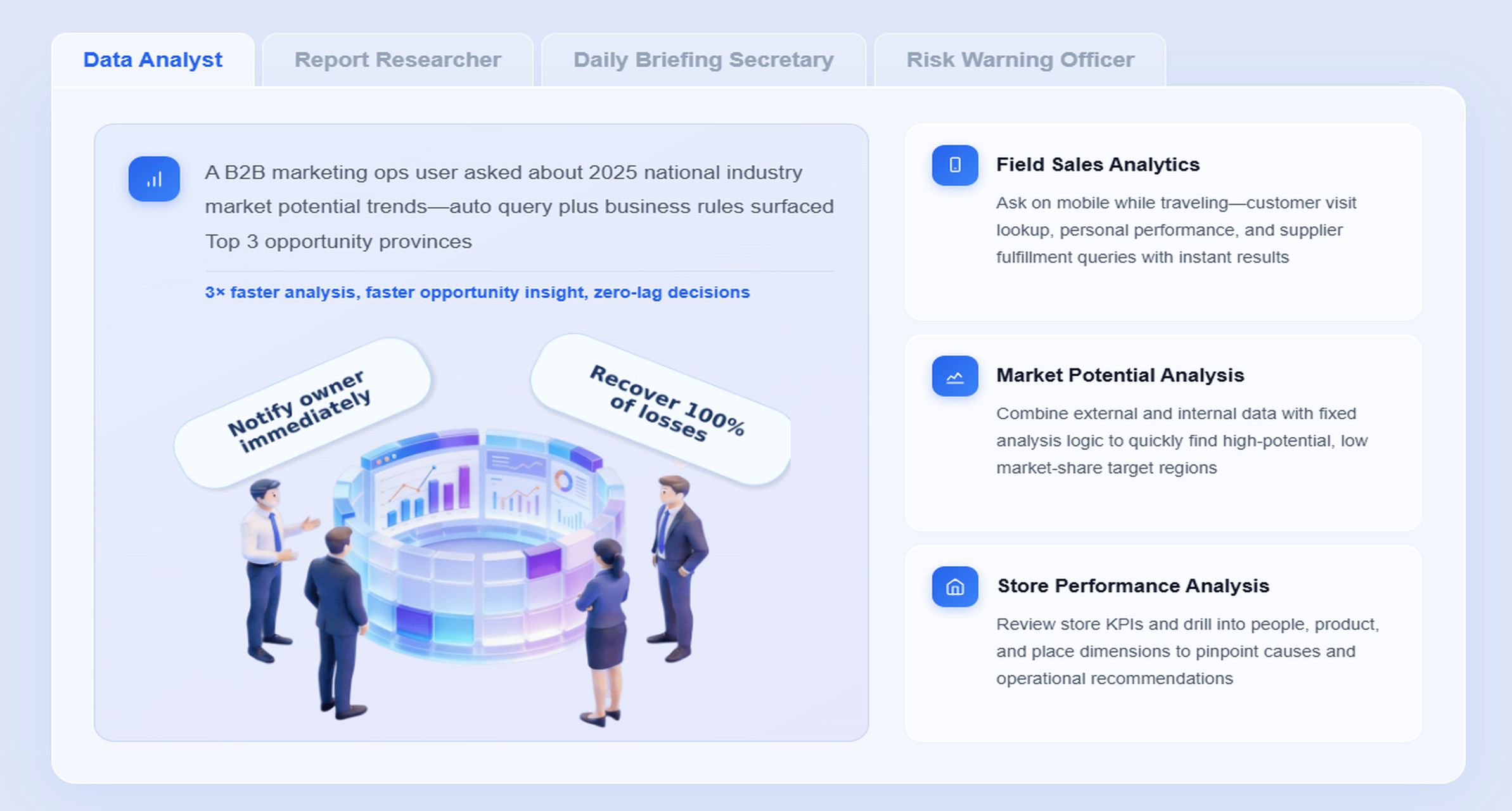
For this scenario, the most relevant Dora digital employees are:
Daily Briefing Secretary for scheduled weekly or monthly sustainability summaries
Risk Alert Officer for exception monitoring on threshold breaches, missing submissions, and site anomalies
Data Analyst digital employee for natural-language report queries and metric explanation
A concrete chat-style example could be:
“Summarize this month’s CPG sustainability reporting dashboard, highlight any increase in virgin plastic use, identify facilities with rising emissions intensity or water risk, and list waste metrics that need follow-up.”
Retrieve trusted FineReport report or operational cockpit data Dora accesses the approved ESG dashboards, formatted reports, exception lists, and management templates built in FineReport.
Interpret KPI definitions, filters, and semantic rules Dora works on top of a governed semantic layer that defines packaging categories, emissions methodologies, water-risk logic, waste classifications, and reporting boundaries.
Generate a structured report summary through chat Dora produces a chart-based answer or management narrative that explains changes in packaging intensity, emissions trends, water exposure, and waste diversion using the trusted FineReport assets.
Detect exceptions and missing items Dora identifies abnormal metric changes, threshold breaches, unsubmitted facility data, or unusual year-over-year movement that requires review.
Push alerts and follow-up tasks to responsible users
The relevant owners in ESG, operations, procurement, or packaging teams receive scheduled summaries, exception notifications, or follow-up reminders.
Create recurring briefing records for management review Dora supports daily, weekly, monthly, or quarterly reporting cadences by preparing structured briefings and preserving follow-up visibility.
This is not a generic chatbot experience. It is Agentic BI built on governed enterprise reporting assets. FineReport provides the trusted reporting and semantic foundation: KPI definitions, permission control, report templates, operational cockpits, data-entry forms, and audit-friendly workflows. Dora turns that foundation into a scenario-specific AI assistant that can answer report questions in chat, create structured report summaries, monitor exceptions, push alerts, and support follow-up.
For executives, this means faster access to concrete scenario ROI. Dora is not an AI experiment. It is a landed digital employee for recurring sustainability work such as monthly ESG management reports, packaging progress reviews, site-level resource-risk summaries, and owner follow-up.
For IT teams, the role shifts from manually responding to every report question toward strengthening data integration, semantic layers, KPI governance, permissions, report templates, and reusable AI Skills.
For business users, especially ESG managers and operations stakeholders, Dora reduces the friction of searching through reports and waiting for manual interpretation. They get timely report summaries, chart explanations, scheduled briefings, and exception pushes tied to the FineReport assets they already trust.
How to turn measurement into a reporting system ESG teams can trust
Reliable cpg sustainability reporting depends on governance as much as metrics. The most effective ESG teams build reporting as an operating system, not a year-end spreadsheet project.
Standardize governance, controls, and review cycles
A trustworthy reporting system should define:
Metric ownership by function
Calculation documentation standards
Approval workflows
Change logs for methodology updates
Audit trails for submitted and adjusted data
Review cadence by month, quarter, and year
A reporting calendar should support both annual disclosure needs and quarterly management reviews. Many teams also benefit from monthly exception reviews for high-risk topics such as packaging claims, emissions outliers, water constraints, or landfill increases.
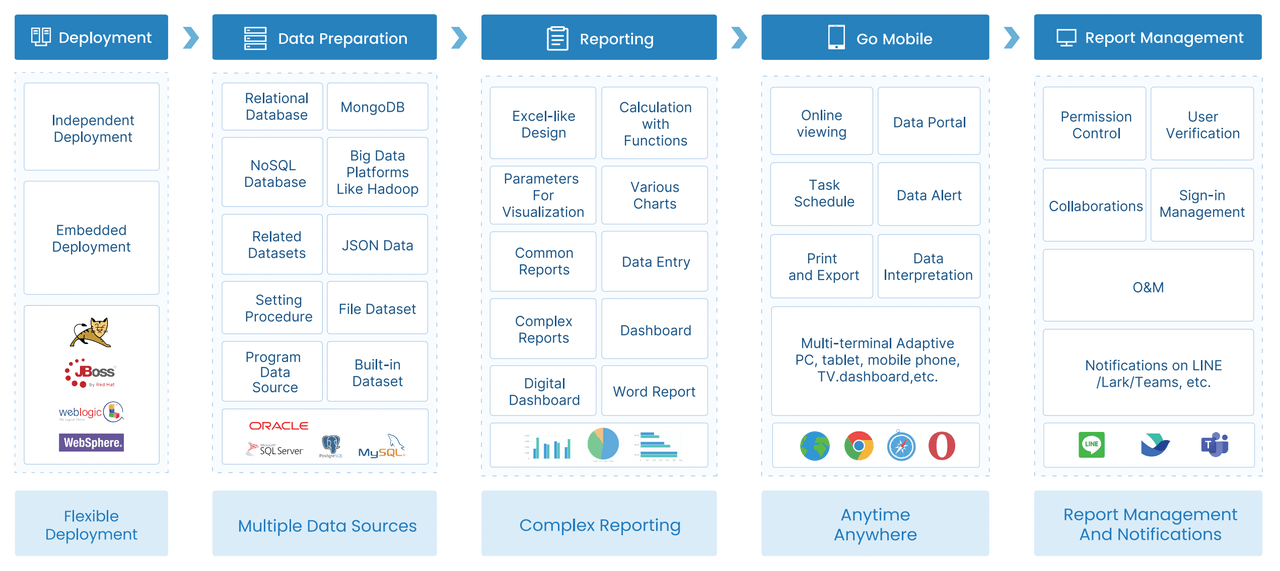
FineReport is well suited to this model because it supports formatted reports, recurring management packs, workflow-based submissions, and operational cockpits in one governed reporting environment.
Connect disclosures to decisions and continuous improvement
Reporting only creates value when it helps the business decide what to do next. ESG dashboards should help teams:
Identify hotspots by brand, site, supplier, or material
Set realistic targets and track progress
Prioritize packaging redesign, energy efficiency, water mitigation, or waste recovery actions
Prepare clear narratives on methodology changes and reporting limitations
Explain year-over-year changes with business context
Dora strengthens this process by helping teams consume reports more efficiently. Instead of manually rewriting the same summary every month, users can ask Dora for a structured report summary, exception explanation, or owner follow-up list based on the FineReport source report. Scheduled summaries, weekly briefings, and exception pushes make ESG reporting more actionable between formal disclosure cycles.
1. Standardize templates, KPI definitions, and business terms first
Before adding AI, align definitions for packaging categories, emissions factors, water metrics, waste streams, reporting periods, and ownership rules. FineReport can serve as the standardized reporting foundation for these templates and workflows. Dora performs best when the reporting semantics are already governed.
2. Start with high-value recurring sustainability reports
Do not try to automate every ESG output at once. Start with recurring management reports such as monthly sustainability dashboards, quarterly packaging reviews, emissions hotspot summaries, or site-level water-risk briefings. These scenarios deliver strong landing capability because the process is repeatable and the stakeholders are already defined.
3. Build AI on top of trusted report assets, not isolated prompts
An enterprise Data Agent should work on governed reports, metrics, and semantic rules. FineReport provides the trusted report templates, chart logic, permissions, and operational cockpits. Dora then adds natural-language query, structured summaries, scheduled pushes, and governed Skills-based execution. This creates more controllable and auditable AI workflows than raw prompt-only agents.
4. Treat data quality and permissions as part of the AI rollout
If packaging data from co-packers is incomplete or facility waste definitions are inconsistent, AI will only surface the same underlying problem faster. Make data quality checks, exception rules, and access permissions part of the implementation. Dora should respect FineReport access boundaries so users only see the sustainability information they are authorized to consume.
5. Define alert thresholds, follow-up rules, and human review points
AI-generated summaries are most useful when teams know what triggers action. Set thresholds for emissions intensity spikes, water-risk changes, missing data submissions, landfill increases, or recycled content declines. Use Dora to push alerts and follow-up reminders, while preserving human review for external narratives, methodology-sensitive interpretation, and disclosure approval.
Building this manually is complex. FineReport helps teams standardize trusted reports, operational cockpits, templates, and reporting workflows. Dora turns those assets into an AI assistant that can answer report questions in chat, generate structured summaries, push scheduled briefings, monitor exceptions, and follow up with responsible owners.
For ESG teams managing cpg sustainability reporting, that means a practical path from fragmented spreadsheets and manual commentary to a governed reporting system with AI-assisted consumption. FineReport handles the reporting foundation: formatted sustainability reports, management packs, data-entry forms, operational cockpits, and workflow automation. Dora adds the enterprise Data Agent layer: natural-language queries over trusted reporting assets, chart-based answers, structured narratives, periodic briefings, exception alerts, and digital employees for repeatable reporting workflows.
FineReport + Dora is not only a reporting upgrade; it is a practical fourth-generation Agentic BI path. FineReport provides governed reports and operational cockpits. Dora provides the AI assistant layer for scenario execution, with more controlled Skills, lower token waste, faster execution paths, and more stable workflows than prompt-only agents.
Get Ready-to-Use Dashboard Templates in Fine Gallery
The strongest Dora pitch is scenario + product + service: FineReport provides the trusted reporting foundation, Dora provides the AI digital employee, and implementation service connects data, governance, semantic setup, Skills, report templates, permissions, and rollout.
The core metrics usually cover packaging, emissions, water, and waste across brands, plants, suppliers, and logistics. Teams should also define clear boundaries, calculation rules, and reporting periods so results stay consistent.
Start by separating primary, secondary, and tertiary packaging and standardizing definitions such as recyclability, recycled content, and packaging weight. Then aggregate data by SKU, format, brand, and region to identify trends and exceptions.
Scope 3 is important because a large share of CPG emissions often comes from suppliers, ingredients, packaging, and transportation rather than only owned operations. Including the most relevant categories gives a more accurate view of climate impact and business risk.
They can improve data quality by assigning owners, standardizing methodologies, and using review workflows across sites and suppliers. A governed reporting system also helps teams reduce definition conflicts and keep reporting repeatable over time.
FineReport provides dashboards, formatted reports, and management cockpits built on trusted sustainability data. Dora adds AI support for querying metrics, summarizing changes, monitoring exceptions, and delivering scheduled briefings to the right stakeholders.
Product Trial
FineReport
Pixel-perfect reports · Interactive dashboards · Easy data entry · Digital twins