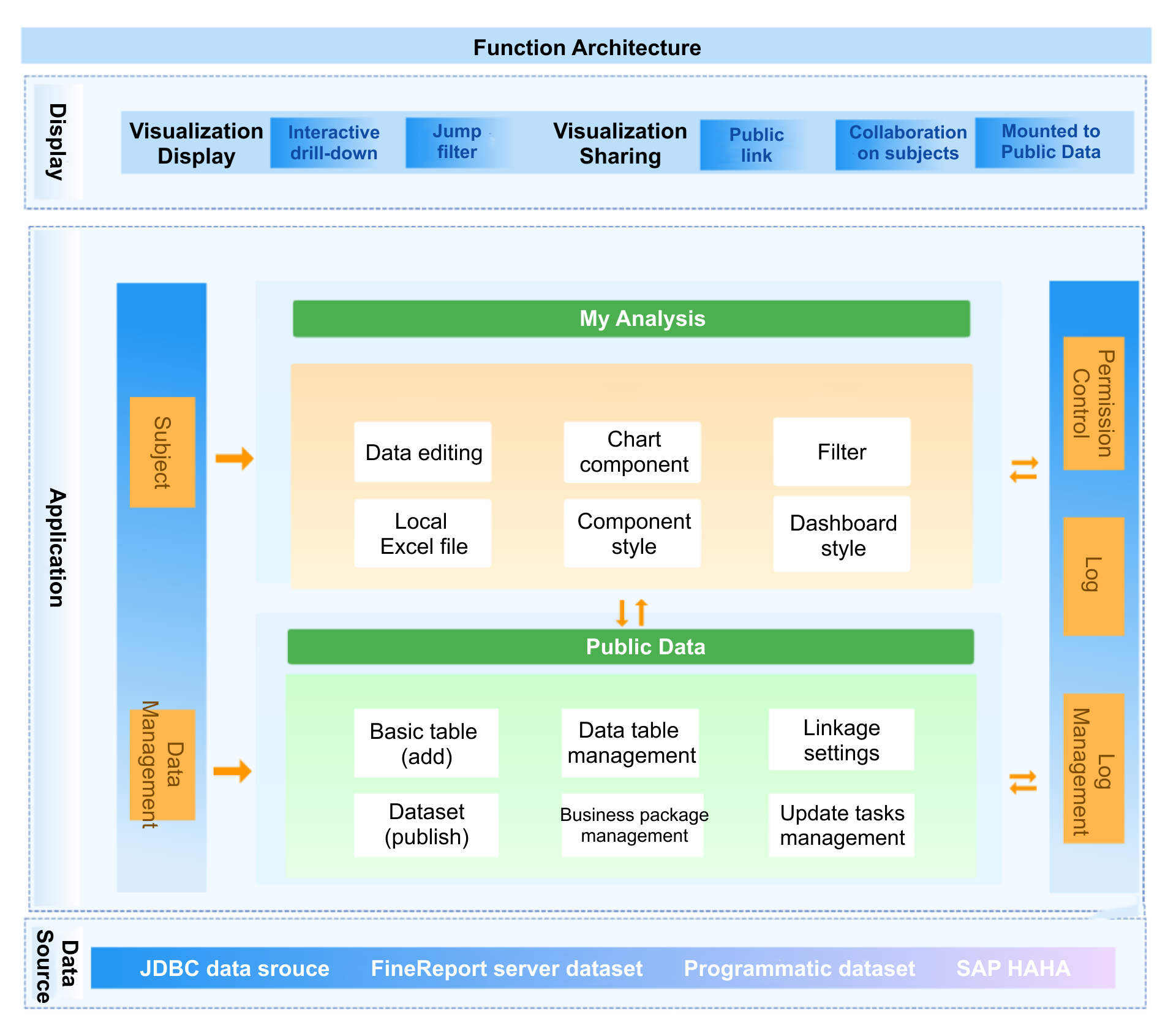
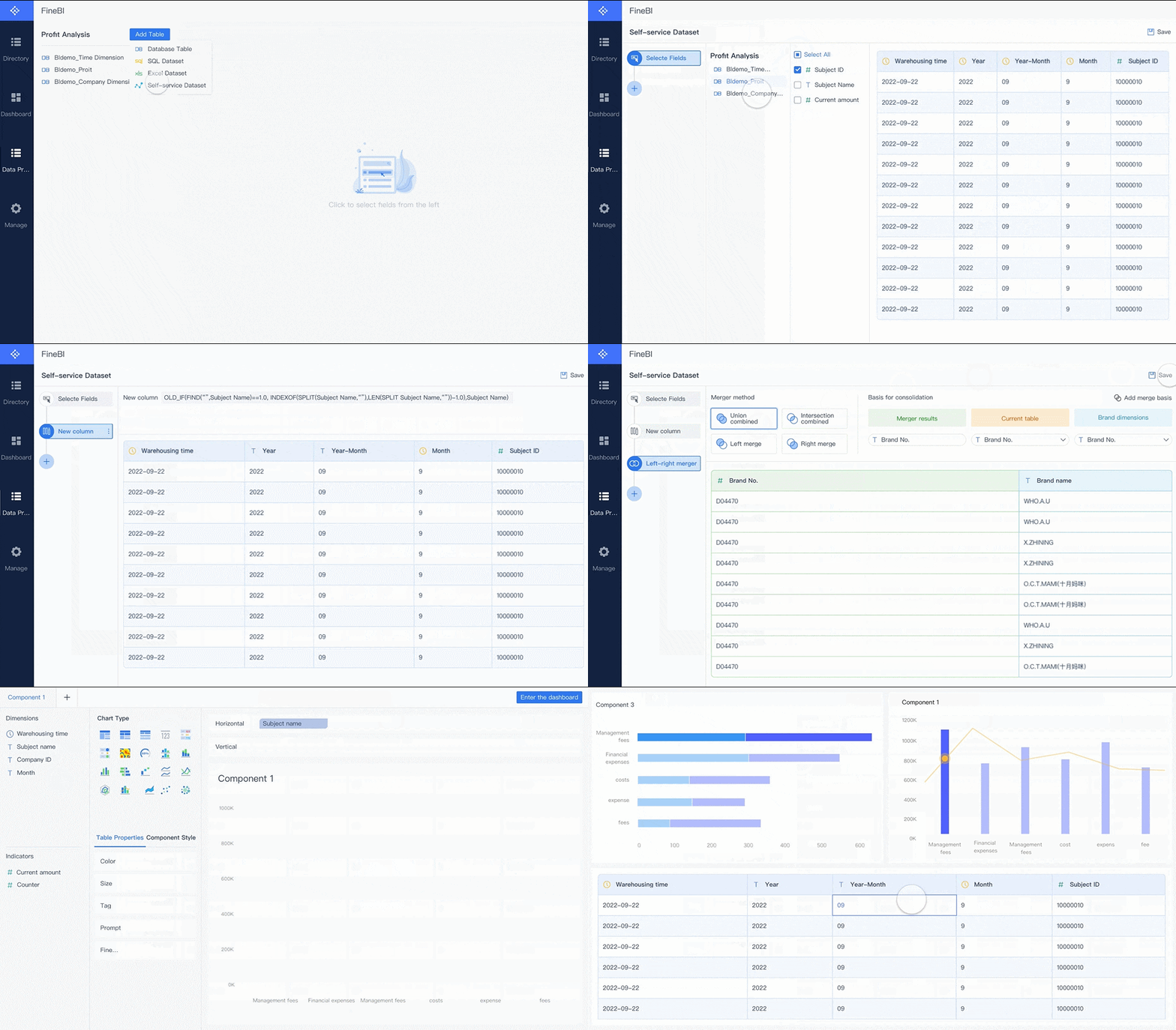
Customer data management becomes a leadership issue the moment customer KPIs start influencing revenue planning, retention strategy, service performance, and AI investment decisions. If customer records are incomplete, duplicated, fragmented, or inconsistently defined across systems, dashboards become harder to trust, forecasts become less reliable, and executive decisions carry more risk.
That is why enterprise teams should not treat AI as a shortcut around weak data foundations. Adding AI on top of broken customer data flows usually accelerates confusion rather than insight. The better path is to first build a trusted KPI foundation, then upgrade that foundation with an AI assistant that can help users ask questions, retrieve governed metrics, generate chart-based answers, and push timely summaries to decision-makers.
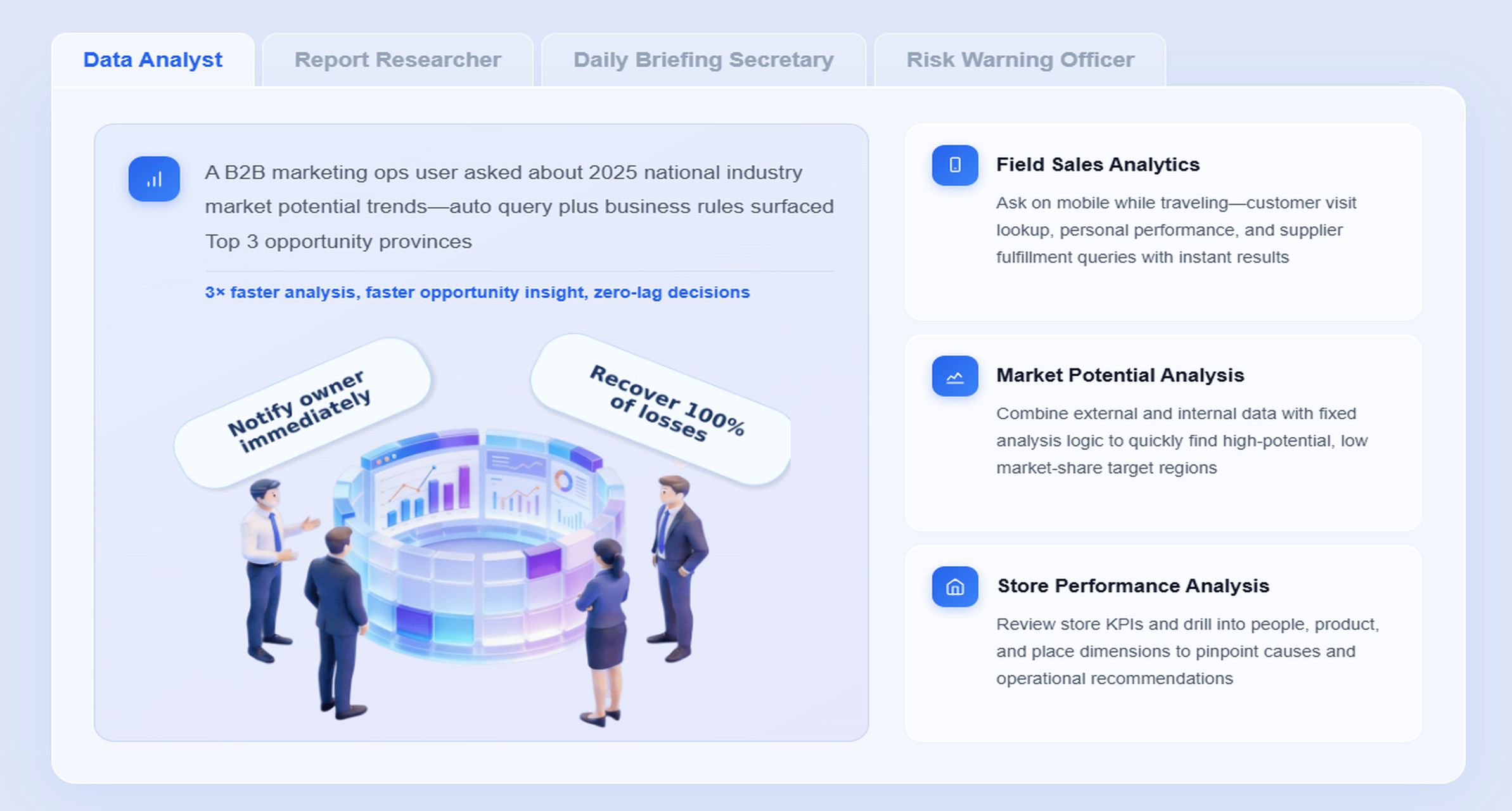
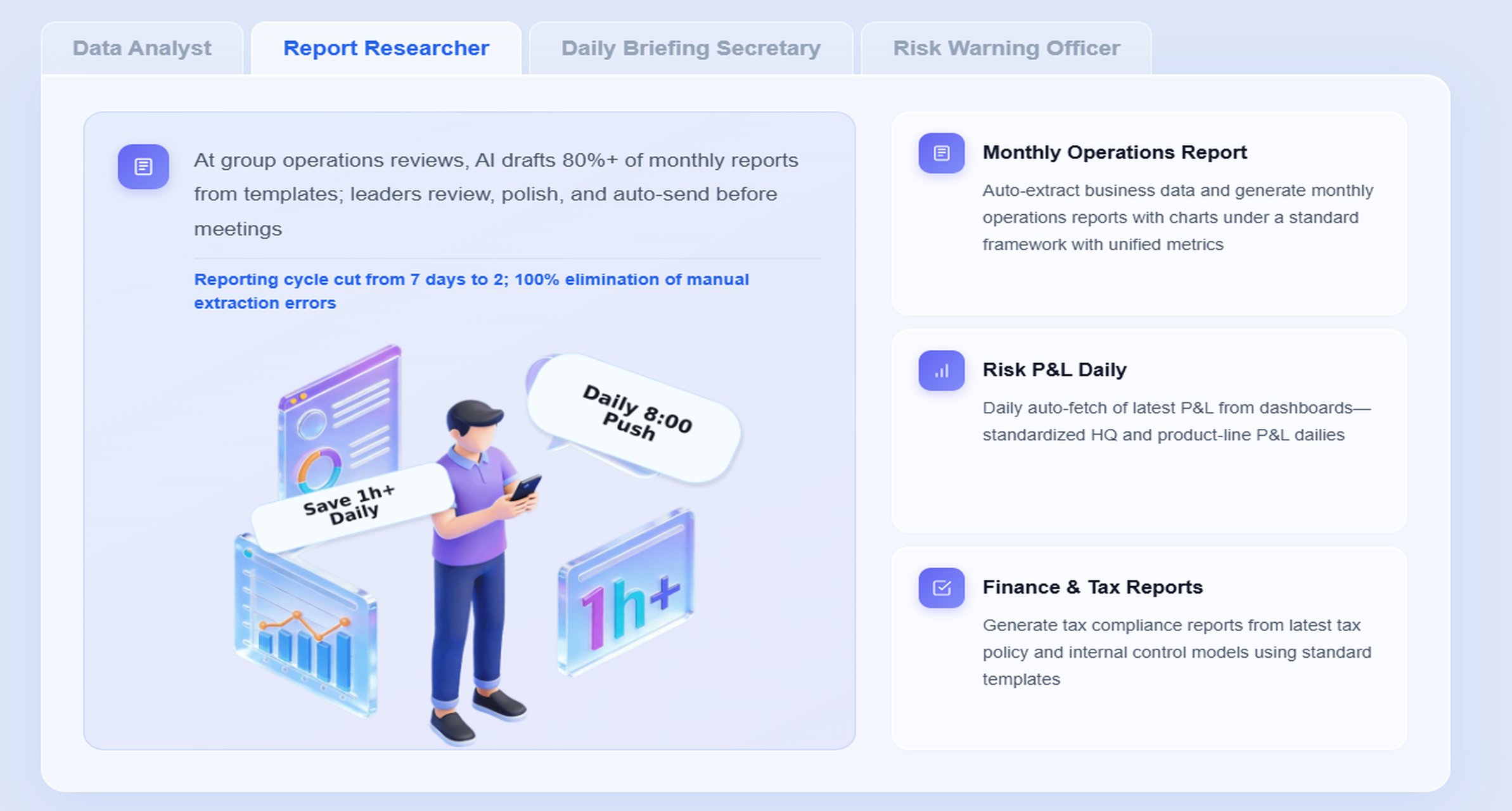
With FineBI + Dora, business users can ask for analysis in chat, generate chart-based answers or dashboard-style views from trusted BI assets, and receive scheduled summaries before the next meeting.
Click To Try The Dashboard
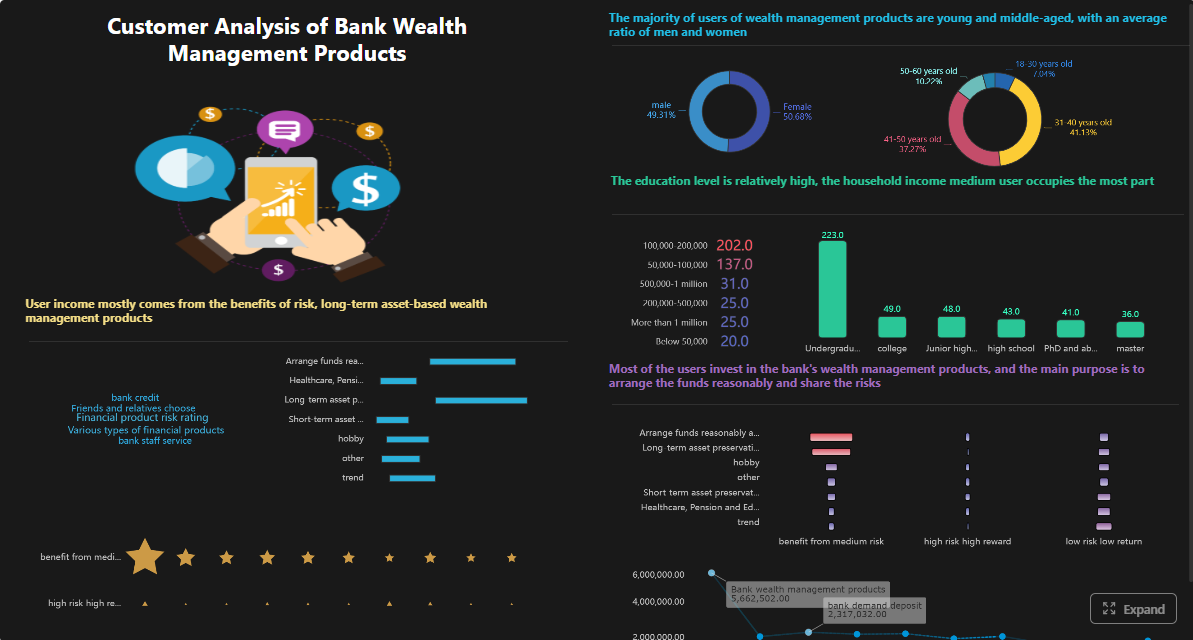
All dashboards in this article are built with FineBI
Why customer data management matters before AI initiatives
Enterprise leaders often launch AI programs with strong expectations: better segmentation, faster planning, more accurate churn signals, smarter service prioritization, and more personalized engagement. But all of those outcomes depend on the quality and consistency of customer data underneath them.
When customer data management is weak, the same customer may appear under multiple identifiers, accounts may not roll up correctly, ownership may be missing, and transaction history may be split across disconnected systems. That distorts core KPIs such as active customers, retention rate, average revenue per account, service response performance, and customer lifetime value.
This creates three immediate problems:
KPI distortion: leadership teams see conflicting numbers across sales, marketing, finance, and service.
Operational delay: analysts spend too much time reconciling data instead of explaining what changed and why.
AI risk: models and AI workflows inherit the same inconsistencies, which weakens targeting, summaries, alerts, and recommendations.
The practical distinction is simple:
Adding AI to broken data flows means faster access to unreliable answers.
Building a trusted measurement foundation first means AI can operate within governed definitions, permissions, and semantic rules.
For executives, this is not just a data quality issue. It is a revenue, retention, and service issue. Better customer data management reduces risk by aligning data improvement work with the outcomes leaders actually care about:
cleaner pipeline and account reporting
more reliable retention measurement
better service-level visibility
stronger budget assumptions
safer AI expansion into customer-facing and management workflows
What customer data management means in an enterprise context
Customer data management in an enterprise context is the discipline of collecting, standardizing, governing, integrating, and maintaining customer-related data so the business can use it consistently for reporting, planning, operations, and customer engagement.
For different stakeholders, that means different things:
Executives need trusted customer KPIs for planning, board reporting, and performance reviews.
Operations leaders need consistent customer records to coordinate service, escalation, and ownership.
Analytics teams need governed definitions and reusable data structures for reporting and exploration.
IT teams need reliable integration, quality controls, permission governance, and maintainable data architecture.
What customer data management is not
Customer data management is often confused with adjacent systems or practices. It is related to them, but not the same thing.
CRM administration: focuses on managing workflows, users, and records inside a CRM system. Customer data management spans multiple systems, not one tool.
Customer data platforms: often unify and activate customer data for marketing and experience use cases. They may support customer data management, but they do not replace enterprise-wide KPI governance.
Data warehouses: store and structure data for analytics, but they do not automatically solve identity resolution, stewardship, ownership, or business definitions.
Master data governance: provides broader governance principles across domains. Customer data management applies those principles specifically to customer-related entities and processes.
The business case for a trusted customer KPI foundation
Customer data management becomes strategic when leaders connect it directly to KPI trust. Without that link, data cleanup remains a low-priority technical exercise. With that link, it becomes a business performance program.
Common symptoms of weak customer data foundations
Most enterprises recognize the symptoms before they formally diagnose the cause.
Common warning signs include:
duplicate customer and account records
inconsistent identifiers across CRM, ERP, service, and marketing systems
missing account ownership or unclear responsibility
conflicting definitions of active customers, churn, retention, or account value
slow reporting cycles due to manual validation
low confidence in dashboards used for growth or service decisions
recurring arguments in meetings about whose number is correct
These symptoms do not just create inefficiency. They damage operating rhythm. Leaders spend time debating numbers instead of acting on them.
Why data trust is essential for performance management
Performance management depends on trustworthy metrics. If customer data cannot support consistent KPI definitions, then budgeting, forecasting, board reporting, and operational accountability all weaken.
Below are examples of business-critical customer KPIs that require a trusted foundation.
Active Customer Count: The number of customers meeting the agreed active criteria within a period. Business value: Supports growth tracking, account planning, and resource allocation. AI use:Dora can retrieve this metric through chat, explain the definition used, compare it by region or segment, and include it in scheduled briefings.
Customer Retention Rate: The percentage of customers retained over a defined period based on the approved business rule. Business value: Measures relationship stability and supports revenue planning. AI use:Dora can surface retention trends, detect segment-level declines, and push anomaly summaries to responsible managers.
Average Revenue per Account: Total revenue divided by the number of relevant accounts in scope. Business value: Helps leaders understand account monetization and segment performance. AI use:Dora can generate chart-based answers by industry, region, or owner and summarize movement drivers.
Service Resolution Time: The average time required to resolve customer issues according to agreed service definitions. Business value: Indicates service efficiency and customer experience quality. AI use:Dora can monitor threshold breaches, identify exception groups, and notify operations owners through a governed AI workflow.
Consent Coverage Rate: The percentage of customer records with valid and current consent attributes where required. Business value: Reduces compliance risk and protects campaign effectiveness. AI use:Dora can include consent risk in management summaries and flag business units with poor coverage.
Customer Lifetime Value or Strategic Account Value: The projected or aggregated value associated with a customer or account. Business value: Supports prioritization, service tiering, and investment decisions. AI use:Dora can retrieve the relevant KPI from FineBI assets and generate dashboard-style analysis views for leadership review.
When these KPIs are governed, leaders get a common language for decision-making. When they are not, every dashboard becomes negotiable.
Risks of scaling AI on fragmented customer data
AI makes weak data more visible, but it can also make weak data more dangerous if enterprises expand too quickly.
Risks include:
Misleading outputs: AI summaries reflect whatever records and definitions they are given.
Poor targeting quality: fragmented profiles lead to inaccurate segmentation and mistimed outreach.
Compliance exposure: consent and privacy rules may be inconsistently applied across systems.
Customer experience damage: service or sales teams may act on outdated or incomplete account information.
Executive distrust: if AI-generated answers conflict with manually reconciled reports, adoption slows immediately.
This is why enterprise leaders should view customer data management as a prerequisite for scalable Agentic BI, not a separate cleanup project.
Core components of an effective enterprise customer data management strategy
A strong customer data management strategy needs process discipline, technical support, and KPI alignment. It is not solved by one tool alone.
Data quality and standardization
Data quality is the operational layer of customer data management. Enterprises need explicit rules for how customer records are created, validated, corrected, enriched, and monitored over time.
This should include:
validation rules for mandatory fields
completeness thresholds by data domain
deduplication logic and match rules
normalization standards for names, addresses, contact methods, and classifications
periodic quality monitoring and issue tracking
The goal is not perfect data. The goal is data that is reliable enough for trusted KPI calculation and repeatable decision-making.
Governance, ownership, and stewardship
Customer data problems persist when no one owns definitions, resolution paths, or exception handling. Governance establishes who decides, who approves, and who fixes.
An effective model usually defines:
data owners for each customer domain
stewards for review and correction workflows
policy rules for access, retention, and consent
escalation paths for unresolved conflicts
business approval for KPI definitions and changes
For IT teams, this matters because the AI era changes their role. IT no longer just builds reports on demand. It helps optimize enterprise data connections, semantic layers, permissions, data quality controls, and reusable AI Skills that business teams can safely use.
Integration and identity resolution
Most enterprises do not have one clean customer source. They have multiple operational systems with different identifiers, structures, and refresh cycles.
Integration and identity resolution help unify these records into consistent views for reporting and action. That means:
matching records across CRM, ERP, support, commerce, and marketing systems
mapping source IDs to enterprise identifiers
managing account hierarchies and parent-child relationships
preserving source lineage for auditability
maintaining synchronization rules and update logic
Without this layer, customer KPIs often vary by system perspective rather than business truth.
Measurement architecture and KPI alignment
This is where many customer data initiatives either succeed or stall. Enterprises may improve records but still fail to create trusted management reporting because KPI definitions remain inconsistent.
Measurement architecture connects customer data elements to approved KPI logic. It should define:
metric formulas
dimensional hierarchies
standard filters
time windows
segmentation rules
ownership and approval process
semantic definitions and synonyms for business use
This is exactly where FineBI adds value as the BI foundation. FineBI helps teams build trusted dashboards, metric models, self-service analytics workflows, and reusable semantic assets so customer KPIs can be interpreted consistently across departments.
Once the customer KPI foundation is trustworthy, the next step is to reduce decision friction. This is where Dora, FanRuan’s enterprise Data Agent platform, becomes valuable.
Instead of asking analysts to manually assemble recurring customer performance updates, leaders can use chat-based analysis over governed BI assets. Dora does not replace FineBI. It works on top of FineBI’s trusted dashboards, metrics, and semantic rules to deliver more actionable analysis in daily work.
A scenario-specific chat request might look like this:
“Show me this month’s active customer count, retention trend, top churn-risk segments, and service resolution exceptions by region. Summarize the main changes versus last month and prepare a briefing for tomorrow’s executive meeting.”
How Dora works in a governed customer data management scenario
Retrieve trusted FineBI assets Dora accesses the approved FineBI dashboard, analysis subject, or metric model for customer KPIs rather than relying on unmanaged raw prompts.
Interpret business semantics and KPI rules Dora understands approved KPI definitions, dimensions, filters, synonyms, and permission boundaries from the FineBI semantic foundation.
Generate chart-based answers or dashboard-style analysis views
In chat, Dora can return a trend chart, segmented table, exception list, or concise management summary based on trusted customer data.
Detect abnormalities or threshold breaches
If retention drops, consent coverage deteriorates, or service exceptions spike, Dora can identify these changes according to governed business rules.
Push insights and follow-up tasks Dora can send scheduled summaries, alerts, and responsibility-based pushes to the right managers, reducing delay between analysis and response.
Prepare management-ready output Dora can produce meeting summaries, periodic KPI briefings, and follow-up notes for executive review, improving consistency in reporting cycles.
Why this works better in real enterprises
The main reason AI projects fail to land is not lack of model capability. It is lack of governed business grounding.
FineBI provides the trusted BI and semantic foundation:
chart-based answers and dashboard-style analysis views
scheduled summaries and weekly briefings
anomaly alerts and push notifications
follow-up support through controllable Skills
This matters because enterprises need more than a feature demo. They need landing capability. Dora uses skills-based execution for more controllable and auditable AI workflows. Compared with raw prompt-only agents, this approach is better suited to enterprise environments that care about permissions, KPI governance, semantic consistency, workflow stability, and reduced token waste.
For business users, the value is practical: they get timely metrics, chat-based answers, and exception pushes without searching through multiple dashboards or waiting for analysts.
For executives, the value is concrete ROI: Dora is not an AI experiment. It is a landed AI digital employee for recurring data work such as customer KPI briefing, churn-risk follow-up, service exception alerts, and management summary preparation.
Best practices for building a reliable customer data foundation
Customer data management improves fastest when enterprises avoid trying to solve everything at once. Start with the KPI decisions that matter most, then expand with control.
Start with business-critical KPI use cases
Prioritize the reports, dashboards, and decisions that most affect revenue, retention, and customer experience.
Good starting points include:
executive customer performance review
retention and churn monitoring
service exception management
strategic account health reporting
consent and compliance visibility
This helps justify investment because data improvement work is tied directly to decision outcomes.
Design for consistency across systems
Create shared definitions, naming standards, synchronization rules, and business-approved identifiers so customer metrics stay consistent across CRM, service, finance, and analytics workflows.
These controls make progress visible and help leadership assess business value over time.
Build the semantic layer inside the BI workflow
This is especially important for scalable AI adoption. Enterprises should not leave KPI meaning in tribal knowledge or spreadsheet notes.
Use the BI workflow to formalize:
KPI definitions
dimensions and hierarchies
standard filters
business terms and synonyms
access rules
With FineBI, teams can turn these elements into trusted semantic assets that support self-service analytics and also enable Dora to respond more accurately in chat-based scenarios.
Preserve governance for AI outputs
AI value depends on governed access and reliable interpretation.
Executive sponsorship is essential. Customer data management usually spans sales, service, finance, operations, marketing, and IT. Without senior sponsorship, teams default back to local definitions and siloed reporting.
Operational ownership is just as important. Someone must own the day-to-day health of customer data, KPI consistency, and exception resolution. Leaders should review progress regularly and refine the roadmap as business priorities and AI ambitions evolve.
FineBI + Dora solution pitch
Building this manually is complex. FineBI helps teams build trusted dashboards, metrics, and semantic assets. Dora turns those assets into an AI assistant that can answer questions in chat, generate dashboard-style analysis views, push scheduled summaries, monitor anomalies, and follow up with responsible owners.
In a customer data management scenario, that means enterprises can move from fragmented reporting to a governed operating model:
business users get faster access to insights without bypassing governance
leaders get scheduled, explainable, and actionable analysis support
FineBI + Dora is not only a BI upgrade; it is a practical fourth-generation Agentic BI path. FineBI provides governed metrics and visual analysis. Dora provides the AI assistant layer for scenario execution, with more controlled Skills, lower token waste, faster execution paths, and more stable workflows than prompt-only agents.
Get Ready-to-Use Dashboard Templates in Fine Gallery
For enterprise leaders, the message is straightforward: customer data management should not stop at cleaner records. It should result in trusted KPIs, faster decision cycles, and a usable path to AI.
The strongest Dora pitch is scenario + product + service: FineBI provides the trusted BI foundation, Dora provides the AI digital employee, and implementation service connects data, governance, semantic setup, Skills, and rollout.
Customer data management is the practice of collecting, standardizing, governing, and maintaining customer data across systems so teams can use consistent information for reporting, planning, and operations. Its goal is to create trusted customer KPIs and a reliable view of accounts, contacts, transactions, and engagement.
AI can only accelerate what already exists in the data foundation. If customer records are fragmented or inconsistent, AI outputs, alerts, and recommendations become less reliable and increase decision risk.
Weak customer data management can distort metrics such as active customers, retention rate, average revenue per account, service performance, and lifetime value. Duplicates, missing ownership, and disconnected histories often lead to conflicting numbers across teams.
CRM mainly manages customer interactions and workflows inside one operational system. Customer data management is broader and focuses on governing, integrating, and standardizing customer information across multiple systems for enterprise-wide use.
FineBI and Dora help business users ask questions in chat, retrieve governed metrics, and generate chart-based answers from trusted BI assets. This makes it easier for leaders to work from consistent KPI definitions instead of disconnected reports.
Product Trial
FineReport
Pixel-perfect reports · Interactive dashboards · Easy data entry · Digital twins