A customer data management platform is valuable when the real business problem is not “we need more data,” but “we cannot trust, govern, unify, and use the customer data we already have.” In many enterprises, customer records are scattered across CRM, e-commerce, service, ERP, marketing automation, regional systems, and analytics tools. Teams then argue over who the customer is, which audience definition is correct, and whether reporting can be trusted.
That is where a practical customer data management platform approach matters. It helps enterprises unify profiles, apply governance, manage consent, improve data quality, and activate trusted customer intelligence across departments.
Just as important, the platform should not stop at static storage or fragmented dashboards. With FineBI + Dora, business users can ask for analysis in chat, generate chart-based answers or dashboard-style views from trusted BI assets, and receive scheduled summaries before the next meeting. That means customer data management becomes not only a data foundation effort, but also an operational decision-support capability for marketing, sales, service, operations, and leadership teams.
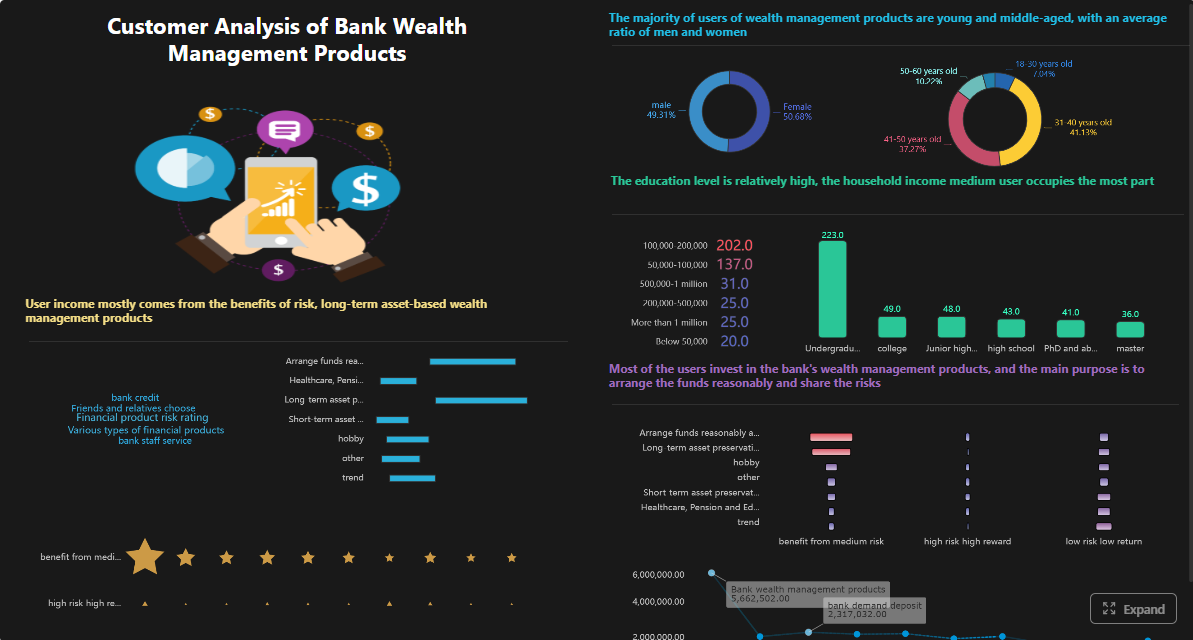
Click To Try The Dashboard
All dashboards in this article are built with FineBI
What a customer data management platform actually is
A customer data management platform is an enterprise system and operating layer used to unify, govern, organize, and operationalize customer data across multiple systems. In plain language, it helps a business create a more reliable view of customers and make that view usable for reporting, segmentation, compliance, service, and downstream activation.
This is broader than simply collecting events from a website or syncing contacts into a campaign tool. A management platform focuses on the full lifecycle of customer data:
collecting and integrating records from many systems
reconciling identities and duplicate records
defining common customer attributes and business rules
applying permissions, governance, and lineage
supporting analytics and operational use cases
activating the right customer data in the right tools
The practical goal is not just a “single customer view” as a slogan. The goal is a usable and governed customer data foundation that different enterprise teams can trust.
Managing customer data is different from collecting more of it
Many enterprises already collect too much customer data and still struggle to use it well. More raw data does not automatically create better customer insight.
For example, if marketing, sales, and service all define “active customer” differently, more data only creates more disagreement. If opt-in status is inconsistent across regions, more data can increase compliance risk. If online and offline identities are not linked properly, personalization and reporting remain weak.
How it differs from a customer data platform and related tools
The market often mixes up customer data management platform, customer data platform (CDP), CRM, data warehouse, and other adjacent tools. The confusion happens because these systems overlap in some functions, and vendor messaging often stretches category definitions.
A practical way to separate them is to look at four dimensions:
primary goal
data scope
governance depth
downstream use cases
A customer data platform typically focuses on collecting, unifying, and activating customer data, often for marketing and personalization. A customer data management platform is a broader framing centered on governance, profile trust, operational consistency, privacy, and enterprise-wide usability.
In other words, a CDP may be part of your answer, but not always the whole answer.
Common terms that are often mixed together
Customer data platform
A customer data platform is usually designed to unify customer data and make it available for segmentation, personalization, audience activation, and campaign execution.
Typical strengths:
profile assembly
audience building
channel activation
marketing use cases
identity stitching
Typical limitations in some enterprise environments:
weaker enterprise governance depth than required
insufficient support for cross-department semantic consistency
limited reporting trust if KPI logic sits elsewhere
challenges when customer data use cases extend beyond marketing
A CDP is often the right tool for activation-heavy environments. But if the enterprise problem is broader data governance, cross-functional trust, and governed analytics, the organization may need a wider customer data management platform approach.
Data warehouse and lakehouse
A data warehouse or lakehouse is the analytical storage and modeling layer for enterprise data. It can be essential to customer data architecture, but it is not automatically a customer data management platform.
Typical strengths:
large-scale storage
transformation and modeling
historical analysis
cross-domain analytics
flexible engineering control
Typical gaps:
business-friendly profile operations may be limited
activation workflows often require other tools
identity resolution may need extra components
governance may exist technically but remain inaccessible to business teams
A warehouse is often where trusted customer data should live or be modeled. But enterprises still need a usable layer for business access, governance, KPI interpretation, and action.
CRM and marketing automation
CRM systems manage customer relationships, account records, pipeline, service interactions, or contact data. Marketing automation platforms manage campaigns, journeys, lead nurturing, and outbound communication.
These tools are important, but they are not designed to be the full customer data management layer.
Typical constraints:
they often only reflect one department’s view
they may contain duplicates and partial records
they rarely solve enterprise-wide identity and governance alone
analytics and semantic consistency are often limited
Identity resolution and consent tools
Some tools specialize in identity resolution, while others focus on consent management, preference capture, or privacy workflows.
These are critical capabilities, but they are usually components of a broader customer data management strategy rather than complete answers.
An enterprise may need:
identity tools for record stitching
consent tools for privacy enforcement
a warehouse for storage and modeling
BI for trusted reporting and semantic governance
activation tools for downstream execution
That is why category labels alone are not enough. Enterprises should evaluate the operating model they need, not just the vendor category they are being sold.
Why customer data management matters for enterprise teams
Customer data management matters because fragmented data directly affects revenue, efficiency, compliance, and decision quality.
When profiles are inconsistent, the business pays in multiple ways:
personalization becomes generic or inaccurate
campaign targeting wastes spend
service teams lack context
analytics reports conflict across departments
compliance exposure rises
teams spend time arguing over definitions instead of acting on insight
A strong customer data management platform helps enterprises create shared standards, consistent definitions, and cross-functional trust.
Problems enterprises are trying to solve
Siloed customer records across business units
Large enterprises often have separate customer records by region, product line, channel, or department. Marketing may know the subscriber, sales may know the account, service may know the ticket owner, and finance may know the billing entity. None of them fully align.
One team defines “active customer” as a purchase in 90 days. Another uses 180 days. A third includes service engagement. This causes segmentation conflicts and reporting disputes.
Customer data is not just a marketing asset. It is a regulated and sensitive operational asset. If opt-in rules, regional permissions, or deletion workflows are inconsistent, the enterprise is exposed.
If every customer analysis request requires manual SQL, spreadsheet cleanup, or analyst support, execution slows down. Campaign teams cannot move fast, and measurement becomes unreliable.
A good platform approach reduces friction by making governed data easier to use, not easier to misuse.
Core framework and key metrics for customer data management
A practical customer data management platform initiative should be measured with a clear KPI framework. These metrics help enterprises track profile quality, governance health, activation readiness, and business usability.
Customer profile and identity KPIs
Unified Profile Rate: Percentage of relevant customer records successfully consolidated into usable profiles. Business value: Shows whether the organization is moving from fragmented records to usable customer views. AI use:Dora can retrieve this metric through chat, compare regions or business units, and include it in scheduled briefings.
Duplicate Record Rate: Percentage of customer records identified as duplicates or likely duplicates. Business value: High duplication distorts campaign targeting, service quality, and customer analytics. AI use:Dora can surface duplicate trends, flag abnormal increases, and summarize which systems contribute most.
Identity Match Confidence: Quality score or rule-based confidence for identity stitching across systems. Business value: Helps teams understand how reliable cross-channel profile unification really is. AI use:Dora can explain where identity stitching is strong, where it is weak, and which profile groups need review.
Data quality and governance KPIs
Completeness Rate: Percentage of required customer attributes populated for priority use cases. Business value: Incomplete records weaken segmentation, analytics, and service workflows. AI use:Dora can answer natural-language questions like which customer attributes are most incomplete by business unit.
Definition Consistency Rate: Percentage of teams or reports using approved customer definitions and KPI logic. Business value: Reduces reporting disputes and improves decision confidence. AI use:Dora can cite the trusted FineBI semantic definition when users ask for customer counts or audience sizes.
Lineage Coverage: Share of priority customer metrics and fields with traceable source and transformation lineage. Business value: Supports trust, auditability, and issue resolution. AI use:Dora can reference governed semantic assets and indicate which dashboard metric is being used.
Privacy and compliance KPIs
Consent Coverage: Percentage of customer records with valid, current consent or preference status where required. Business value: Reduces regulatory risk and prevents improper activation. AI use:Dora can include consent exceptions in periodic reports or alert owners when thresholds are breached.
Suppression Accuracy: Rate at which excluded or restricted profiles are properly blocked from downstream activation. Business value: Prevents compliance failures and wasted outreach. AI use:Dora can summarize suppression exceptions and push alerts to responsible teams.
Activation and business usability KPIs
Audience Build Time: Time required to create and approve usable target audiences. Business value: Measures operational efficiency and campaign agility. AI use:Dora can monitor workflow delays and summarize bottlenecks by team or region.
Reporting Trust Score: Internal confidence in customer dashboards and recurring reports, often measured through adoption or governance adherence. Business value: Trust determines whether data gets used. AI use:Dora can guide users to trusted FineBI dashboards instead of disconnected spreadsheets or unofficial exports.
Insight-to-Action Cycle Time: Time from identifying a customer data issue or opportunity to assigning follow-up action. Business value: Shorter cycles improve campaign execution, retention response, and management visibility. AI use:Dora can move from analysis to summary, alert, push, and follow-up in one governed workflow.
A customer data management platform becomes much more valuable when teams can interact with governed customer data in a fast, low-friction way. This is where Dora, FanRuan’s enterprise Data Agent platform, adds a practical AI layer on top of FineBI.
For this scenario, the most relevant Dora digital employees are:
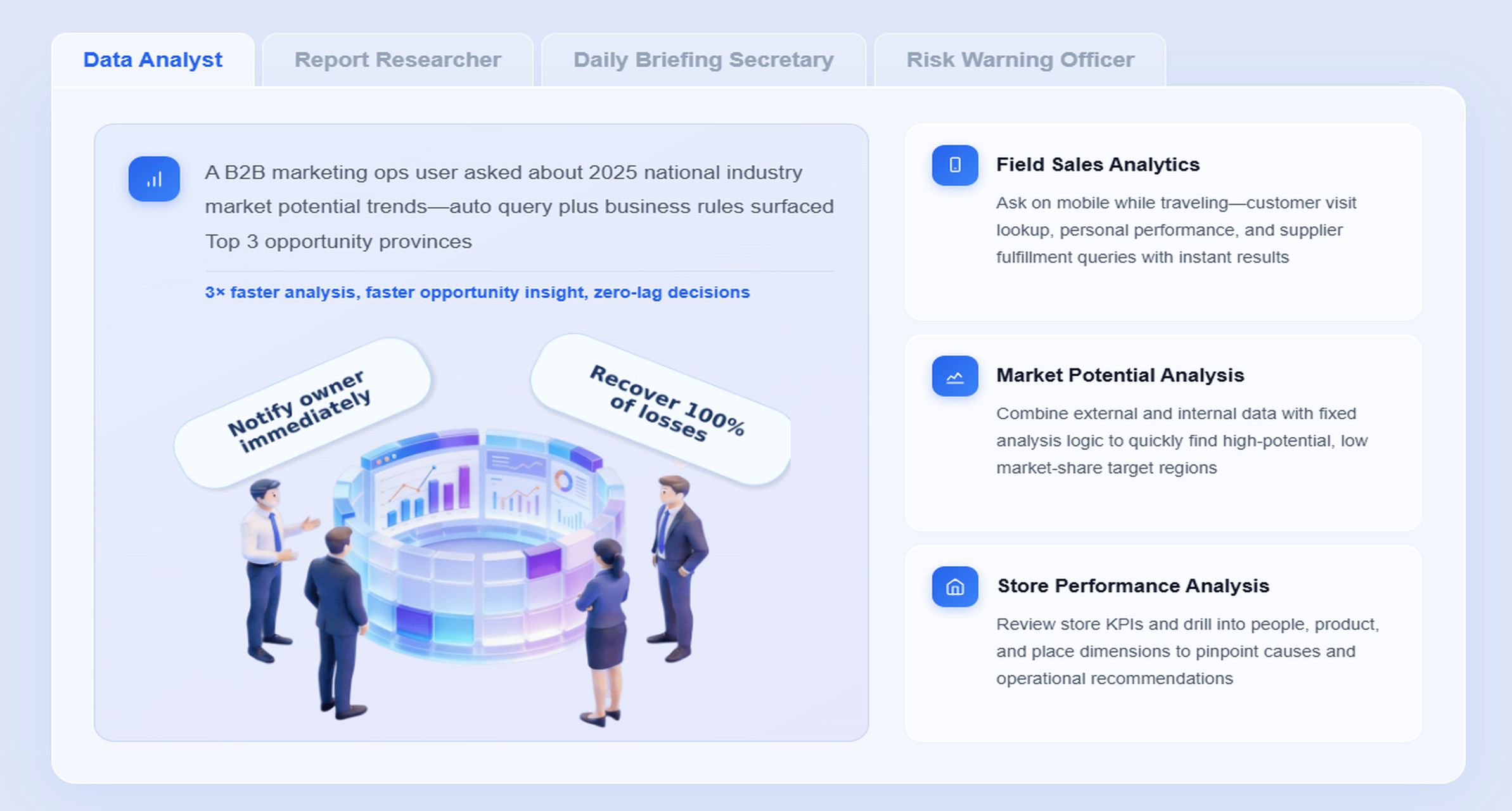
Data Analystdigital employee for natural-language customer data queries, dashboard retrieval, and follow-up analysis
Daily Briefing Secretary for scheduled customer data health summaries
Risk Alert Officer for consent, duplicate, or data quality exception monitoring
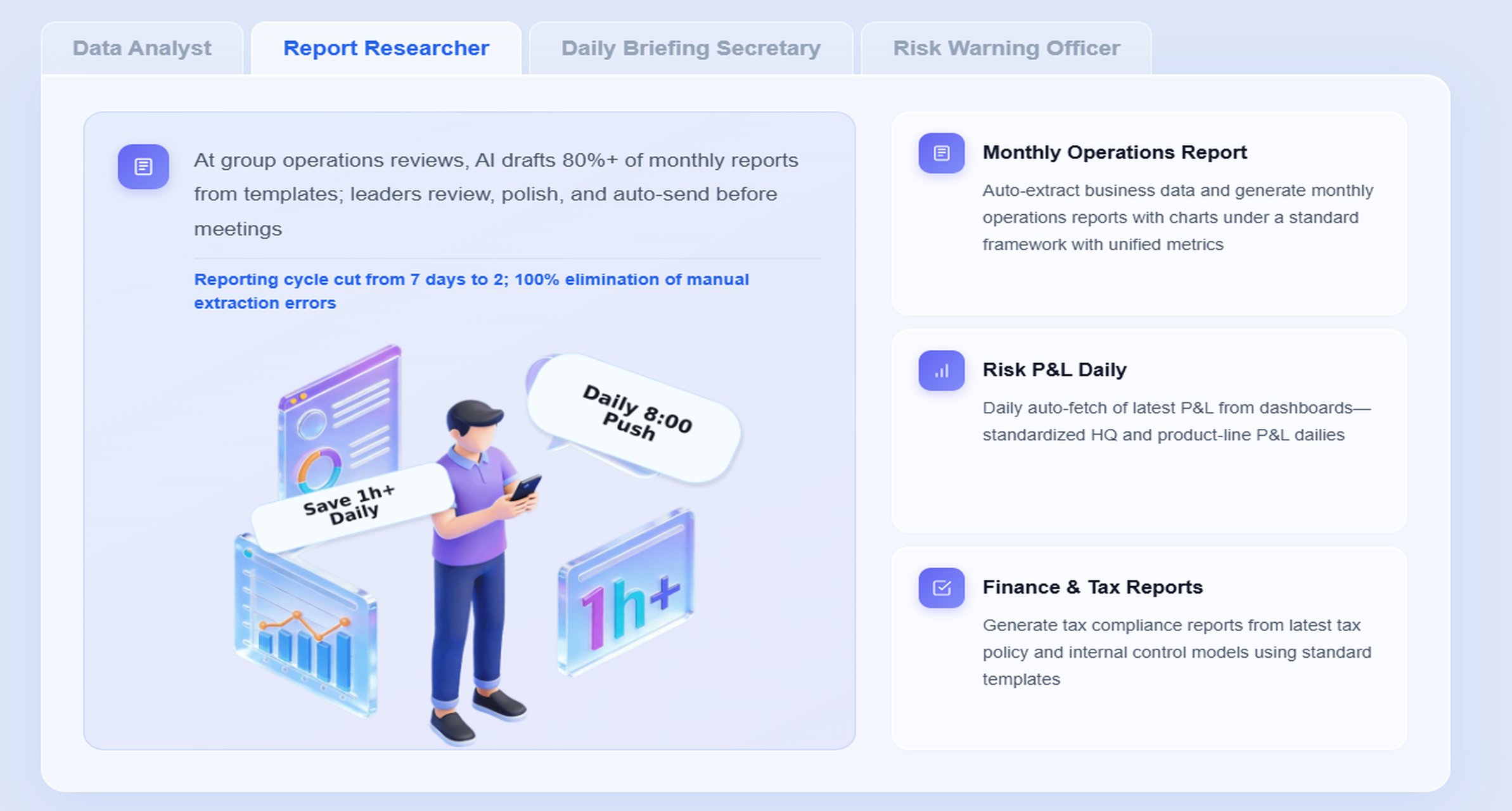
Report Researcher for structured customer data review packages for meetings
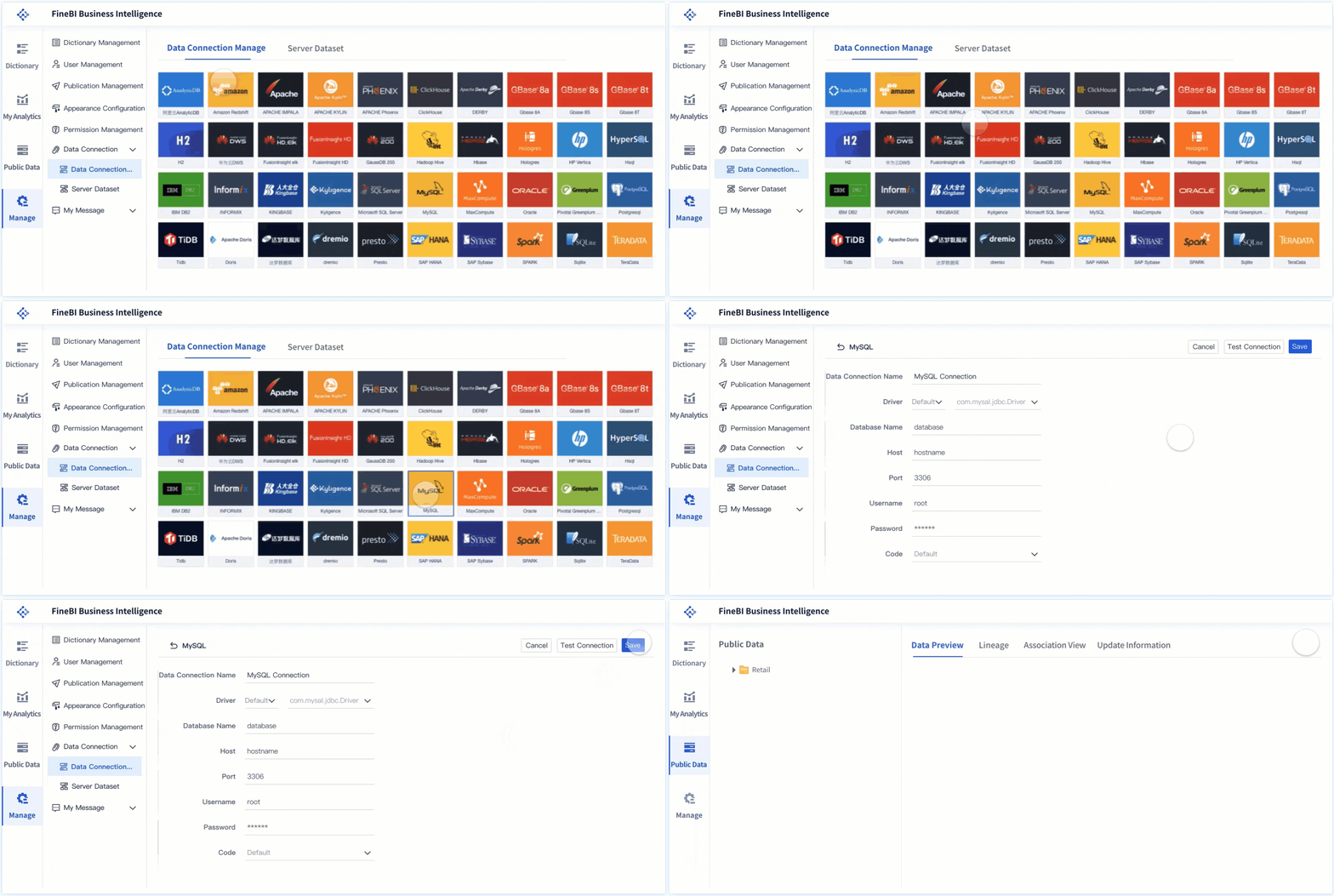
FineBI remains the BI foundation. It provides the governed dashboards, metric models, semantic definitions, and trusted data assets. Dora turns those assets into a scenario-specific AI assistant and AI digital employee layer that helps users ask, analyze, summarize, alert, and follow up.
A concrete chat-style example
A marketing operations leader might ask:
“Show me our customer data management status this month: unified profile rate, duplicate record trend, consent coverage, and which business unit has the highest data quality risk.”
Instead of forcing the user to search across multiple dashboards or wait for an analyst, Dora can retrieve the relevant FineBI dashboard assets, interpret KPI definitions, and return a chart-based answer or dashboard-style analysis view.
How Dora works in a governed AI workflow
Retrieve trusted FineBI dashboard or analysis-subject data Dora starts from governed FineBI assets rather than unverified raw outputs. This helps ensure the analysis uses approved customer data metrics and definitions.
Understand KPI definitions, filters, business terms, and semantic rules Dora uses the semantic layer to interpret terms such as “unified profile,” “consented customer,” or “duplicate record” according to enterprise definitions.
Generate chart-based answers, summaries, or dashboard-style analysis views through chat
The user receives a practical answer, not just a text response. Dora can present a breakdown by region, brand, or business unit.
Detect abnormal changes or threshold breaches
If duplicate rates spike, consent coverage drops, or a source system shows unusual incompleteness, Dora can flag the exception.
Push insights, alerts, or suggested actions to responsible users
The relevant owner can receive a scheduled summary or targeted alert instead of waiting for a manual review cycle.
Produce follow-up summaries for meetings or management review Dora can prepare a concise customer data management briefing before governance reviews, campaign planning, or executive meetings.
Many AI demos fail because they sit on top of ungoverned data and produce impressive-looking but unreliable answers. Dora is different in positioning and landing model:
it works over trusted BI assets and semantic definitions
it supports skills-based execution for more controllable and auditable AI workflows
it fits enterprise permission models and KPI governance
it supports scheduled summaries, anomaly alerts, and push notifications
it reduces reliance on raw prompt-only workflows that often create token waste and unstable outputs
For business users, this means lower friction. For IT teams, it means better control. For executives, it means customer data management becomes a repeatable operating capability, not an isolated dashboard project.
Actionable best practices
A customer data management platform initiative succeeds when governance, architecture, and business workflows are designed together. These best practices help enterprises avoid common failure patterns.
1. Standardize customer KPI definitions and ownership first
Before expanding tools, define the business meaning of critical customer terms:
active customer
consented customer
duplicate record
churn-risk customer
unified profile
contactable audience
Assign owners for each metric and definition. AI outputs are only as trustworthy as the metric framework behind them.
2. Build the semantic layer inside the BI workflow
Do not leave customer definitions scattered across SQL scripts, campaign logic, and spreadsheets. FineBI should hold the trusted dashboard, metric, and semantic foundation so users and AI workflows reference the same business logic.
This is especially important for enterprise customer reporting, where inconsistencies quickly become political as well as operational.
3. Treat data quality as part of the AI implementation
If customer IDs are inconsistent, consent fields are incomplete, or duplicate resolution rules are weak, AI will only expose those problems faster. Dora is most effective when it sits on top of governed, explainable customer data assets.
A practical rollout should include:
source system assessment
identity logic review
field-level quality controls
threshold rules for exceptions
stewardship processes for remediation
4. Start with high-value recurring workflows
Do not try to automate every customer data use case at once. Start with repeatable, high-friction workflows such as:
weekly customer data health briefing
duplicate record risk review
consent exception monitoring
audience readiness reporting
campaign measurement summary
These are ideal scenarios for Dora digital employees because they combine structured metrics, recurring cadence, and clear owners.
5. Preserve permissions and human review
AI should respect enterprise governance boundaries. Dora should operate within FineBI access rules so outputs remain permission-aware.
Also, keep human review for important reports and customer-impacting actions, especially early in rollout. Expand Skills gradually as confidence in data quality, semantic rules, and workflow control improves.
How to choose the right approach and evaluate vendors
The best approach starts with business outcomes, not category labels. Some enterprises truly need a CDP-focused activation engine. Others need a broader customer data management platform strategy that spans governance, identity, analytics, and cross-functional operational use.
evaluate where BI, warehouse, CDP, privacy, and AI layers fit
Questions to ask during evaluation
Which data sources can be unified in the first phase?
Do not start with an unrealistic all-data ambition. Ask which systems can be connected quickly and deliver measurable business value in phase one.
Typical first-phase systems include:
CRM
e-commerce or order data
service platform
marketing automation
consent or preference source
core customer master records
How are identity, consent, and governance handled?
Ask vendors and internal architects:
how identities are matched
how confidence is measured
how consent restrictions are enforced
how permissions are inherited
how lineage is exposed
how business definitions are governed
What activation channels and reporting workflows are supported?
Some platforms are strong at segmentation and outbound activation. Others are better at analytics and governance. Many enterprises need both.
This is where FineBI + Dora is strategically useful. FineBI supports trusted analytics, dashboards, metric modeling, and semantic governance. Dora adds the AI assistant layer for business execution through chat-based retrieval, summaries, alerts, and follow-up.
What internal skills are required after launch?
Ask what the operating model looks like after implementation:
Do business teams need SQL expertise?
How much engineering support is required for change requests?
Who owns KPI governance?
Who maintains semantic assets?
Who configures AI Skills and alert rules?
How much analyst time can be reduced for recurring report work?
The right answer depends on maturity, but the goal should be to reduce dependency on manual rework while increasing governance and business usability.
Building customer data management manually is complex. Data lives in multiple systems. Customer definitions vary by department. Consent rules are sensitive. Reporting logic fragments across dashboards, spreadsheets, and scripts. Then business users still need answers quickly.
FineBI helps teams build trusted dashboards, metrics, and semantic assets. Dora turns those assets into an AI assistant that can answer questions in chat, generate dashboard-style analysis views, push scheduled summaries, monitor anomalies, and follow up with responsible owners.
That combination is practical because it reflects how enterprise customer data work actually lands:
FineBI + Dora is not only a BI upgrade; it is a practical fourth-generation Agentic BI path.FineBI provides governed metrics and visual analysis. Dora provides the AI assistant layer for scenario execution, with more controlled Skills, lower token waste, faster execution paths, and more stable workflows than prompt-only agents.
For executives, this creates clearer scenario ROI: recurring customer data review work becomes faster, more consistent, and easier to operationalize.
For IT teams, the role shifts from manually serving every report request to optimizing enterprise data connections, semantic layers, data quality, permission governance, and reusable agent Skills.
For business users, the value is immediate: timely metrics, chat-based answers, scheduled summaries, and exception pushes without hunting through dashboards or waiting on ad hoc analysis.
Get Ready-to-Use Dashboard Templates in Fine Gallery
The strongest Dora pitch is scenario + product + service: FineBI provides the trusted BI foundation, Dora provides the AI digital employee, and implementation service connects data, governance, semantic setup, Skills, and rollout.
Practical next steps beyond CDP buzzwords
A customer data management platform is the right framing when your enterprise challenge is broader than campaign activation. If the business needs trusted customer profiles, shared definitions, privacy-aware governance, repeatable analytics, and cross-functional usability, management is the real problem to solve.
A CDP may be enough when the priority is primarily marketing activation and the organization already has strong governance and trusted customer modeling elsewhere.
A broader architecture is more realistic when the enterprise needs to combine:
deploy Dora for recurring analysis, briefings, alerts, and follow-up
expand to more teams and customer workflows over time
That is how enterprises move beyond CDP buzzwords and into a workable customer data management operating model: governed data foundation first, usable intelligence second, AI-assisted execution where it creates real business value.
It brings customer data from multiple systems into a governed, usable foundation for analytics, segmentation, compliance, and operational decision-making. Its core value is improving trust, consistency, and usability of customer data across teams.
A CDP often emphasizes profile unification and marketing activation, while a customer data management platform has a broader focus on governance, data quality, consent, lineage, and enterprise-wide use. In many organizations, a CDP may be one part of the larger management approach.
Enterprises with customer data spread across CRM, e-commerce, service, ERP, marketing, and regional systems typically benefit most. It is especially useful when teams cannot agree on customer definitions, audience logic, or trusted reporting.
Yes, it can help unify identities, reduce duplicates, and standardize customer attributes to support a more reliable customer view. However, success also depends on source system quality, clear ownership, and strong business rules.
Focus on integration coverage, identity resolution, data quality controls, governance, consent management, lineage, analytics support, and activation flexibility. You should also assess whether business users can access trusted insights easily through tools such as FineBI and Dora.
Product Trial
FineReport
Pixel-perfect reports · Interactive dashboards · Easy data entry · Digital twins