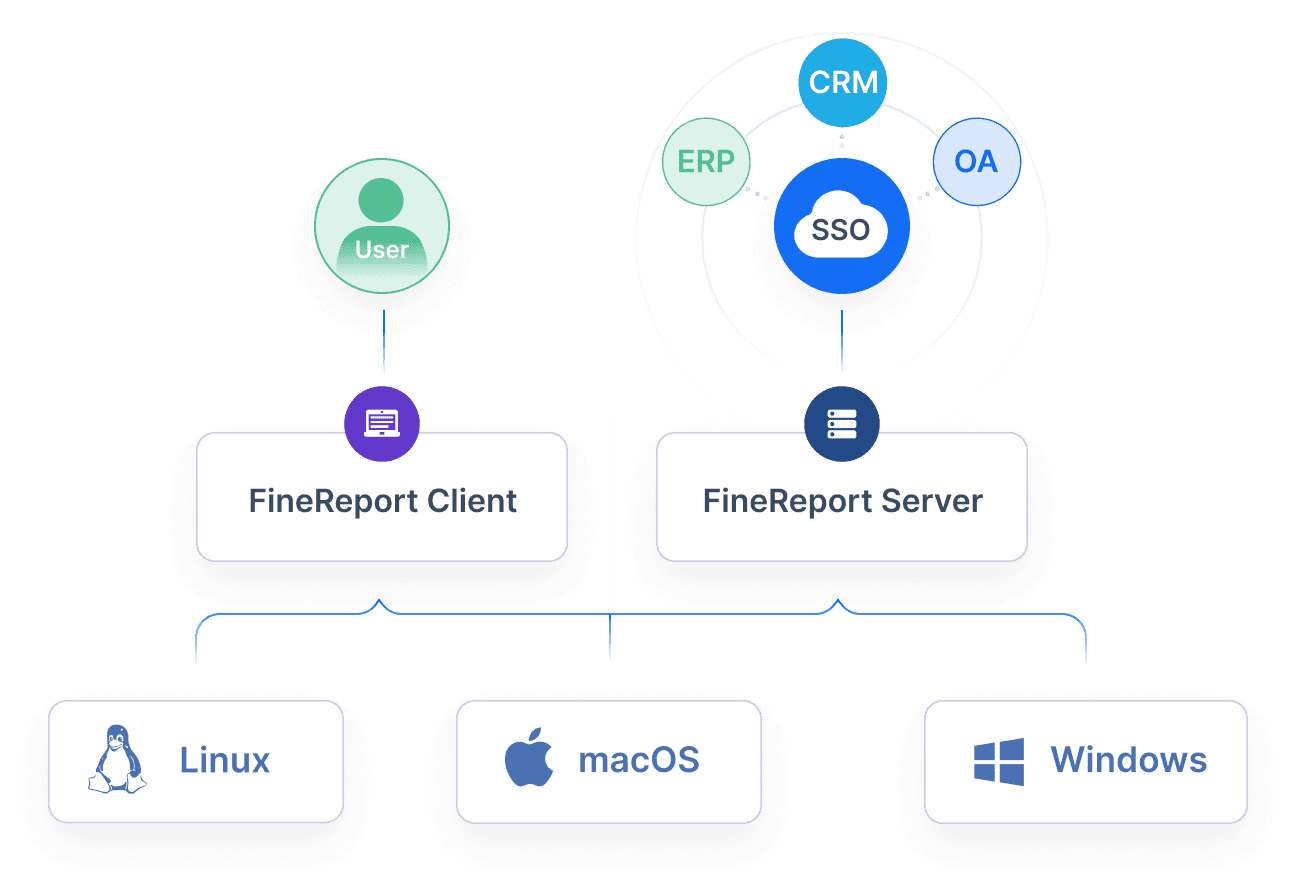
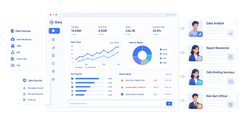
Enterprise financial reporting software helps finance teams turn data from ERP, consolidation, payroll, CRM, and other business systems into structured financial statements, management packs, board reports, dashboards, and audit-ready outputs. If you are evaluating options, you are likely trying to solve a practical problem: how to make reporting faster, more accurate, easier to govern, and more scalable as your organization grows.
That is exactly why an enterprise financial reporting software comparison needs to go beyond generic feature lists. Finance leaders usually are not just buying charts or templates. They are choosing how monthly close outputs, entity reporting, variance analysis, executive reporting, and compliance evidence will be produced for years to come.
Budget input, commentary collection, workflow forms where needed
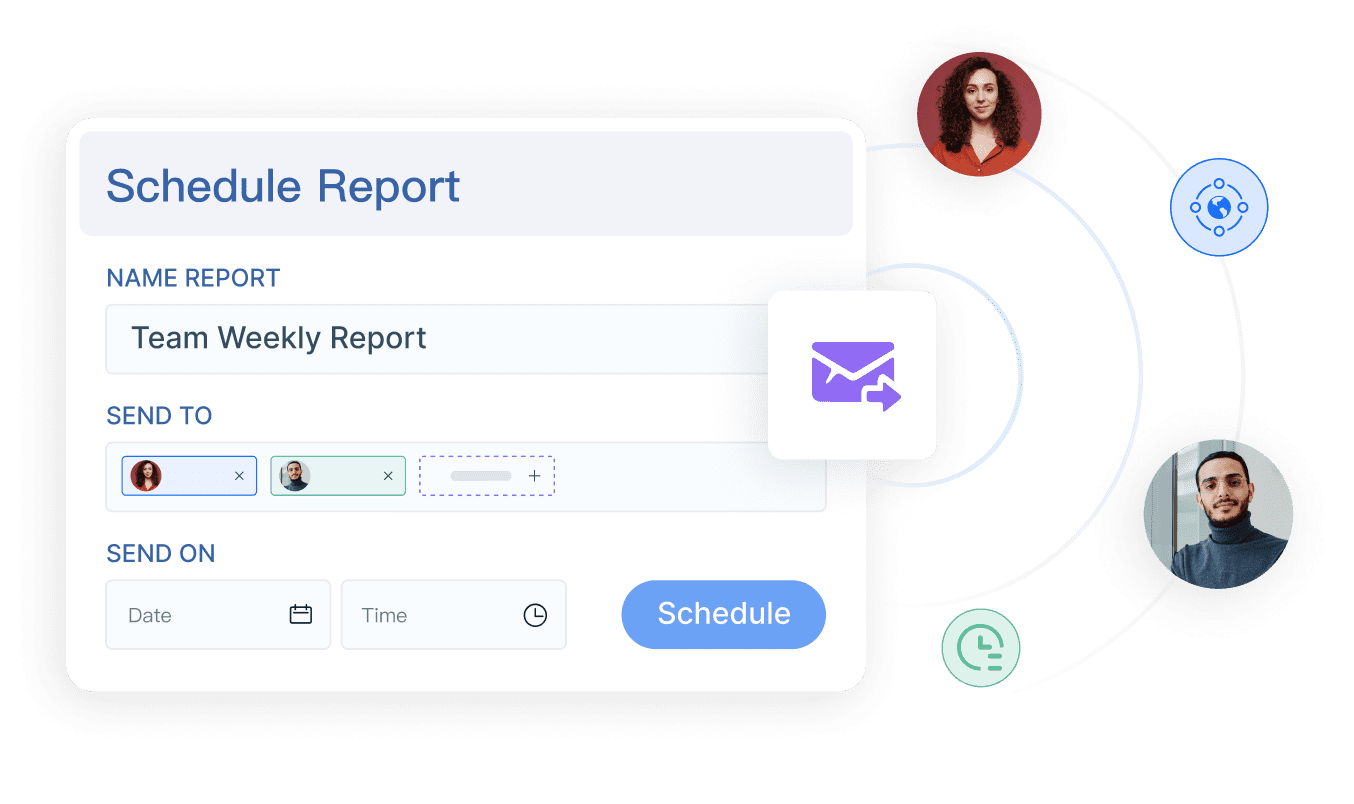
Scheduling and distribution
Automated delivery by role, entity, period, or report package
Governance and auditability
Permissions, version control, logs, and traceable changes
Recommended users
CFOs, controllership teams, FP&A, finance operations, and enterprise reporting teams
A strong platform is not necessarily the one with the longest feature list. It is the one that fits your reporting complexity, governance expectations, systems landscape, and future finance operating model.
Why this enterprise financial reporting software comparison matters
Many finance software evaluations go off track because buyers rely too heavily on polished vendor demos or generic “top tools” articles. Those can be useful for awareness, but they rarely show what matters most in actual finance operations: close-cycle pressure, entity complexity, approval controls, report distribution, and audit readiness.
A structured evaluation framework helps finance leaders compare platforms based on real reporting needs instead of surface-level impressions. For example, a product may look strong in dashboarding but be weak in board-ready report formatting. Another may have broad finance suite functionality but require more implementation effort than the reporting use case justifies.
It also helps to separate three categories that often get blended together:
Basic reporting tools: Often good for charts, self-service analysis, and simple dashboards, but may be limited for highly formatted financial statements or recurring reporting workflows.
Enterprise accounting platforms: Broader systems that manage transactional finance processes such as ledger, AP, AR, or consolidation, sometimes with reporting built in.
Finance management suites: Platforms that may combine reporting with planning, consolidation, workflow, and broader performance management.
The right comparison depends on your business complexity. A midsize group with one ERP and limited statutory complexity will evaluate differently from a multinational finance organization handling multiple entities, currencies, approval layers, and recurring board reporting.
The 9 criteria finance leaders should use before choosing a platform
1. Data integration and source connectivity
Financial reporting is only as reliable as the data pipeline behind it. Start by assessing how well the platform connects to your current systems:
ERP and general ledger
CRM and revenue systems
Payroll and workforce systems
Consolidation platforms
Data warehouses and operational databases
You should also clarify how refreshes work:
Real-time access for live operational visibility
Scheduled refreshes for standard reporting cycles
Manual refreshes where tighter control is preferred
For enterprise finance teams, the real challenge is rarely a single connector. It is the effort required to unify data across:
Legal entities
Currencies
Business units
Chart of accounts variations
Regional reporting structures
A platform that looks easy in a single-system demo may require substantial data preparation in a real enterprise environment. Ask vendors to show how they handle data mapping, transformation, and ongoing maintenance when your source systems change.
2. Reporting depth and dashboard flexibility
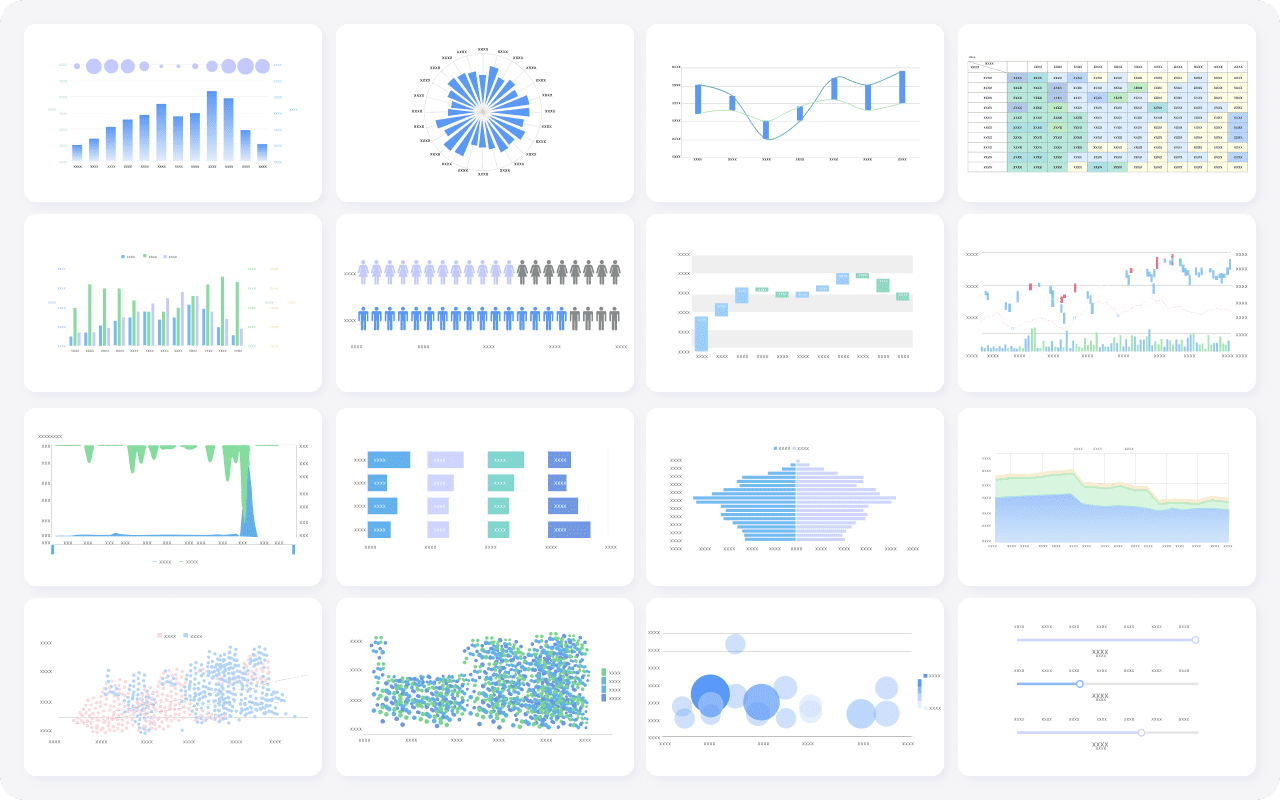
Not every finance report is a dashboard, and not every dashboard can replace a structured finance report. A good platform should support a range of outputs, including:
Board reports
Monthly management packs
KPI dashboards
Variance analysis reports
Ad hoc finance queries
Departmental performance views
Finance leaders should check whether finance users can build, update, and distribute reports without depending on IT for every layout change. This matters especially during quarter-end, planning cycles, or executive requests for new views.
Also evaluate how the tool handles:
Drill-down from summary to transaction detail
Multiple reporting dimensions
Entity and region filters
Comparative periods
Budget versus actuals
Consolidated and segment-level views
Tools focused mainly on BI visualization often handle exploratory dashboarding well. But finance teams frequently also need pixel-perfect, paginated, and printable reporting for recurring packs, statements, and controlled distributions.
If your reporting platform supports the close process, not just post-close display, this criterion becomes critical. Finance leaders should evaluate whether the software helps with:
Multi-entity consolidation
Intercompany eliminations
Ownership structures
Audit trails
Sign-offs and approvals
Version history
Documentation retention
In regulated or audit-sensitive environments, reporting is not just about presenting numbers. It is about proving where those numbers came from, what changed, who approved them, and which version was ultimately published.
Ask whether the reporting workflows help shorten the close cycle. For example:
Can recurring reports refresh automatically once data is ready?
Can commentary or exception notes be collected in a controlled workflow?
Can approvers review the same governed output rather than emailed spreadsheet variants?
A platform that reduces handoffs and version confusion can improve both reporting speed and control.
4. Spreadsheet compatibility and add-in capabilities
Finance teams still rely heavily on spreadsheets for analysis, review, and last-mile reporting. That does not mean spreadsheet-based reporting is wrong. It means the right platform should make spreadsheet use more governed and scalable.
Look at whether the product offers:
Excel integrations or add-ins
Controlled template refresh
Permission-based access to data
Standardized report templates
Central management of recurring outputs
This area is important because finance adoption often improves when users can work in familiar formats without giving up governance. But spreadsheet-heavy workflows can become fragile if too much reporting logic lives outside the governed platform.
Key questions include:
Are templates centrally managed?
Can data refreshes be controlled by role or schedule?
How are broken links, version confusion, and local file copies prevented?
Will the process still work across dozens or hundreds of monthly reports?
The best approach is often not “spreadsheet or platform.” It is a governed combination that keeps finance productive while reducing manual risk.
5. AI, automation, and anomaly detection
AI has become a major talking point in enterprise financial reporting software, but finance leaders should separate useful workflow support from vague marketing.
Documentation support for review and audit preparation
Automation often delivers value faster than flashy AI claims. If a platform can automatically refresh reports, burst distributions by entity, notify stakeholders, and maintain traceable outputs, that may be more valuable than generic “AI insights.”
For anomaly detection, ask specific questions:
What type of anomalies can be flagged?
Can finance teams define thresholds?
Are explanations transparent?
Can alerts be routed to the right owners?
Does it support action, or just surface observations?
In finance, trust matters more than novelty. Useful AI should fit existing workflows and improve review quality rather than create more noise.
6. Security, governance, and audit readiness
Enterprise finance reporting often involves highly sensitive information: payroll costs, margins, executive compensation, legal entity performance, and forward-looking projections. So governance cannot be an afterthought.
Review whether the platform supports:
Role-based access control
Segregation of duties
Encryption
Access logging
Change tracking
Evidence retention
Controlled publishing and distribution
Finance leaders should also consider whether the security model aligns with enterprise IT requirements. A reporting tool may be easy to adopt, but if it cannot fit your governance architecture, rollout may stall.
Audit readiness also depends on operational discipline. A strong platform should help answer:
Who changed a report?
When was it changed?
Which version was distributed?
What source data was used?
Which users had access to which outputs?
These are practical questions that matter during internal control reviews and external audits.
What works for one business unit often breaks at enterprise scale. A reporting platform should be evaluated not just for current needs, but for how well it handles growth in:
Local business unit visibility with centralized governance
Changes to hierarchy and ownership over time
Performance matters here too. A tool that feels responsive with one entity and a few dashboards may struggle when finance must run group-wide management packs, detailed sub-ledger summaries, or large-volume operational finance reports on a fixed schedule.
8. Implementation effort and change management
Even a strong product can underdeliver if implementation demands exceed your internal capacity. Finance leaders should compare:
Deployment timelines
Data migration effort
Model and template design complexity
Internal IT dependencies
Training needs for finance users
Post-go-live admin ownership
Do not just ask how fast the software can be implemented in ideal conditions. Ask what your team specifically must contribute:
Adoption across finance, controllership, FP&A, and executives often determines success more than raw product capability. A platform that finance can actually maintain and use consistently may outperform one that is theoretically broader but operationally heavier.
9. Total cost of ownership and long-term platform fit
Price alone is not enough. Total cost of ownership should include:
Licensing model
Implementation services
Integration work
Internal admin effort
Training and change management
Expansion costs as use cases grow
You should also ask whether the platform fits your future direction. For example:
Will reporting remain the main use case?
Are planning and forecasting expansion likely?
Do you expect more entities or acquisitions?
Will audit expectations increase?
Do executives want broader performance visibility?
Sometimes a finance suite makes sense because the organization wants a more unified platform strategy. In other cases, a specialist reporting platform may be the better fit because reporting flexibility, speed, and finance-led ownership are the top priorities.
These tools are often a strong fit when the core challenge is building and governing recurring reports across departments, entities, and stakeholders.
The trade-off is that they may not provide the full breadth of a finance suite or native transactional accounting capabilities. They typically depend on integration with your source systems rather than replacing them.
For organizations with an established ERP landscape, that can actually be an advantage. It lets finance improve reporting without replacing core systems.
Enterprise accounting and finance suites
Enterprise accounting and finance suites make sense when organizations want broader process standardization across accounting, close, consolidation, planning, and reporting.
Their strengths may include:
Unified finance data model
Native process coverage
Consolidation support
Broader finance workflow alignment
Shared controls across multiple finance functions
The trade-offs often involve:
Longer implementation cycles
Greater change management demands
Less reporting agility in some cases
More dependence on platform-wide design choices
If your organization is undergoing a larger finance transformation, an all-in-one route may be appropriate. If the immediate pain point is reporting agility and output quality, a specialist reporting layer may be more practical.
AI-forward and audit-ready reporting platforms
Some vendors now differentiate with AI, anomaly detection, or audit positioning. These capabilities can be useful, but finance leaders should test whether they improve real workflows.
Meaningful signs of value include:
Faster review of variances
Better exception routing
Reduced manual narrative preparation
Clear evidence trails
Easier recurring reporting administration
Warning signs include:
Generic AI claims with little finance-specific workflow value
Limited explainability
Features that are impressive in demos but hard to operationalize
Audit language used more as branding than as functional support
The right question is not whether the tool “has AI.” It is whether it helps your finance team close, review, explain, distribute, and defend results more effectively.
A practical scoring framework finance leaders can use
A simple vendor scorecard often leads to better decisions than long, unstructured demos. Start by assigning weights to each criterion based on your environment.
For example:
Data integration: high weight if you have multiple ERPs or fragmented source systems
Compliance and audit readiness: high weight for regulated industries or public-company environments
Reporting flexibility: high weight if board packs, management packs, and entity-level outputs change frequently
Implementation effort: high weight if internal IT resources are limited
Scalability: high weight if acquisitions or global expansion are likely
A useful shortlist matrix should compare vendors side by side on:
Capabilities
Implementation effort
Ongoing administration
User adoption likelihood
Governance fit
Total cost of ownership
Include cross-functional stakeholders in the evaluation:
The best enterprise financial reporting software is rarely the one with the most features on paper. It is the one that matches your operating model, systems landscape, reporting complexity, and future finance priorities.
Common mistakes to avoid during vendor evaluation
Finance software selections often fail for predictable reasons. Here are the most common pitfalls.
Choosing based on demos instead of real reporting scenarios
Vendor demos are designed to show ideal workflows. Your evaluation should include real examples such as:
Monthly close packs
Board reporting
Entity-level P&L analysis
Variance commentary workflows
Audit evidence requests
Ask vendors to recreate one of your real reporting scenarios, not just show a generic template.
Underestimating integration effort and data governance needs
A large feature list does not guarantee adoption. Finance teams need tools they can operate every month under time pressure. Prioritize workflows that are reliable, understandable, and sustainable.
Ignoring future requirements
Today’s reporting needs may be manageable. But what happens if you:
Acquire new businesses
Expand internationally
Face higher audit scrutiny
Add more stakeholders and reporting cycles
Need broader operational-finance integration
Choose a platform that can adapt, not just one that solves the next quarter.
Practical recommendations for choosing enterprise financial reporting software
Here are five practical steps finance leaders can use immediately:
Start with reporting outputs, not vendor categories. List the exact reports, packs, dashboards, and approval workflows you need each month.
Separate dashboard needs from formal reporting needs. Many teams need both exploratory visuals and structured, printable, governed financial reports.
Score integration effort explicitly. Do not treat connectivity as a checkbox; estimate the actual work to unify source data.
Test governance with a real use case. Review permissions, version control, scheduling, and auditability using an actual monthly report.
Evaluate admin ownership after go-live. Confirm whether finance can manage reports independently or whether every change requires technical support.
When FineReport is a practical option for enterprise financial reporting software
Tools in the finance software market serve different purposes. Some are strongest as ERP or finance suites. Others are built primarily for BI dashboards and analysis. But teams with complex reporting workflows may also need a dedicated enterprise reporting platform like FineReport.
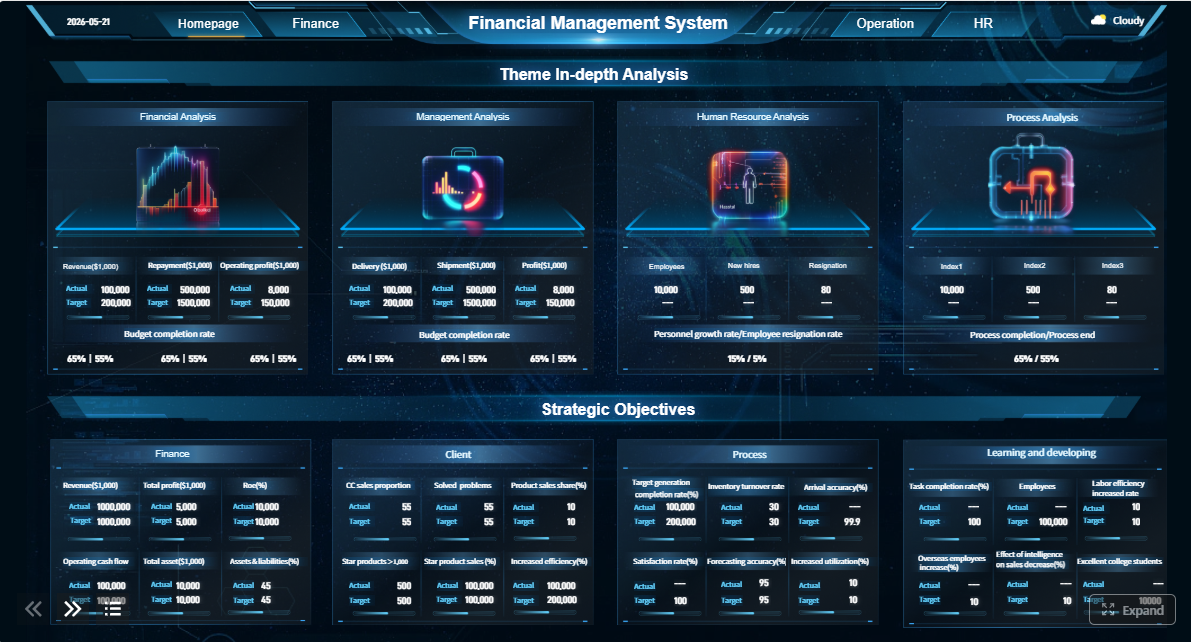
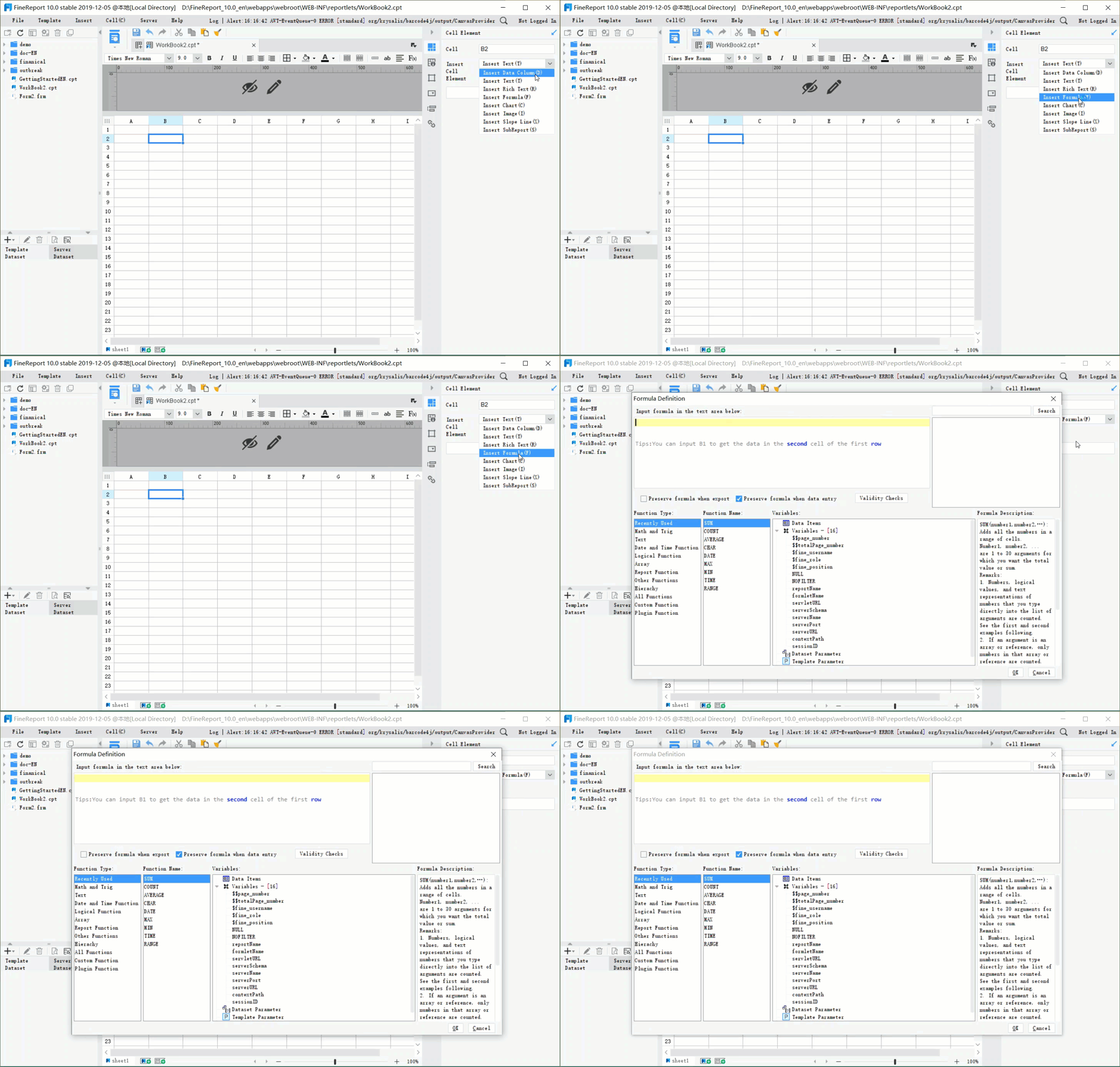
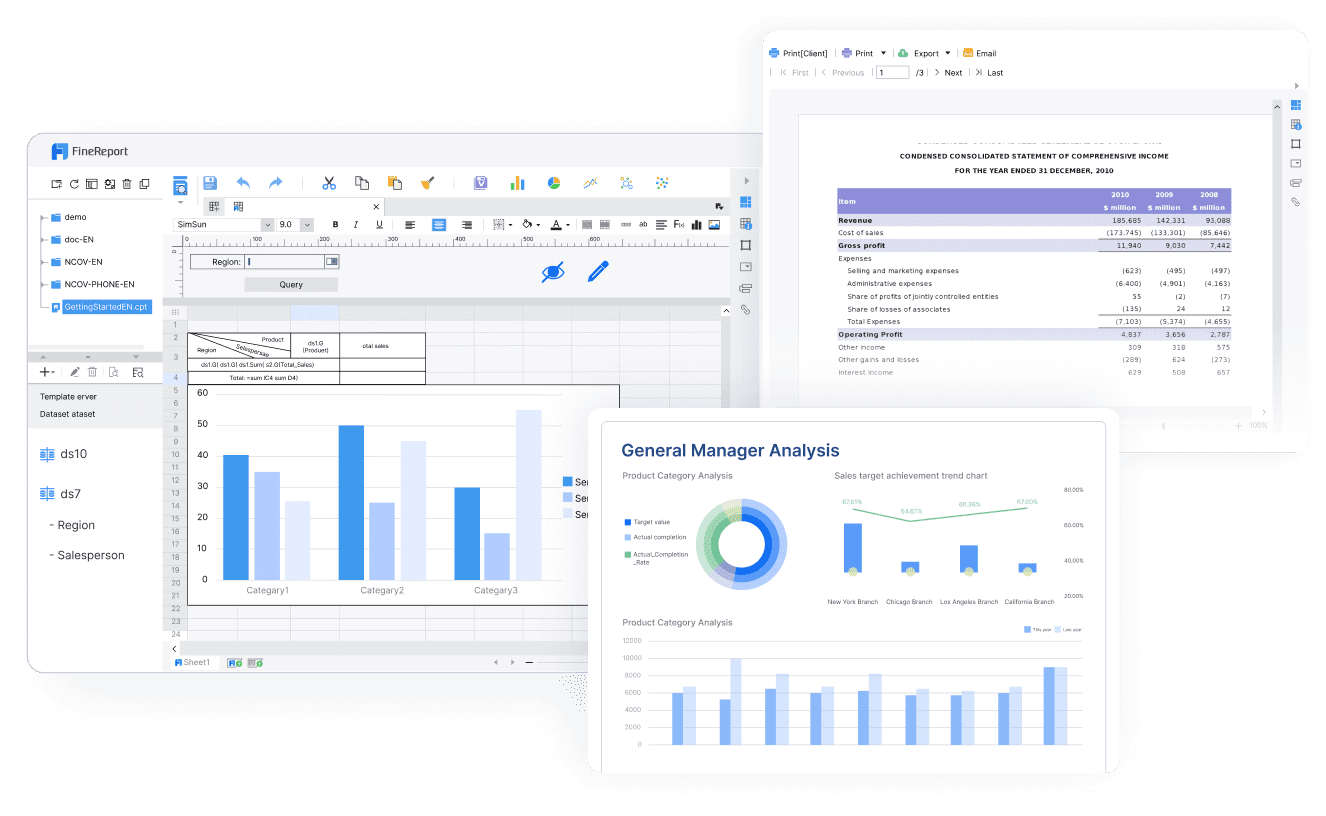
FineReport is particularly relevant when finance teams need to produce highly formatted, pixel-perfect reports, recurring paginated outputs, parameter-driven analysis, and dashboard-plus-report experiences in the same environment. That can make it useful for organizations that already have source systems in place but need a more flexible reporting layer for finance, management, and operational use cases.
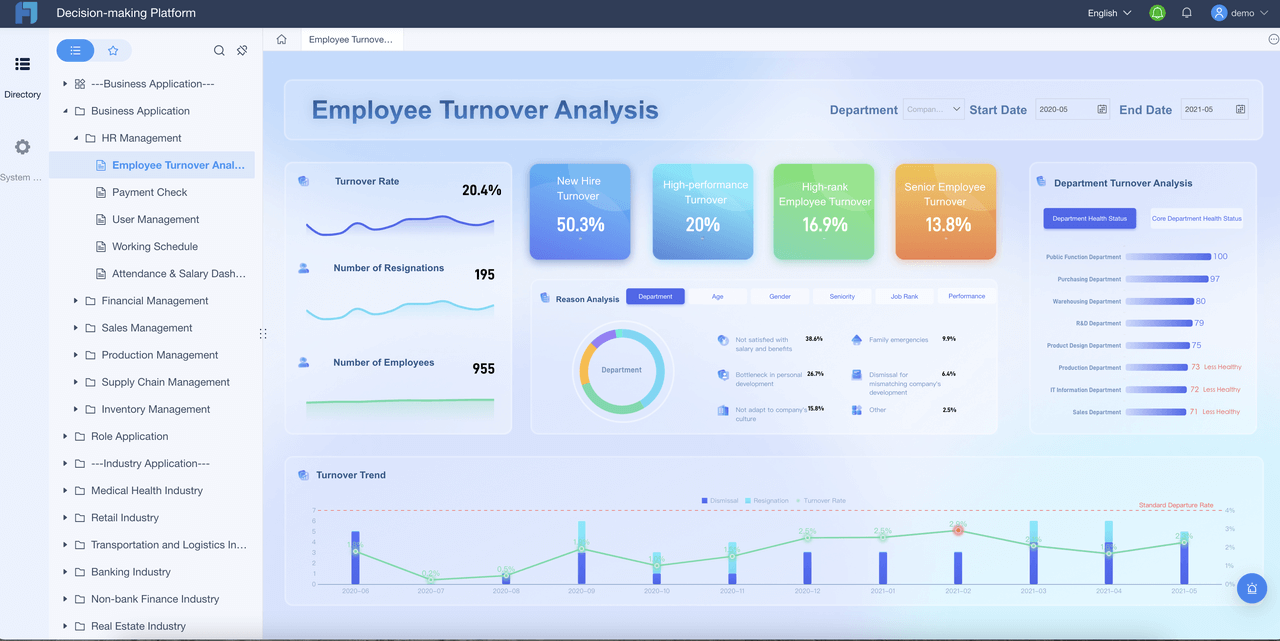
Combined dashboards and detailed reports for executives and finance teams
Form-based workflows where data entry or commentary collection is part of the process
Because FineReport is positioned as an enterprise reporting platform, it is especially relevant when reporting requirements go beyond visualization and require more controlled distribution, report formatting, and workflow flexibility.
Get Ready-to-Use Dashboard and Report Templates in Fine Gallery
For finance organizations comparing reporting specialists with broader finance suites, FineReport is not necessarily a replacement for every finance system. Instead, it can be a strong option when the main need is to improve how reports are designed, queried, scheduled, governed, and delivered across the enterprise.
That is especially true if your current environment already includes ERP, accounting, or consolidation systems, but your reporting process still depends too heavily on manual spreadsheet assembly, static exports, or inflexible layouts.
Final takeaway
An effective enterprise financial reporting software evaluation should reflect how finance actually works: across close cycles, board deadlines, entity structures, audit scrutiny, and executive reporting demands. The best platform for your organization depends on your source systems, governance requirements, reporting complexity, and future operating model.
If your priority is not just analytics, but also enterprise-grade reporting, pixel-perfect design, scheduled distribution, parameterized queries, and integrated dashboards and reports, FineReport is worth considering as part of your shortlist.
Focus on data integration, reporting flexibility, governance, auditability, and automated distribution. The best choice is the platform that matches your reporting complexity and operating model, not just the one with the most features.
Reporting quality depends on how reliably the platform connects ERP, payroll, CRM, consolidation, and warehouse data. Strong integration reduces manual work, improves accuracy, and helps create a consistent source of truth across entities and regions.
Yes, but capabilities vary widely by platform. Finance teams should verify how the software handles entity structures, currency conversion, account mapping, and ongoing changes in source systems.
Look for role-based permissions, version control, approval workflows, change logs, and traceable report updates. These features help finance teams maintain control, support compliance, and defend reported numbers during audits.
Product Trial
FineReport
Pixel-perfect reports · Interactive dashboards · Easy data entry · Digital twins