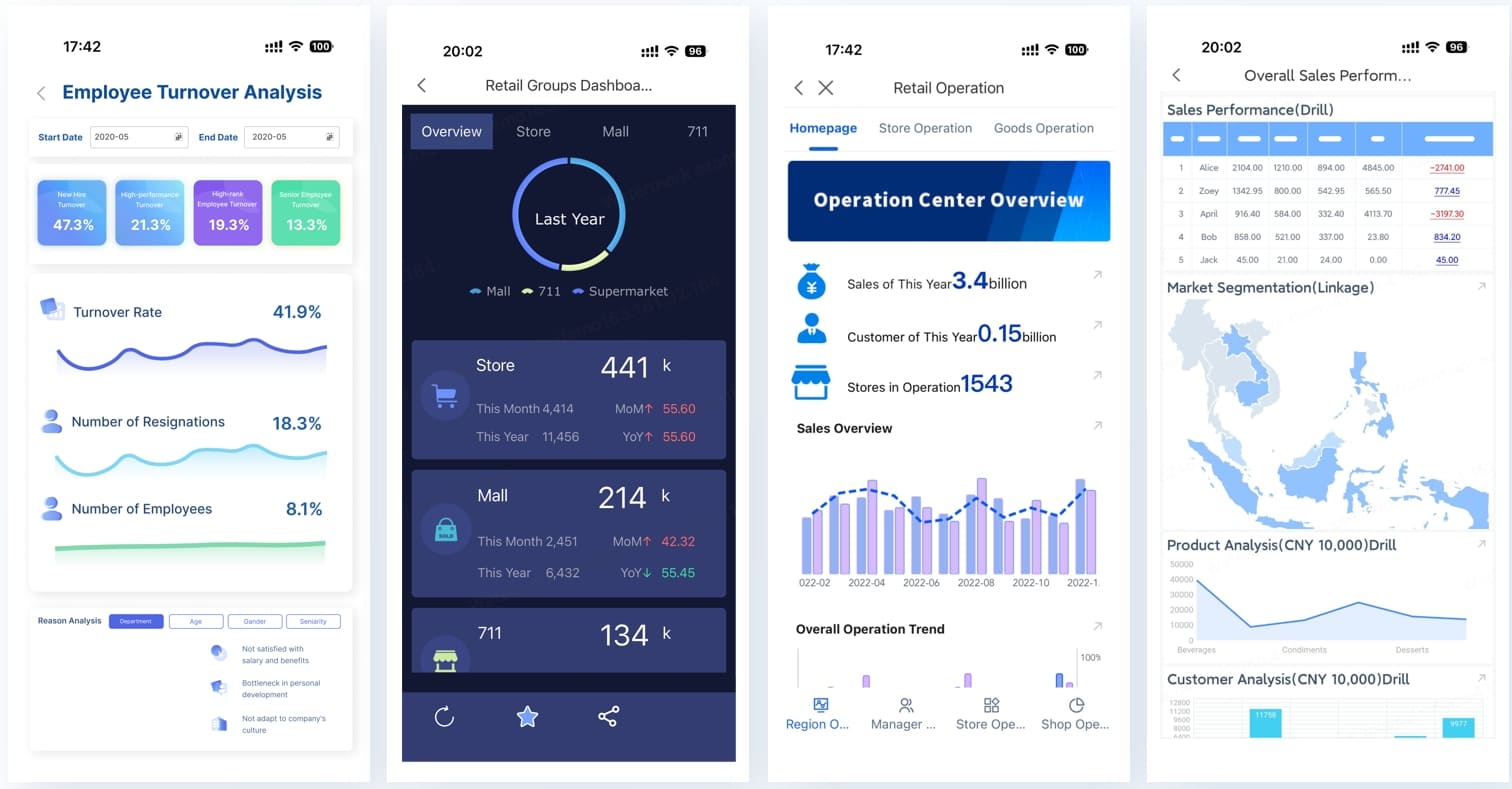
HR compliance reporting is no longer a side task handled once a year. For enterprise employers, it is a cross-functional operating discipline that affects audit readiness, legal exposure, workforce visibility, and executive risk management. The challenge is not just filing forms. It is maintaining the reporting and operational cockpit needed to track employee records, workforce composition, benefits coverage, safety incidents, and state-specific pay data across multiple systems and jurisdictions.
With FineReport + Dora, teams can ask for a report summary in chat, generate structured narratives from trusted report assets, receive scheduled briefings, and push exceptions to the right owner. That makes HR compliance reporting more actionable for HR leaders, payroll teams, legal counsel, and operations owners who need timely answers instead of last-minute spreadsheet consolidation.
Click To Try The Dashboard
All reports in this article are built with FineReport
HR compliance reporting: the core filings enterprises need to track
Enterprise HR compliance reporting covers the recurring and event-driven records, disclosures, logs, and filings that employers must maintain or submit under federal and state employment rules. In practice, this includes document retention, workforce demographic reporting, workplace injury logs, health coverage reporting, and increasingly detailed state pay data programs.
For large and multi-state employers, the risk grows because requirements do not operate on one calendar or one data model. A company may need to:
retain I-9 records based on hire and termination timing
group workforce data for EEO-1 reporting
maintain OSHA logs at the establishment level
align ACA eligibility, offers of coverage, and payroll data
respond to different state pay data reporting rules by employee location, category, or compensation fields
That is why hr compliance reporting should be treated as a governed reporting program, not a collection of ad hoc exports.
A merger, remote-work shift, or payroll system change can quickly create filing errors if reporting logic is not standardized. In many enterprises, the issue is not lack of data. It is lack of trusted, reusable reporting assets and clearly governed definitions.
How obligations differ across major HR compliance frameworks
The same employee can appear across multiple compliance workflows, but the reporting purpose is different in each framework:
I-9: verifies employment eligibility documentation and retention obligations
EEO-1: groups workforce data by demographic categories and job classifications
OSHA: records injuries and illnesses and triggers event-based incident reporting in certain cases
ACA: tracks coverage offers, affordability, and employer reporting obligations
State pay data: analyzes compensation and workforce composition under state-specific rules
Because each framework has different rules, employers need reporting views designed for the filing purpose, not just generic HR dashboards.
Which teams usually share responsibility
Few enterprises can manage hr compliance reporting through HR alone. Responsibility is commonly shared across:
Payroll: wage and hours data, compensation elements, employee counts
Benefits: coverage offers, enrollment and affordability support
Legal and compliance: interpretation, review, audit response, jurisdiction monitoring
Safety or operations: workplace incident logging and establishment-level OSHA readiness
IT and data teams: system integration, data quality, permissions, report automation
This is also where the role of IT is changing. In the AI era, IT should not be manually rebuilding every HR compliance report. Instead, it should optimize data connections, semantic rules, permissions, report templates, and reusable AI Skills on top of trusted reporting assets.
Form I-9 compliance is primarily about completion accuracy, retention discipline, reverification when required, and the ability to present records during an audit or agency request.
What employers must complete, retain, reverify, and present
At a high level, employers need to ensure:
Section 1 is completed by the employee on time
Section 2 is completed by the employer or authorized representative within the required timeframe
reverification is handled where applicable
records are retained for the proper period
forms and supporting processes can be produced quickly during an inspection
A strong I-9 reporting cockpit should track:
missing or incomplete forms
late completion
upcoming reverification dates
terminated employee retention countdowns
storage location and document status
audit exceptions by business unit or location
Report Element: I-9 completion status Definition: Whether each active employee has a properly completed I-9 with required sections completed on time. Business value: Reduces audit exposure and helps HR identify missing or late records before an inspection. AI use:Dora can summarize overdue forms, list locations with the highest exception counts, and push follow-up tasks to responsible HR owners.
Report Element: Reverification queue Definition: Employees whose work authorization requires monitoring or reverification. Business value: Prevents missed deadlines and business disruption. AI use:Dora can generate a scheduled reverification briefing and explain which cases need action this month.
Report Element: Retention eligibility Definition: Terminated employee I-9s that are eligible for continued retention or disposal based on timing rules. Business value: Supports compliant retention while reducing unnecessary record storage. AI use:Dora can flag records approaching retention thresholds and produce a review list for compliance teams.
Common recordkeeping errors that increase exposure
Typical enterprise errors include:
missing signatures or dates
late completion
using inconsistent document review procedures
failure to track reverification requirements
poor separation of active and terminated records
inability to retrieve forms by employee, site, or audit scope
These are exactly the kinds of exceptions that should appear in a governed FineReport exception list rather than being discovered only when counsel asks for an urgent audit file.
EEO-1 workforce reporting
EEO-1 reporting requires covered employers to submit workforce data grouped by job category, race or ethnicity, and sex, using the applicable reporting structure.
Which employers must file and how data is grouped
For enterprises that fall within filing scope, the operational challenge is not only counting employees. It is ensuring that each employee is mapped accurately to:
the correct establishment
the correct job category
the correct demographic grouping
the correct reporting period logic
An enterprise EEO-1 cockpit should make visible:
headcount by establishment
demographic breakdowns by category
employees with missing demographic fields
location or entity mapping anomalies
year-over-year shifts caused by reorganizations
Report Element: EEO job category mapping Definition: Assignment of employees to the required reporting categories used for workforce grouping. Business value: Improves filing accuracy and supports defensible workforce reporting. AI use:Dora can explain where category assignments changed and summarize which business units need cleanup before filing.
Report Element: Demographic data completeness Definition: Availability and usability of required race, ethnicity, and sex data fields. Business value: Reduces incomplete submissions and manual remediation work. AI use:Dora can identify records with missing fields and produce a prioritized exception summary.
Report Element: Establishment roll-up accuracy Definition: Whether employees are associated with the proper reporting location and entity. Business value: Prevents distorted counts caused by entity restructuring or remote work complexity. AI use:Dora can compare current reporting structure against the prior cycle and highlight unusual shifts.
How organizational changes can affect reporting accuracy
EEO-1 data often becomes inaccurate after:
mergers or acquisitions
new legal entity creation
location closures
remote-worker reassignment
job architecture redesign
HRIS migration
These changes may look operationally minor but can materially affect reported counts. That is why enterprises need a reporting foundation that preserves definitions and supports controlled changes over time.
OSHA injury and illness reporting
OSHA compliance can involve both continuous recordkeeping and event-driven reporting. Those are different operational tasks and should be managed differently in enterprise reporting.
Which logs and summaries employers may need to maintain
Depending on employer profile and reporting obligations, organizations may need to maintain establishment-level injury and illness records and prepare annual summaries. They may also need processes that identify incidents requiring agency notification within a specific timeframe.
A practical OSHA reporting view should track:
recordable incidents by site
open case review status
case classification consistency
annual summary preparation status
posting readiness
incidents that may trigger immediate reporting workflows
Report Element: Recordable case log status Definition: The ongoing completeness and classification status of work-related injury and illness cases. Business value: Improves consistency in safety records and supports annual summary preparation. AI use:Dora can summarize case trends, identify sites with unusual increases, and prepare a weekly safety briefing.
Report Element: Annual summary readiness Definition: Whether the required annual summary is complete, approved, and ready for posting or internal review. Business value: Helps safety and operations teams avoid last-minute compilation. AI use:Dora can notify responsible owners of missing site submissions and push a consolidated readiness update.
Report Element: Incident escalation trigger Definition: Cases that may require immediate evaluation for event-based reporting obligations. Business value: Supports faster internal escalation and reduces the chance of missed reporting triggers. AI use:Dora can push alerts when an incident matches predefined escalation conditions.
Ongoing recordkeeping versus event-based reporting
This distinction matters:
Ongoing recordkeeping focuses on maintaining accurate logs and summaries over time.
Event-based reporting is triggered by specific incidents that may require rapid assessment and agency notification.
Enterprises often fail when they manage both with email alone. A better model is a FineReport operations cockpit with threshold rules and Dora follow-up workflows for exception escalation.
ACA employer reporting
ACA employer reporting depends on reliable alignment between workforce eligibility, coverage offers, affordability logic, and employee statement support.
What large employers need to track
Applicable large employers typically need visibility into:
full-time status measurement
offer of coverage tracking
affordability support logic
enrolled versus offered populations
employee statement readiness
filing package completeness
Because these data points often live across HRIS, payroll, and benefits systems, ACA reporting is a classic example of why hr compliance reporting must be cross-functional.
Report Element: Coverage offer tracking Definition: Whether eligible employees received the appropriate offer of coverage during the reporting period. Business value: Supports employer reporting obligations and internal compliance validation. AI use:Dora can summarize employees with missing offer records and explain population differences by month.
Report Element: Affordability support view Definition: The payroll and benefits data needed to evaluate affordability under the employer’s approach. Business value: Helps finance, payroll, and benefits teams reconcile reporting support before filing. AI use:Dora can create a structured narrative explaining affordability exceptions and their possible root causes.
Report Element: Employee statement fulfillment Definition: Tracking for required employee-facing forms, requests, or distribution support processes. Business value: Improves readiness for employee inquiries and filing season operations. AI use:Dora can generate a briefing on outstanding statement issues and push follow-up tasks.
payroll and benefits systems using different eligibility logic
coverage offer records not matching payroll periods
entity changes not reflected in filing views
FineReport can standardize the reporting layer across those systems. Dora can then help users consume that reporting layer through chat, summaries, exception pushes, and periodic briefings.
State pay data reporting
State pay data reporting is one of the most dynamic areas of HR compliance reporting because definitions, required fields, thresholds, and covered employers can vary by jurisdiction.
Why state requirements vary
State programs may differ in areas such as:
which employers must file
which employees to include
how job categories are mapped
which compensation elements to report
how labor hours are defined
whether remote employees are counted based on residence or work location
what demographic fields are required
That variability means enterprises cannot assume one state report can be copied into another filing with minor edits.
Report Element: Jurisdictional employee inclusion rules Definition: The logic used to determine which employees belong in a state-specific pay data submission. Business value: Prevents under-reporting or over-reporting across multi-state workforces. AI use:Dora can explain inclusion logic in plain language and highlight records that fall into ambiguous categories.
Report Element: Compensation field standardization Definition: The mapping of payroll earnings and compensation data into state-specific reporting elements. Business value: Reduces manual adjustment and improves consistency between states. AI use:Dora can summarize mapping exceptions and identify fields requiring payroll review.
Report Element: Location and remote-work mapping Definition: Rules that assign employees to the correct reporting state and establishment context. Business value: Supports accurate multi-state reporting as work models change. AI use:Dora can flag employees whose location attributes conflict across systems.
How enterprises can prepare for changing state rules
Enterprises should assume state pay data rules will continue to evolve. The practical response is to build:
reusable compensation and job architecture mappings
location governance for remote and hybrid workers
state-specific reporting templates
periodic legal review of filing scope
exception dashboards before filing windows open
The data, documents, and systems enterprises should standardize
A sustainable hr compliance reporting program starts with standard inputs. If data definitions are unstable, every filing cycle becomes a new reconciliation project.
Core employee data fields to validate
The most important fields to validate usually include:
employee ID and unique identifiers
legal entity
work location and establishment mapping
hire, rehire, termination, and status dates
job title and job category
pay rate and compensation elements
hours worked or hours basis
benefits eligibility and offer indicators
demographic data where lawfully collected and applicable
safety incident identifiers and case status where relevant
Retention rules also matter. Sensitive employment records should have:
Cross-functional workflows that reduce reporting errors
Good reporting depends on workflow, not just fields. Enterprises should define how data moves between:
HRIS
payroll
recruiting
benefits administration
safety systems
legal review
compliance sign-off
A reliable workflow typically includes:
system data refresh and validation
exception reporting by owner
business review and correction
legal or compliance review where needed
filing package preparation
post-filing archive and lessons learned
When these handoffs are informal, errors multiply. FineReport helps standardize the reporting workflow. Dora can assist by pushing scheduled summaries, unresolved exception lists, and owner-specific follow-up prompts.
Common system gaps to address before filing season
Most enterprises already know where the trouble spots are. Common gaps include:
duplicate employee records
inconsistent job codes
outdated location hierarchies
missing demographic fields
weak links between payroll and benefits data
manual incident logs outside core systems
spreadsheet workarounds without audit trails
These issues rarely disappear on their own. They need to be surfaced in operational reporting before the filing calendar becomes urgent.
Key deadlines, risk areas, and audit readiness for 2026
Deadlines change, and some obligations are annual while others are periodic or triggered by specific events. The safest enterprise practice is to build a living filing calendar and review it regularly with legal, HR, payroll, and compliance stakeholders.
Key HR compliance dates for 2026
For 2026 planning, enterprises should build a calendar that separates:
annual obligations: recurring filings, annual summaries, and standard employer statements
poor treatment of reorganizations and acquired entities
remote-worker misclassification by reporting jurisdiction
High-risk periods include:
acquisitions and divestitures
HRIS or payroll migration
return-to-office or remote-work policy shifts
entity consolidation
benefit plan redesign
rapid hiring in new states
How to prepare for audits and agency requests
Audit readiness is not just document storage. It is the ability to retrieve trusted records, explain reporting logic, show ownership, and document corrective action.
Enterprises should prepare by:
organizing supporting records by framework and year
designating response owners and backups
documenting review and approval steps
retaining report snapshots used for filing
performing internal spot checks
logging corrective actions and closure dates
An audit-ready reporting cockpit should answer questions like:
For most enterprises, the reporting problem is not only how to produce compliance reports. It is how to help decision-makers consume them quickly, understand exceptions, and take action before deadlines are missed. This is where Dora, FanRuan’s enterprise Data Agent platform, adds practical value on top of FineReport.
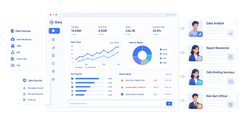
FineReport provides the trusted reporting and semantic foundation: formatted reports, cross-system compliance dashboards, management views, exception lists, and workflow-ready report templates. Dora turns those assets into a scenario-specific AI assistant and AI digital employee for recurring compliance work.
In this HR compliance scenario, the most relevant Dora digital employees are:
Daily Briefing Secretary for recurring compliance status updates
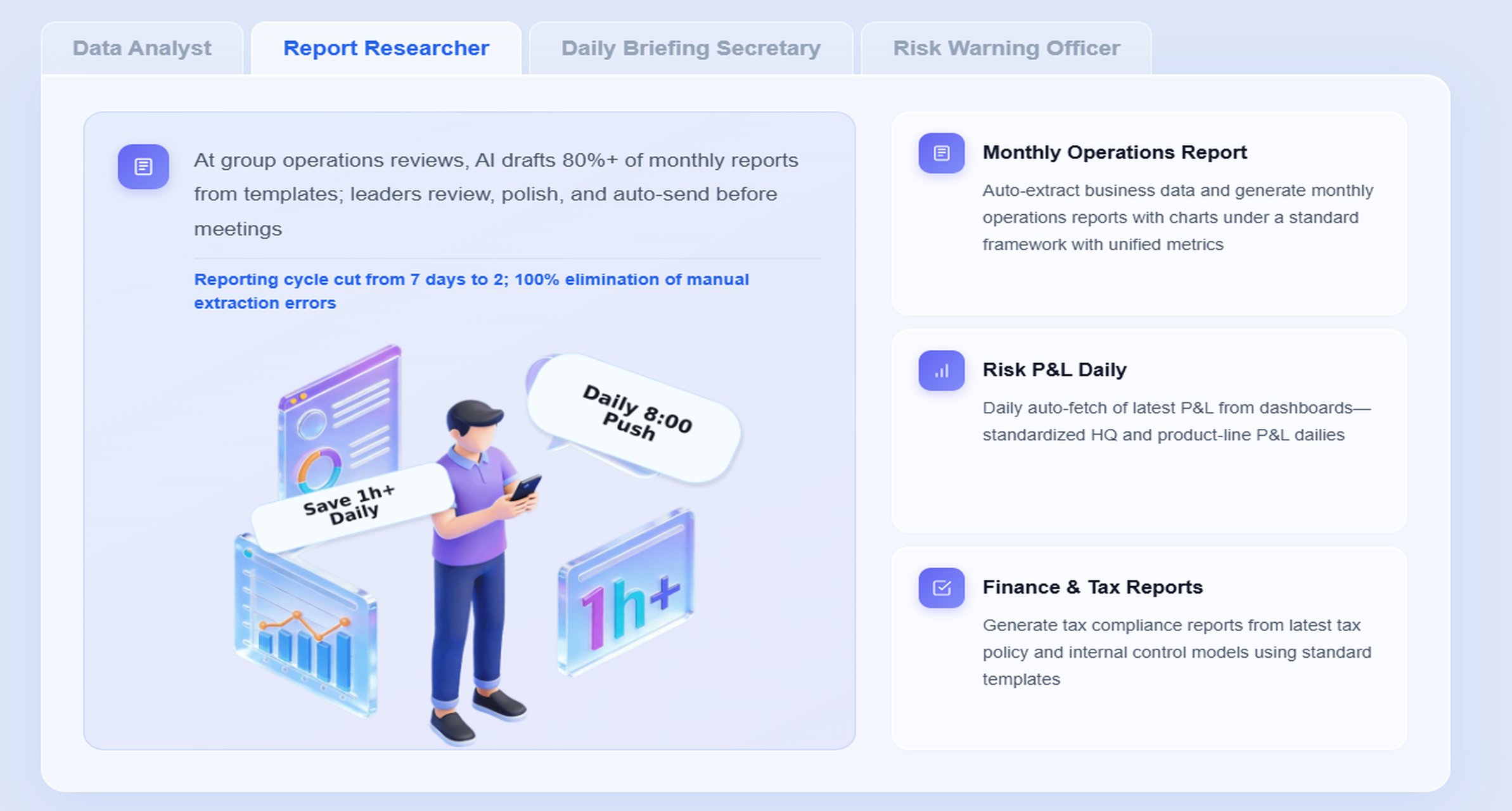
Report Researcher for structured report summaries from dashboards and filing views
Risk Alert Officer for exception monitoring, threshold breaches, and owner notification
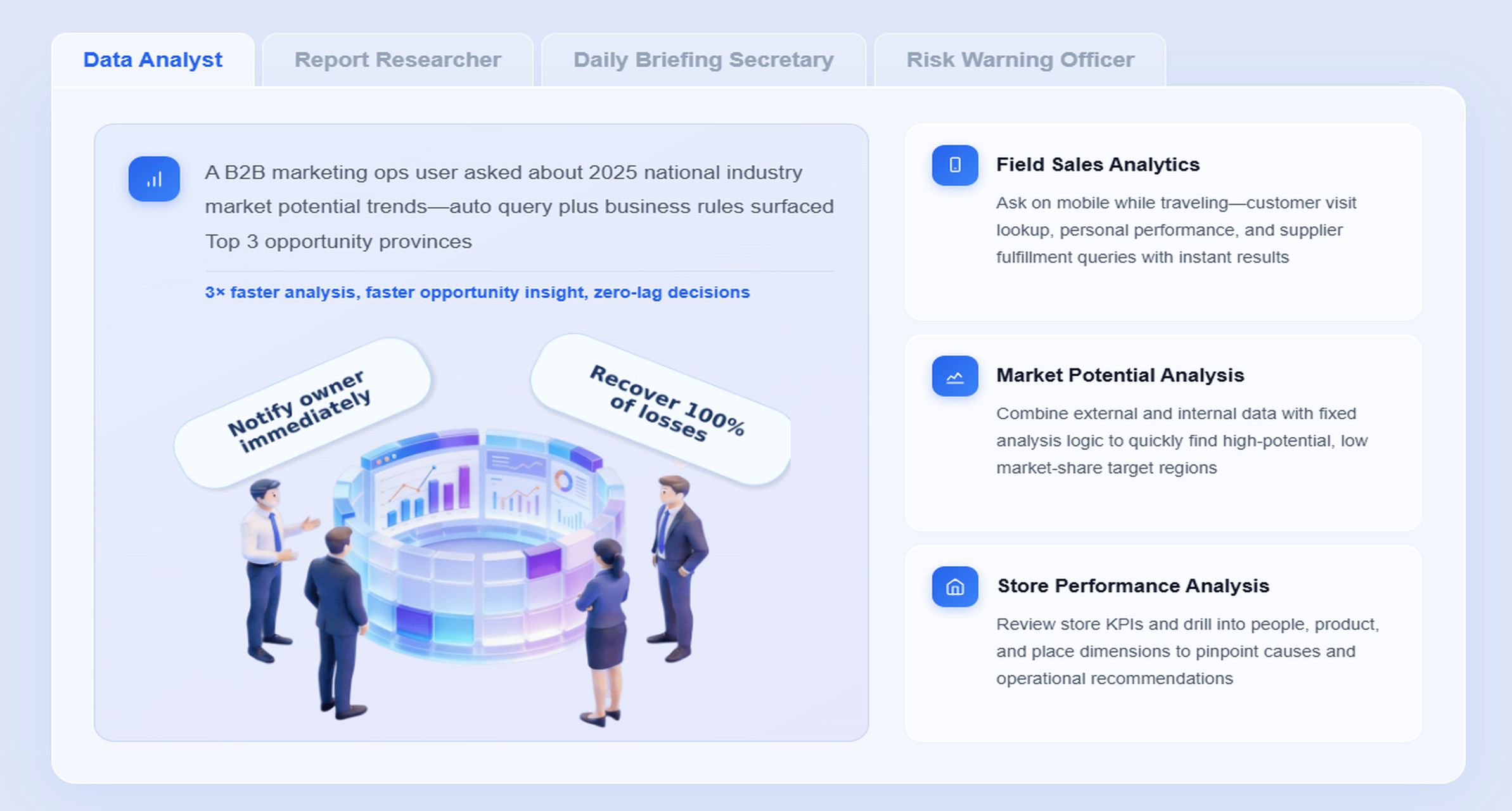
Data Analyst digital employee for natural-language Q&A over governed HR compliance reports
A chat-style example for HR compliance reporting
A compliance leader or HR operations manager could ask:
“Summarize our 2026 HR compliance reporting status, highlight missing I-9 reverifications, ACA coverage offer exceptions, OSHA sites with open incident reviews, and states where pay data fields are incomplete. Then list the owners who need follow-up this week.”
That is not a generic chatbot interaction. It is a governed Agentic BI workflow running on trusted reporting assets, semantic definitions, permissions, and reusable Skills.
Understand KPI definitions and business rules
It applies governed semantic logic for terms such as active employee, establishment, offer of coverage, reverification queue, and state inclusion rules.
Generate a structured report summary Dora produces a chart-based answer or management-style narrative covering filing readiness, overdue tasks, and exception concentration by team or location.
Detect exceptions and priority risks
It identifies threshold breaches such as missing forms, incomplete demographic fields, unresolved incident logs, or state pay data gaps.
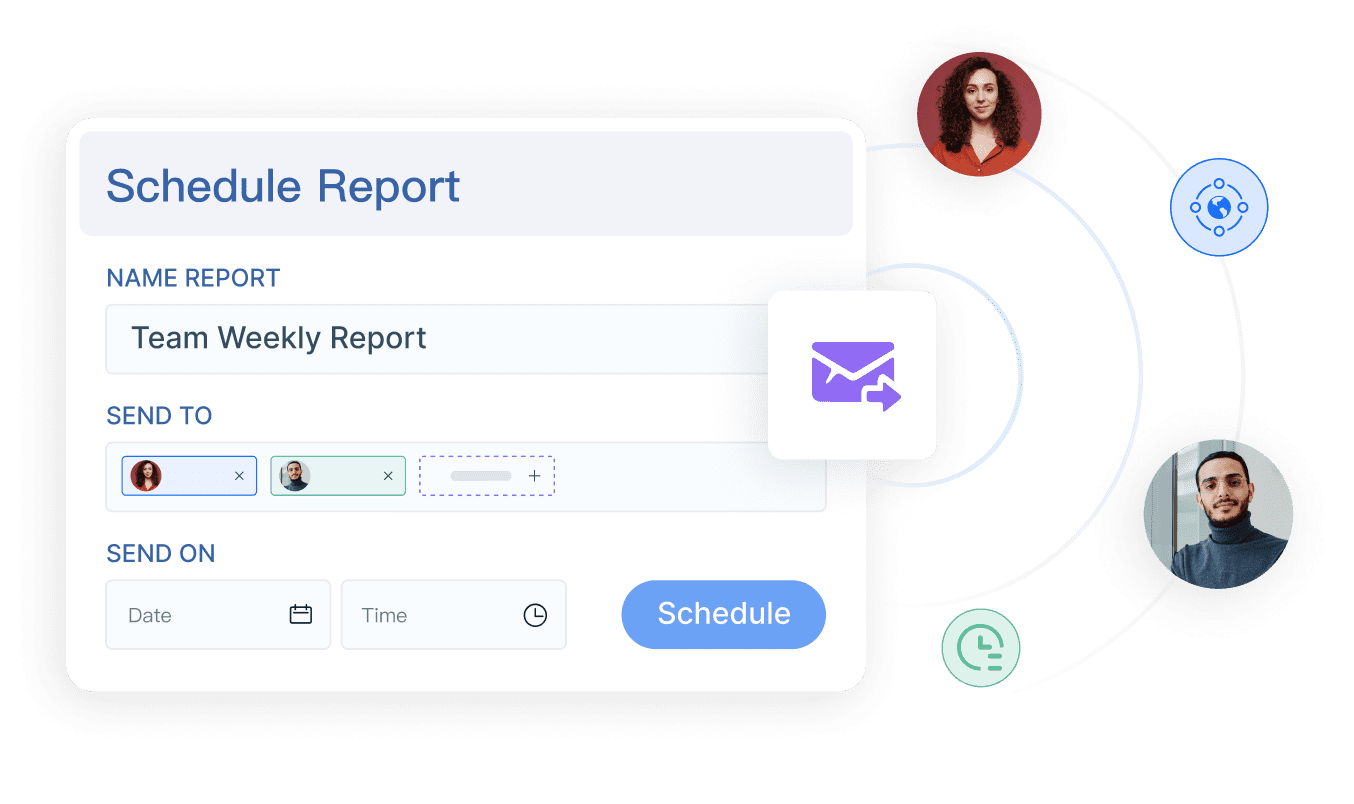
Push alerts and follow-up tasks Dora sends scheduled summaries or owner-specific notifications to HR, payroll, benefits, safety, or legal stakeholders.
Create follow-up records for review
It prepares a daily or weekly compliance briefing for management and keeps a record of outstanding issues for subsequent review.
Why this works in an enterprise setting
Many AI demos fail in HR because they rely on raw prompts over ungoverned data. That creates risk. Dora is designed for better enterprise landing capability because it works with:
skills-based execution for more controllable workflows
auditable follow-up paths
more stable execution than prompt-only agent patterns
This matters for HR compliance reporting because teams need consistency, not creative output. They need scheduled summaries, chart explanations, exception pushes, and clear ownership routing.
Example of AI-assisted report consumption by persona
For executives
Executives do not want to inspect five different compliance systems. They want a concrete risk summary. Dora can act as a Daily Briefing Secretary that delivers:
filing readiness by framework
top unresolved risks
business units with repeated exceptions
pending deadlines requiring leadership attention
Dora is not an AI experiment. It is a landed digital employee for recurring reporting work such as monthly compliance summaries, audit-readiness updates, safety exception overviews, and pay data preparation follow-up.
IT’s role shifts from manual report production to governed enablement. FineReport standardizes data connections, report templates, and semantic logic. Dora uses those assets through controlled Skills, reducing fragile one-off reporting requests and improving auditability.
For business users
HR, payroll, and operations users get lower friction. Instead of searching across reports, they can ask a natural-language question and receive a structured report summary linked back to the source FineReport asset. That improves timeliness without bypassing governance.
Best practices for building a sustainable HR compliance reporting program
A strong enterprise program is built on repeatability, ownership, and governed reporting design.
A practical compliance checklist for HR teams
Use a recurring checklist that covers:
applicable federal and state reporting obligations
system of record for each required data element
named owners for preparation, review, approval, and response
filing windows and incident-driven triggers
validation rules and exception thresholds
document retention and audit support location
post-filing review and remediation steps
This keeps hr compliance reporting visible throughout the year instead of forcing a scramble during filing season.
Best practices that strengthen reporting accuracy
1. Standardize definitions, templates, and exception rules
Define key business terms once and reuse them across reporting. This includes employee status logic, location mapping, job category standards, compensation classifications, and incident definitions. FineReport is well-suited to building these governed report templates and operational cockpits.
2. Build a semantic layer inside the reporting workflow
AI value depends on trusted semantics. If “active employee” means one thing in payroll and another in HRIS, both reporting and AI summaries will break. FineReport provides the governed reporting foundation, while Dora uses that semantic layer for more reliable chart-based answers and structured report summaries.
3. Start with high-value recurring reports
Do not try to automate every compliance report at once. Start with recurring, high-friction scenarios such as:
These scenarios are easier to operationalize and show value quickly.
4. Preserve permission governance and human review
AI outputs should respect FineReport access boundaries. Dora should not expose sensitive employee data outside approved permissions. For sensitive narratives or filing support packages, keep human review in the process and gradually expand Skills after governance is proven.
5. Treat data quality as part of AI implementation
Dora can improve report consumption, but it cannot fix broken source logic by itself. Data quality, retention discipline, KPI governance, and report standardization remain essential. That is why enterprises with mature reporting assets get stronger AI outcomes.
Building this manually is complex. FineReport helps teams standardize trusted reports, operational cockpits, templates, and reporting workflows. Dora turns those assets into an AI assistant that can answer report questions in chat, generate structured summaries, push scheduled briefings, monitor exceptions, and follow up with responsible owners.
For HR compliance reporting, that means enterprises can build a governed foundation for:
I-9 record status and reverification views
EEO-1 workforce grouping dashboards
OSHA logs and exception monitoring
ACA readiness and cross-system reconciliation
state pay data completeness and jurisdiction-specific filing support
annual compliance calendars and audit-readiness cockpits
natural-language query over trusted reporting assets
chat-based AI assistant for report consumption
retrieval of reports, cockpits, metrics, and exception lists
structured report summaries and management narratives
scheduled daily or weekly briefings
exception alerts and push notifications
digital employees for repeatable compliance workflows
skills-based execution for more controllable and auditable AI workflows
FineReport + Dora is not only a reporting upgrade; it is a practical fourth-generation Agentic BI path. FineReport provides governed reports and operational cockpits. Dora provides the AI assistant layer for scenario execution, with more controlled Skills, lower token waste, faster execution paths, and more stable workflows than prompt-only agents.
Get Ready-to-Use Dashboard Templates in Fine Gallery
The strongest Dora pitch is scenario + product + service: FineReport provides the trusted reporting foundation, Dora provides the AI digital employee, and implementation service connects data, governance, semantic setup, Skills, report templates, permissions, and rollout.
For enterprise teams struggling with hr compliance reporting across I-9, EEO-1, OSHA, ACA, and state pay data obligations, that combination is what makes the solution practical. It does not replace compliance judgment. It helps teams consume reports faster, detect exceptions earlier, coordinate owners more effectively, and operate with a more reliable reporting foundation.
It typically covers I-9 records, EEO-1 workforce demographics, OSHA injury and illness logs, ACA coverage reporting, and state pay data requirements. Enterprise teams also need supporting audit trails, retention controls, and exception tracking across systems.
Multi-state employers face different filing deadlines, data definitions, retention rules, and reporting formats by jurisdiction. Remote work, multiple establishments, and separate payroll or HR systems can make inconsistencies harder to spot before a filing or audit.
They should monitor missing or incomplete forms, late Section 1 or Section 2 completion, reverification dates, and retention timelines for terminated employees. Fast access to records during an inspection is also critical.
EEO-1 reporting focuses on workforce demographics and job categories, while state pay data reporting often adds compensation, hours, location, and other state-specific fields. The same employee data may be reused, but the grouping logic and required outputs are different.
Good reporting tools centralize trusted data, standardize definitions, automate recurring reports, and flag exceptions before deadlines are missed. Platforms like FineReport with Dora can also help teams summarize compliance status and route issues to the right owners faster.
Product Trial
FineReport
Pixel-perfect reports · Interactive dashboards · Easy data entry · Digital twins