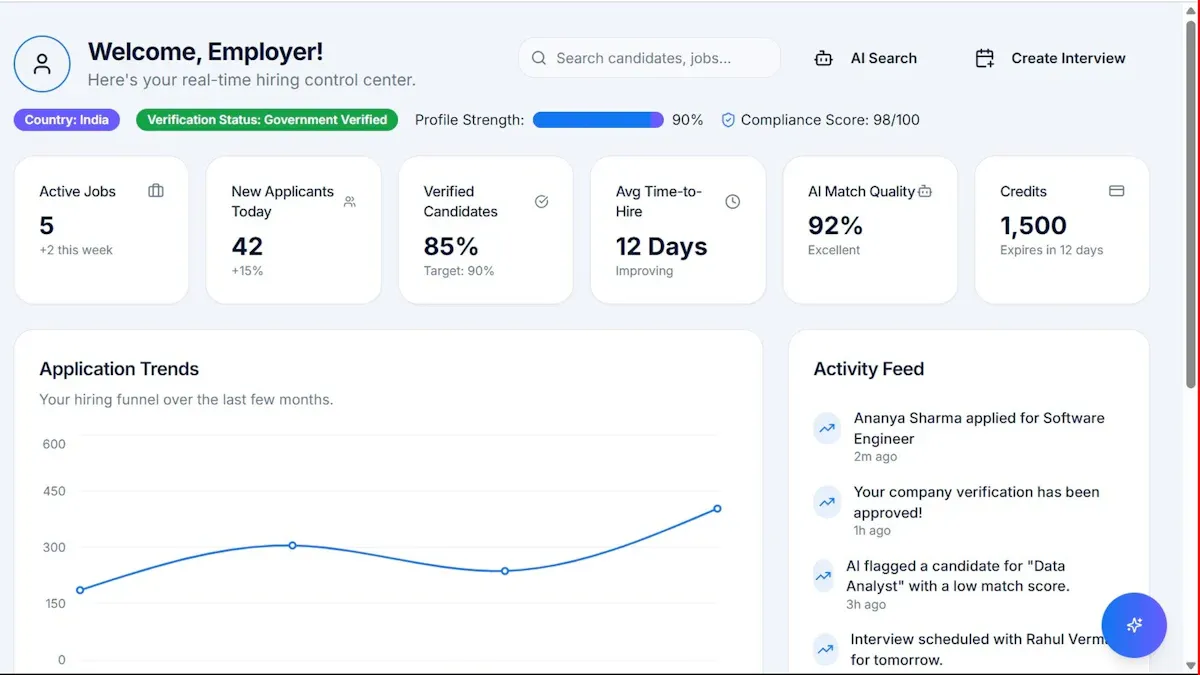
Contract compliance reporting helps organizations prove that contracts are being followed in practice, not just signed and stored. For procurement teams, legal departments, finance leaders, operations managers, and internal audit, the challenge is the same: obligations are spread across deadlines, approvals, invoices, service levels, filings, and supporting evidence. If reporting is weak, noncompliance stays hidden until it becomes a cost, dispute, audit issue, or leadership surprise.
That is why contract compliance reporting needs both a trusted reporting layer and an AI assistant upgrade. With FineReport + Dora, teams can ask for a report summary in chat, generate structured narratives from trusted report assets, receive scheduled briefings, and push exceptions to the right owner. Instead of manually reviewing every contract tracker and follow-up email, teams can move toward governed, repeatable reporting and monitoring.
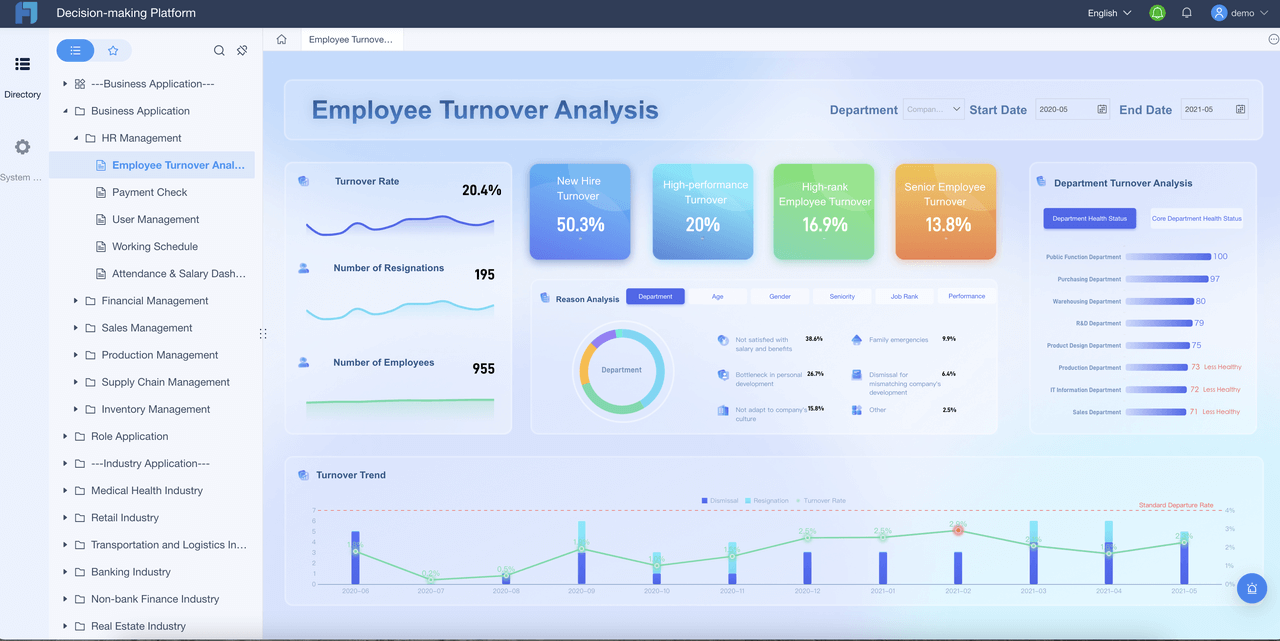
Click To Try The Dashboard
All reports in this article are built with FineReport
What contract compliance reporting is and why it matters
Contract compliance reporting is the process of collecting, organizing, and presenting evidence that contractual obligations are being met. In simple terms, it answers questions such as:
Are deliverables completed on time?
Are pricing terms being applied correctly?
Are service levels being achieved?
Have required approvals and filings been completed?
Are exceptions documented and resolved?
This is different from general contract management. Contract management covers the broader lifecycle of a contract, including drafting, negotiation, approval, storage, amendment, renewal, and termination. Contract compliance reporting is narrower and more operational. It focuses on whether the contract is being executed according to agreed terms and whether the organization can prove that through reliable reporting and evidence.
A strong reporting process helps organizations verify:
obligations and deliverables
deadlines and renewal milestones
service-level commitments
pricing and payment terms
policy requirements
regulatory and disclosure commitments
remediation status when issues are found
These reports are used by multiple teams, each with a different purpose:
Procurement tracks supplier obligations, savings commitments, and performance against service terms.
Legal monitors adherence to negotiated clauses, amendments, and dispute-related obligations.
Finance checks invoice accuracy, payment controls, and budget impact.
Operations reviews delivery performance, service failures, and issue resolution.
Internal audit tests evidence, controls, and repeat exceptions.
Leadership teams need a concise view of risk exposure, unresolved issues, and accountability.
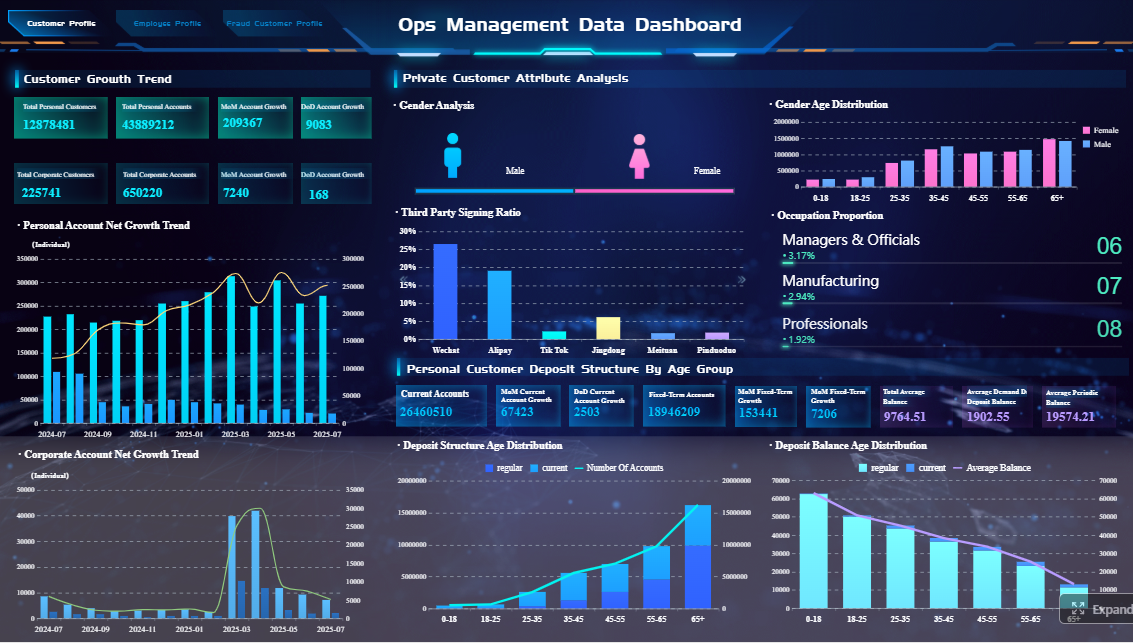
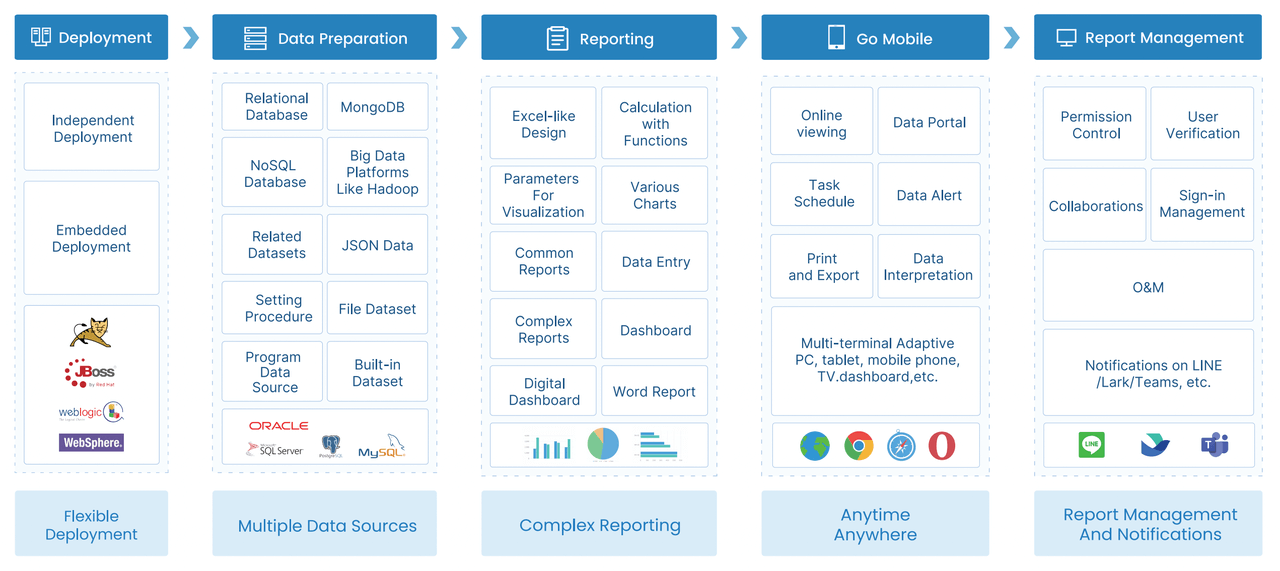
In many organizations, the reporting problem is not lack of data. It is fragmentation. Terms live in contracts, milestones sit in spreadsheets, invoices are in ERP systems, evidence is in email or shared folders, and operational status lives in dashboards. FineReport helps unify these reporting assets into formatted reports, exception views, and operational cockpits. Dora adds the enterprise Data Agent layer that helps users consume those reports through natural-language requests, structured summaries, alerts, and follow-up.
At the core, contract compliance means confirming that each party is fulfilling what the contract requires. That usually involves four building blocks:
Obligations
These are the actual duties defined in the contract, such as delivery dates, pricing adherence, staffing requirements, service levels, reporting submissions, insurance certificates, or audit rights.
Controls
Controls are the checks used to prevent or detect noncompliance. Examples include approval workflows, threshold alerts, invoice validation rules, evidence checklists, and periodic review procedures.
Approvals
Many contracts require formal approvals for changes, extensions, exceptions, credits, or payments. Reporting should show whether approvals happened on time and by the right authority.
Evidence
Evidence proves the obligation was met. This may include signed acceptance records, system logs, invoices, service reports, filing receipts, policy attestations, or correspondence.
It is also important to separate three related concepts:
Contractual compliance means meeting the specific obligations written into the contract.
Policy compliance means following internal company policies, such as procurement rules, delegation limits, or approval standards.
Regulatory compliance means meeting legal or industry requirements that may also be referenced in the contract.
A contract can appear compliant operationally but still fail policy or regulatory expectations. For example, a vendor may deliver on time, but invoices might bypass required approval controls. Or a government contractor may meet service obligations but fail a required workforce reporting submission.
Where compliance risk usually appears
Most contract compliance issues are not dramatic breaches. They are routine failures in visibility, timing, and discipline. Common risk areas include:
missed renewals and termination notice windows
incorrect invoicing or pricing deviations
service-level failures
unapproved scope or commercial changes
incomplete documentation
missing compliance evidence
weak escalation and remediation tracking
inconsistent reporting across departments
Risk patterns also vary by contract type:
Vendor contracts often expose organizations to service failures, price leakage, and weak evidence collection.
Customer contracts may create revenue leakage, missed commitments, and disputes around deliverables or credits.
Government contracts usually carry stricter documentation, certification, reporting, and audit trail expectations.
The practical lesson is simple: if obligations are not translated into trackable report elements, compliance becomes reactive.
A useful contract compliance report should not try to measure everything. It should focus on KPIs that show obligation performance, financial control, regulatory exposure, and resolution discipline. Below is a practical KPI framework.
Operational performance KPIs
On-time deliverables rate: Percentage of contractual deliverables completed by the agreed due date. Business value: Shows whether the organization or vendor is meeting core performance commitments. AI use:Dora can summarize overdue deliverables, explain trend deterioration, and include them in a scheduled management briefing.
Milestone completion rate: Percentage of planned milestones completed within the reporting period. Business value: Helps teams verify execution progress and spot contracts drifting off plan. AI use:Dora can compare current milestone status with previous periods and highlight contracts needing owner follow-up.
Service-level attainment: Percentage of SLA targets met, such as uptime, response time, or quality thresholds. Business value: Critical for service contracts where penalties, credits, or risk exposure depend on performance. AI use:Dora can retrieve the FineReport cockpit view, identify breached thresholds, and generate a structured report summary for operations and procurement.
Issue resolution time: Average time taken to resolve compliance-related issues or service incidents. Business value: Reveals how quickly the organization addresses exceptions before they become recurring risk. AI use:Dora can flag aged unresolved items and push alerts to responsible teams.
Exception volume: Number of compliance exceptions recorded in a reporting period. Business value: A rising exception count may signal process breakdowns, supplier instability, or control weakness. AI use:Dora can classify exception patterns by owner, contract type, or business unit and produce a chart-based answer in chat.
Invoice accuracy rate: Percentage of invoices that match contract terms without correction. Business value: Reduces overpayments, rework, and disputes. AI use:Dora can summarize invoice mismatch categories and identify where pricing or billing controls need tightening.
Savings realization: Percentage of negotiated savings actually captured after contract execution. Business value: Important for procurement teams that need to prove commercial value after signature. AI use:Dora can include savings shortfalls in recurring executive briefings and connect findings to source reports.
Overpayment recovery amount: Value of overpayments identified and recovered. Business value: Quantifies direct financial benefit from compliance monitoring. AI use:Dora can prepare management narratives showing where recoveries occurred and which contracts should be reviewed more closely.
Budget variance: Difference between contract-related actual costs and planned budget. Business value: Shows where noncompliance or poor control may be affecting financial performance. AI use:Dora can explain unusual cost movement and point users back to the relevant FineReport detail report.
Approval adherence rate: Percentage of transactions, changes, or exceptions that followed required approval workflow. Business value: Indicates whether the control environment is functioning as intended. AI use:Dora can detect missing approval evidence and alert reviewers before audit periods.
Required filing completion rate: Percentage of required reports, certifications, or disclosures submitted on time. Business value: Essential in regulated or government contract environments where reporting lapses carry significant consequences. AI use:Dora can act as a Daily Briefing Secretary or Risk Alert Officer, reminding owners of upcoming filing deadlines and summarizing completion status.
Policy exception rate: Percentage of transactions or actions that violated internal policy or documented procedure. Business value: Helps distinguish isolated issues from systemic governance weakness. AI use:Dora can aggregate exceptions into weekly governance summaries for compliance and audit teams.
Remediation aging: Average age of open corrective actions linked to compliance findings. Business value: Shows whether the organization closes the loop on issues or allows risk to linger. AI use:Dora can monitor aging buckets and push overdue actions to owners and managers.
Audit finding closure rate: Percentage of internal or external audit findings closed by target date. Business value: Indicates the maturity of the compliance response process. AI use:Dora can generate structured follow-up summaries for audit committees or management review meetings.
Documentation completeness: Percentage of contracts or compliance events with all required supporting evidence attached. Business value: Strong documentation reduces audit pain and dispute risk. AI use:Dora can identify missing evidence patterns and include them in exception review reports.
Contract value
High-value contracts justify deeper monitoring of service, financial, and approval metrics.
Risk level
Contracts with penalty exposure, strategic suppliers, revenue dependency, or regulated requirements need stronger exception tracking and evidence reporting.
Industry rules
Heavily regulated sectors often require compliance KPIs tied to certifications, documentation, and filing deadlines.
Reporting audience
Executives need a concise risk and trend view. Operational teams need detailed exceptions and ownership. Audit teams need evidence completeness and remediation status.
A common mistake is building one report for everyone. FineReport is well suited for layered reporting here: operational detail reports for daily owners, management dashboards for oversight, and formatted review packs for audit or leadership. Dora then helps each audience consume the right information in a faster, more accessible way.
A practical contract compliance monitoring framework
A strong monitoring framework turns contract language into operational reporting, ownership, and action. The following four-step model is practical for most enterprises.
Step 1: Inventory contracts and obligations
Start by building a complete inventory of active contracts. For each contract, capture:
contract owner
counterparty
contract type
start and end dates
renewal and notice deadlines
key deliverables
pricing and billing terms
service levels or milestones
mandatory approvals
evidence requirements
regulatory or reporting obligations
This is the foundation of compliance reporting. If obligations are not inventoried in a structured way, they cannot be monitored consistently. FineReport can consolidate this inventory into a central reporting cockpit that surfaces deadlines, status, and missing evidence across the contract portfolio.
Step 2: Assign ownership and controls
Every tracked obligation needs a named owner and a control method. Clarify:
who monitors each obligation
who reviews supporting evidence
who approves exceptions or changes
who receives escalations
who is accountable for remediation
This matters because reporting without ownership becomes passive. A contract dashboard should never stop at red-yellow-green status. It should show responsible owners, pending actions, and due dates.
Step 3: Build a tracking and reporting cadence
Set a reporting rhythm based on contract risk and business need. Examples include:
weekly exception reviews for critical contracts
monthly compliance dashboards for procurement and operations
quarterly summaries for finance and leadership
audit-ready reporting packs for regulated contracts
Your reporting design should include:
dashboard or formatted report structure
KPI definitions
threshold alerts
escalation paths
evidence links
trend views over time
This is where FineReport becomes the reporting foundation. Teams can build formatted reports, complex monitoring tables, operational cockpits, and recurring automated outputs. Instead of distributing static spreadsheets, organizations can standardize contract compliance reporting into trusted enterprise assets.
Compliance reporting only creates value when findings lead to action. The review process should answer:
What exceptions occurred?
Why did they happen?
Who owns remediation?
When is corrective action due?
Has the issue been verified as resolved?
Does the control design need to change?
Recurring issues should trigger process improvement, not just repeated reporting. For example, frequent invoice mismatches may require pricing reference controls, while repeated late filings may indicate ownership confusion or weak reminder processes.
How an AI Data Agent Automates Report Consumption
Contract compliance reporting often breaks down at the last mile: people are too busy to read every dashboard, compare every trend, and manually follow up on every exception. This is where Dora, FanRuan’s enterprise Data Agent platform, changes the operating model.
Dora sits on top of trusted reporting assets and acts as an AI assistant or AI digital employee for governed report consumption. In this scenario, the most relevant digital employees are:
Daily Briefing Secretary for scheduled reporting digests
Data Analyst digital employee for natural-language KPI questions
Risk Alert Officer for threshold breaches, overdue obligations, and owner notification
FineReport remains the reporting foundation. It provides the trusted reports, operational cockpits, KPI definitions, report templates, permissions, and semantic context. Dora uses that governed foundation to help users query, summarize, push, alert, and follow up more efficiently.
A scenario-specific chat example could look like this:
“Summarize this month’s contract compliance report, highlight overdue renewals, invoice mismatches above threshold, and any open remediation items older than 30 days. Then list the responsible owners.”
Understand KPI definitions and business rules Dora uses governed semantic rules, business terms, thresholds, and report templates to interpret what counts as an overdue renewal, approval exception, SLA breach, or incomplete evidence record.
Generate a structured report summary in chat Dora produces a management-ready summary with key metrics, chart explanations, exception counts, and contract-level highlights rather than just raw data output.
Detect exceptions and emerging risk Dora identifies overdue obligations, abnormal variance, repeated invoice mismatches, aging remediation items, or filing deadlines approaching threshold.
Push alerts and summaries to the right people
As a Risk Alert Officer or Daily Briefing Secretary, Dora can send timely summaries or alerts to contract owners, procurement managers, finance reviewers, or compliance leaders.
Create follow-up records for review Dora can support recurring workflows by producing daily or weekly summaries, owner action lists, and follow-up records for management review.
This matters in enterprise settings because it is more than a prompt-based assistant. Dora is positioned as fourth-generation Agentic BI: natural-language request, trusted semantic layer, governed query or Skill execution, structured answer, exception push, and follow-up. That gives organizations a stronger landing path than generic AI feature comparisons.
In practice, that means business users do not need to open five reports and interpret every chart themselves. They can ask a question in chat and receive:
a structured report summary
explanation of KPI changes
contract-specific exception highlights
scheduled daily or weekly briefings
alerts for thresholds and overdue items
links back to FineReport source reports for validation
For executives, this creates clearer scenario ROI. Dora is not an AI experiment. It is a landed digital employee for recurring reporting work such as compliance summaries, supplier performance review packs, invoice exception reporting, filing deadline monitoring, and owner follow-up.
For IT teams, the value is also practical. Instead of manually building every one-off report request, IT can focus on enterprise data connections, semantic setup, permissions, report templates, data quality, and reusable agent Skills that make reporting more scalable.
For business users, Dora reduces friction. Teams get timely report summaries and chat-based answers without waiting for analysts to manually compile narratives from multiple contract trackers.
Special considerations for regulated and government contracts
Reporting expectations in regulated environments
Regulated and government contract environments usually demand more than performance tracking. They often require documentation, disclosures, certifications, and formal evidence trails. Depending on the industry and jurisdiction, organizations may need to report on labor obligations, procurement controls, diversity-related filings, safety records, data handling standards, or other industry-specific requirements.
The exact reporting obligation can vary by:
contract type
jurisdiction
regulator or oversight body
spending threshold
contractor or subcontractor role
industry-specific rules
This makes standardized reporting especially important. A regulated contract compliance report should not only show whether an obligation was completed, but also whether evidence is complete, review steps were followed, and deadlines were met.
Lessons from audit-driven compliance reviews
Audit-driven reviews often reveal the same structural weaknesses:
obligations not translated into trackable controls
missing or inconsistent evidence
exceptions documented without remediation discipline
weak trend reporting across periods
ownership confusion
repeated findings with no process redesign
Public-sector and government contracts typically require stricter evidence discipline because auditability matters as much as outcome. A team may believe a task was completed, but if the reporting trail is incomplete, that can still become a control failure.
FineReport helps here by standardizing formatted audit reports, compliance dashboards, and evidence-linked operational views. Dora adds value by acting as a Report Researcher or Risk Alert Officer that summarizes findings, flags repeat gaps, and pushes pending actions to named owners. This is especially useful when audit committees or compliance leaders need concise, structured summaries rather than raw status exports.
Common mistakes and how to make reporting more useful
Many contract compliance reports fail not because they are missing data, but because they are not designed for action.
Common mistakes include:
reporting too many metrics without linking them to contract risk
mixing unrelated compliance, procurement, and operational measures into one confusing dashboard
relying on inconsistent manual inputs
collecting evidence in disconnected folders or email chains
showing exceptions without owners, due dates, or remediation status
presenting static snapshots with no trend view
ignoring permission governance for sensitive contract data
To make reporting more useful, improve it in four ways:
Connect metrics to business impact
Every KPI should answer a risk, value, or accountability question. If a metric does not influence action, it probably does not belong in the main report.
Standardize data and evidence inputs
Define required fields, evidence types, naming conventions, and review workflow steps. Better data quality is part of better AI performance too.
Make reports action-oriented
Include trend lines, root-cause notes, owner names, due dates, and remediation status. A compliance report should support decisions, not just documentation.
Layer detail by audience
Executives need summaries. Operational teams need detail. Audit teams need evidence and control traceability. FineReport supports this layered structure, while Dora helps each audience access the right view through chat, summary, and push workflows.
Simple checklist to strengthen your contract compliance reporting
Use this checklist to assess your current process:
Do we have a complete inventory of active contracts and obligations?
Are key deadlines, approvals, and evidence requirements tracked in a structured format?
Does each obligation have a named owner and escalation path?
Are KPIs tied to contract value, risk, and audience needs?
Do reports show trends, exceptions, remediation status, and due dates?
Are invoice, SLA, and filing exceptions visible in one governed reporting layer?
Are permissions and access boundaries preserved in reporting outputs?
Are recurring reports standardized instead of manually rebuilt each period?
Can users quickly get a structured summary without reading every detail report?
Do we have AI-assisted alerts, briefings, and follow-up for high-value exceptions?
To make contract compliance reporting practical and scalable, focus on a few disciplined moves rather than trying to automate everything at once.
1. Standardize KPI definitions, contract terms, and exception rules
If “overdue,” “breach,” or “documentation complete” means different things across teams, reporting will stay inconsistent. Define KPI logic, business terms, threshold rules, and exception categories up front. This creates the semantic clarity Dora needs for trustworthy AI-assisted summaries and alerts.
2. Build a governed semantic layer inside the reporting workflow
AI performance depends on governed meaning, not just data access. FineReport provides the trusted reporting and template foundation. Dora works best when KPI definitions, filters, report templates, and business terminology are already standardized. This improves controllability and auditability in Agentic BI workflows.
3. Start with high-value recurring reports
Do not begin by trying to automate every compliance report in the organization. Start with recurring, high-friction scenarios such as monthly supplier compliance review, invoice exception monitoring, renewal risk reporting, or regulated filing status reporting. These scenarios create faster business adoption and clearer ROI.
4. Define thresholds, owners, and follow-up paths before enabling AI alerts
AI alerts are only useful if someone knows what to do next. Before rollout, document who owns each alert type, what threshold triggers it, what the response window is, and when escalation occurs. Dora can then act as a more effective Risk Alert Officer instead of just forwarding noise.
5. Keep human review in the loop for narrative outputs
Structured AI summaries should support faster review, not replace governance. Use human review for management narratives, especially in regulated or high-risk contexts. Expand Dora Skills gradually as data quality, templates, and control confidence improve.
Building this manually is complex. FineReport helps teams standardize trusted reports, operational cockpits, templates, and reporting workflows. Dora turns those assets into an AI assistant that can answer report questions in chat, generate structured summaries, push scheduled briefings, monitor exceptions, and follow up with responsible owners.
Dora adds natural-language query over trusted reporting assets.
Dora retrieves report, cockpit, metric, and exception context from FineReport outputs.
Dora generates structured report summaries, chart explanations, and management narratives.
Dora supports scheduled summaries, daily or weekly briefings, exception alerts, and push notifications.
Dora enables digital employees for repeatable reporting workflows such as Report Researcher, Daily Briefing Secretary, Data Analyst digital employee, and Risk Alert Officer.
FineReport + Dora is not only a reporting upgrade; it is a practical fourth-generation Agentic BI path. FineReport provides governed reports and operational cockpits. Dora provides the AI assistant layer for scenario execution, with more controlled Skills, lower token waste, faster execution paths, and more stable workflows than prompt-only agents.
This matters because enterprises need more than a feature demo. They need a solution that can actually land in the real reporting environment, with permissions, KPI governance, report templates, business semantics, and implementation discipline.
Get Ready-to-Use Dashboard Templates in Fine Gallery
The strongest Dora pitch is scenario + product + service: FineReport provides the trusted reporting foundation, Dora provides the AI digital employee, and implementation service connects data, governance, semantic setup, Skills, report templates, permissions, and rollout.
If your team is still assembling contract compliance reporting through spreadsheets, email reminders, and manual status summaries, there is a better way to move from fragmented monitoring to governed, AI-assisted execution.
Contract compliance reporting is the process of tracking and proving that contract terms are being followed through reliable data, approvals, and supporting evidence. It focuses on execution, not just storing signed agreements.
Common KPIs include on-time deliverable completion, service-level attainment, invoice accuracy, approval turnaround time, renewal milestone status, and exception resolution rates. The right mix depends on the contract type and risk profile.
Contract management covers the full contract lifecycle from drafting to renewal or termination. Contract compliance reporting is narrower and measures whether obligations are being met in day-to-day operations.
Weak monitoring can lead to missed deadlines, pricing errors, service failures, audit gaps, and unresolved exceptions. Over time, these issues can create financial loss, disputes, and regulatory exposure.
FineReport helps centralize dashboards, exception views, and evidence-based reports from fragmented systems. Dora adds AI-driven summaries, natural-language access, alerts, and follow-up support to make monitoring faster and more consistent.
Product Trial
FineReport
Pixel-perfect reports · Interactive dashboards · Easy data entry · Digital twins