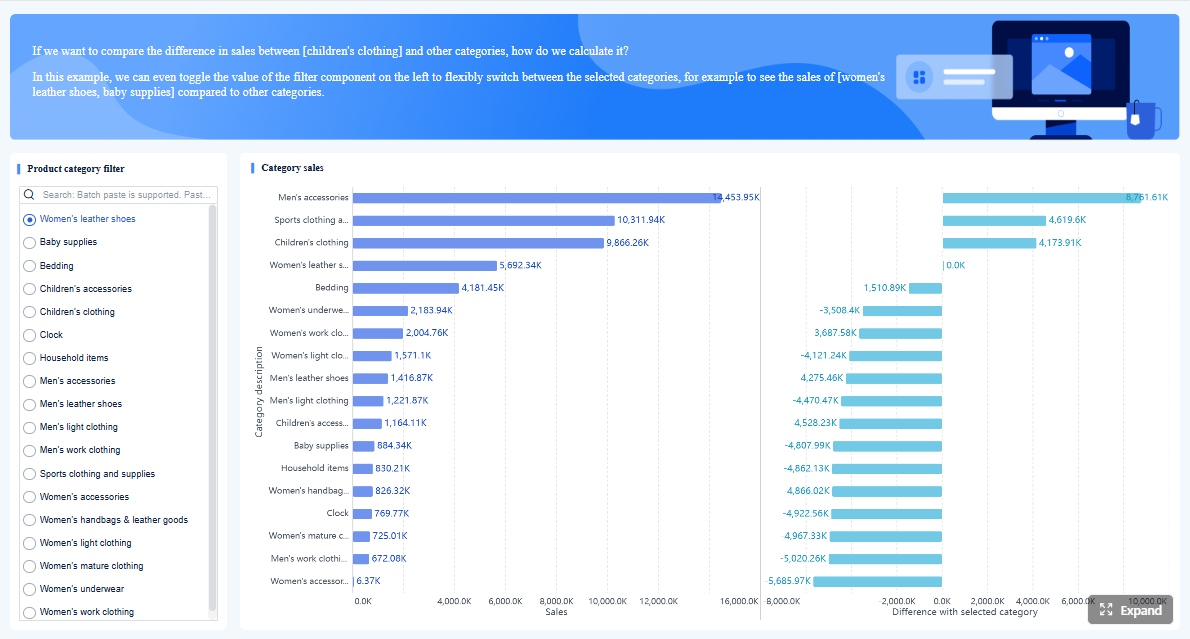
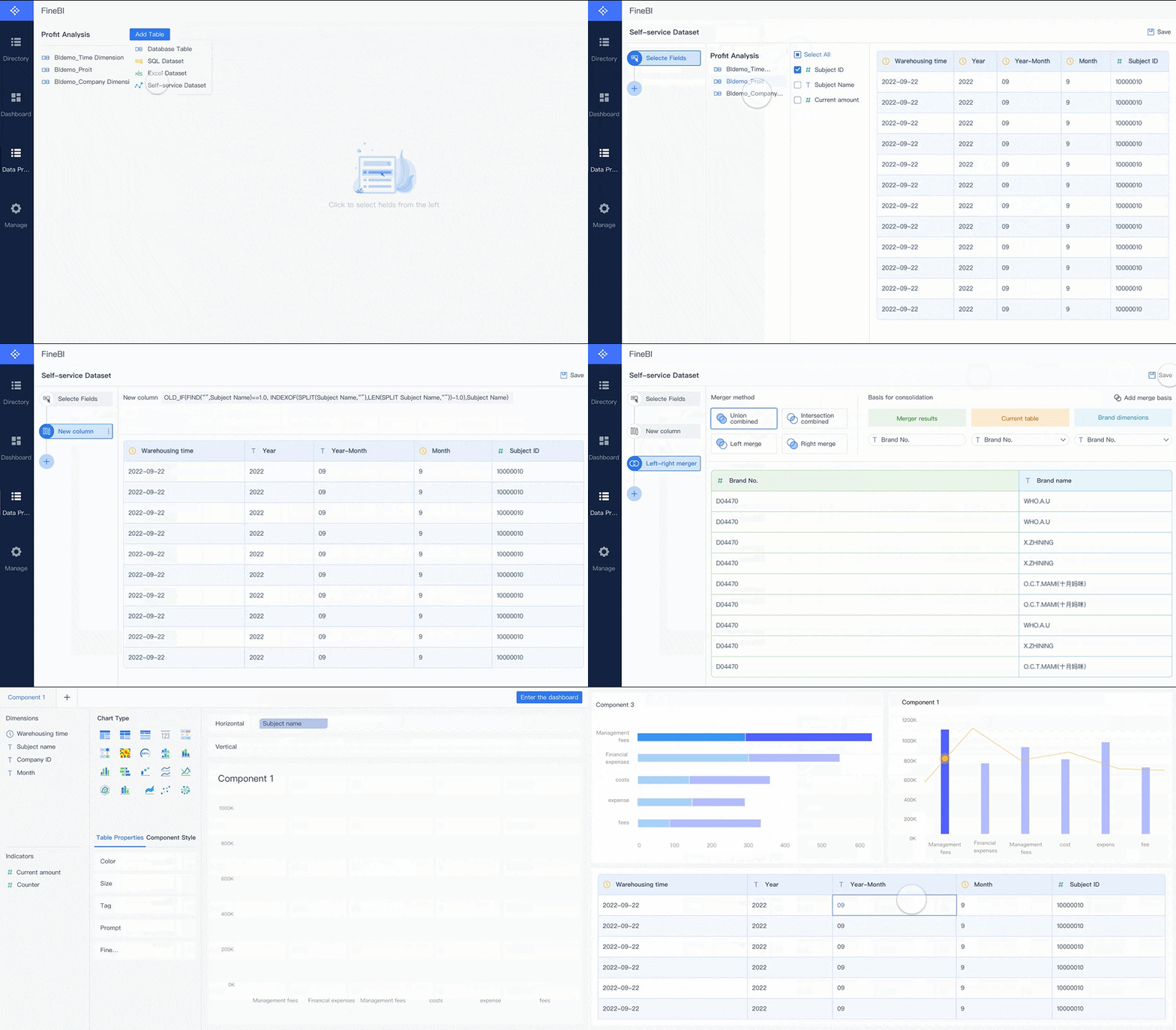
Enterprise data management services help organizations turn fragmented, inconsistent, and poorly governed data into a trusted business asset. For IT leaders, the goal is not just cleaner pipelines or better storage architecture. It is building a foundation that supports reliable BI, controlled self-service analytics, compliance, and enterprise AI.
In practice, this means connecting source systems, standardizing metrics, governing access, improving data quality, and making trusted data usable by business teams. It also means upgrading from passive reporting to AI-assisted execution. With FineBI + Dora, business users can ask for analysis in chat, generate chart-based answers or dashboard-style views from trusted BI assets, and receive scheduled summaries before the next meeting.
Click To Try The Dashboard
All dashboards in this article are built with FineBI
What enterprise data management services are and why they matter
Enterprise data management services are the people, processes, technology, and governance practices used to manage data across its lifecycle. For IT leaders, this includes integrating data from enterprise systems, enforcing standards, maintaining quality, securing access, documenting meaning, and supporting delivery for analytics and AI use cases.
A practical definition is simple: enterprise data management services make enterprise data trustworthy, usable, and governable at scale.
This matters because most organizations do not struggle from a lack of data. They struggle from too many versions of the truth. Revenue appears differently in CRM and ERP. Product names vary by business unit. Customer records are duplicated. KPI definitions change from team to team. Reports are rebuilt repeatedly because no shared semantic layer exists.
When enterprise data management services are done well, they improve:
Data quality, by reducing errors, duplicates, and stale records
Consistency, by aligning business definitions and master entities
Governance, by assigning ownership and applying policy controls
Accessibility, by making approved data easier to find and use
Trust, by giving teams confidence that reports and AI outputs are based on governed data
IT leaders should also distinguish between two ways of thinking about data management.
Managing data as a technical asset
This view focuses on infrastructure and engineering tasks such as ingestion, storage, ETL or ELT, access provisioning, backup, and pipeline operations. These are essential, but they are not enough on their own.
Managing data as a business capability
This view treats data as an operational capability that supports decisions, workflows, and cross-functional execution. It includes ownership, KPI definitions, stewardship, semantic consistency, quality thresholds, and service expectations for reporting and AI use.
That distinction is critical. An enterprise may have modern cloud storage and still fail at analytics because no one agrees on what counts as active customer, gross margin, or fulfilled order.
Strong enterprise data management services are therefore foundational for four reasons:
Reliable BI and analytics
Dashboards and self-service exploration only work when metrics are standardized and source data is trusted.
Compliance and risk control
Organizations need traceability, access controls, retention rules, and auditable governance processes.
Operational efficiency
Teams spend less time reconciling spreadsheets, reworking reports, and resolving data disputes.
AI readiness
Enterprise AI needs governed data, stable business definitions, and permission-aware access. Without that, AI outputs are faster but not more reliable.
For organizations adopting Agentic BI, this last point becomes even more important. FineBI provides the trusted dashboard, metric, and semantic foundation. Dora acts as the enterprise Data Agent layer on top, helping users ask questions in natural language, retrieve governed answers, generate chart-based responses, and push timely summaries and alerts. That is how AI becomes usable in real enterprise workflows rather than staying as a disconnected experiment.
Core components of an enterprise data management framework
A strong enterprise data management framework combines architecture, governance, operations, and business enablement. IT leaders should think in layers rather than tools alone.
Data integration, storage, and pipeline orchestration
This layer manages how data is collected, moved, transformed, and unified across enterprise environments.
Typical responsibilities include:
Ingesting data from ERP, CRM, HR, finance, manufacturing, web, and third-party platforms
Supporting cloud, on-prem, and hybrid architectures
Transforming raw data into analysis-ready models
Scheduling and orchestrating recurring pipelines
Handling failures, retries, schema changes, and dependency management
The key objective is not simply to move data. It is to move data in a controlled and repeatable way so downstream reporting and AI use cases depend on stable, documented pipelines.
For IT leaders, the architectural question is usually not whether to centralize everything in one place. It is how to create a dependable flow between systems while balancing latency, cost, and maintainability.
Data quality, master data, and metadata management
This is where trust is built.
Data quality management includes validation, deduplication, standardization, exception handling, and monitoring for timeliness and completeness. Without it, even well-designed dashboards become unreliable.
The goal is to create consistent master records and reference values across systems.
Metadata management provides the context that helps users understand data. This includes:
Business definitions
Field descriptions
KPI logic
Ownership
Refresh frequency
Data lineage
Usage guidance
For BI and AI, metadata is especially important because it forms the basis of semantic understanding. FineBI’s semantic assets and governed metric modeling make it easier to standardize business logic. Dora can then use that governed layer to answer questions more accurately and more consistently than a prompt-only AI approach.
Governance, security, privacy, and compliance controls
Governance gives enterprise data management services operational discipline.
Supporting audit trails and regulatory requirements
Establishing approval workflows for data changes and KPI standards
Good governance is not about making data hard to use. It is about making trusted data easier to use while reducing risk.
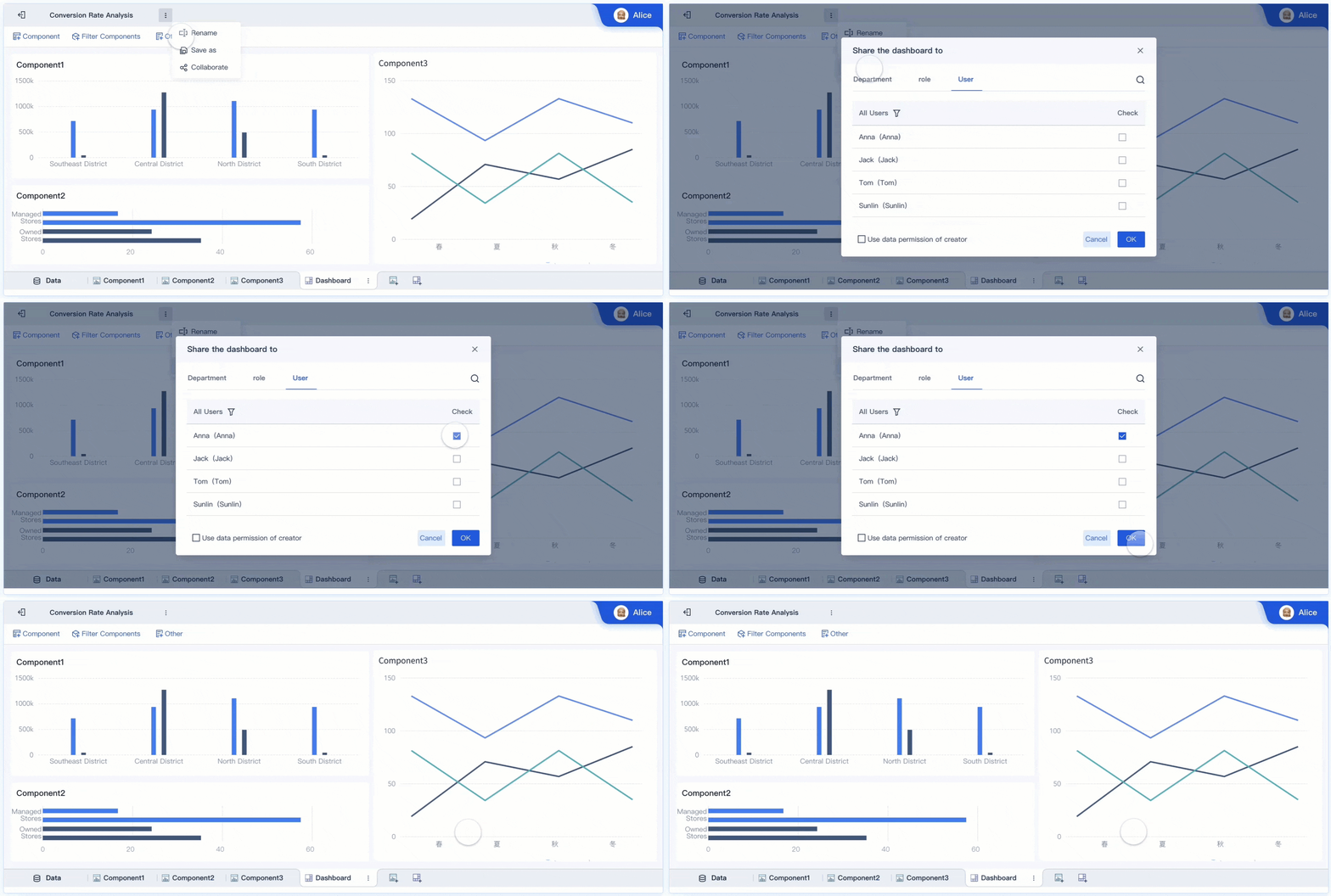
For enterprise BI and Agentic BI, permission boundaries matter. Users should only see the metrics, dimensions, and underlying data they are authorized to access. FineBI helps enforce governed access to dashboards and trusted semantic assets. Dora should operate within those same boundaries so AI outputs respect enterprise permissions rather than bypass them.
Data operations for BI and AI readiness
Data operations often receive less attention than architecture, but they are what keep a data program credible over time.
Business-facing communication about data incidents or metric changes
For BI readiness, these practices support dependable reporting and self-service analysis. For AI readiness, they matter even more because AI systems depend on stable, current, and well-described data assets.
If an executive asks Dora for a margin trend summary before a board review, the answer must rely on trusted and current FineBI assets. If a metric changed definition last week, that change should be documented and governed, not discovered accidentally in a meeting.
Key metrics IT leaders should track in enterprise data management services
A practical data management program should also be measured. The following KPIs help IT leaders assess maturity and business impact.
Data freshness SLA attainment: The percentage of critical datasets delivered within the expected refresh window. Business value: Helps ensure reports and operational decisions are based on timely data. AI use:Dora can retrieve freshness status in chat, summarize delays, and include SLA exceptions in scheduled briefings.
Data quality issue rate: The volume or proportion of records failing validation, completeness, or consistency checks. Business value: Highlights where reporting and AI reliability may be compromised. AI use:Dora can surface exceptions, summarize affected domains, and notify owners when thresholds are breached.
Master data match rate: The percentage of core entities successfully standardized and matched across systems. Business value: Supports cross-system reporting and reduces duplicate or conflicting business records. AI use:Dora can explain entity conflicts in natural language and reference trusted master data views from FineBI.
Dashboard trust and adoption rate: The usage level of certified dashboards and governed metrics versus manual spreadsheets or shadow reports. Business value: Indicates whether the organization is actually consuming trusted BI assets. AI use:Dora can direct users to certified dashboards, retrieve governed metrics through chat, and generate dashboard-style analysis views.
Data incident resolution time: The average time required to detect, assign, and close material data issues. Business value: Reduces disruption to reporting, planning, and compliance activities. AI use:Dora can act as a Risk Alert Officer by pushing incident summaries, owners, and follow-up reminders.
How enterprise data management software supports delivery
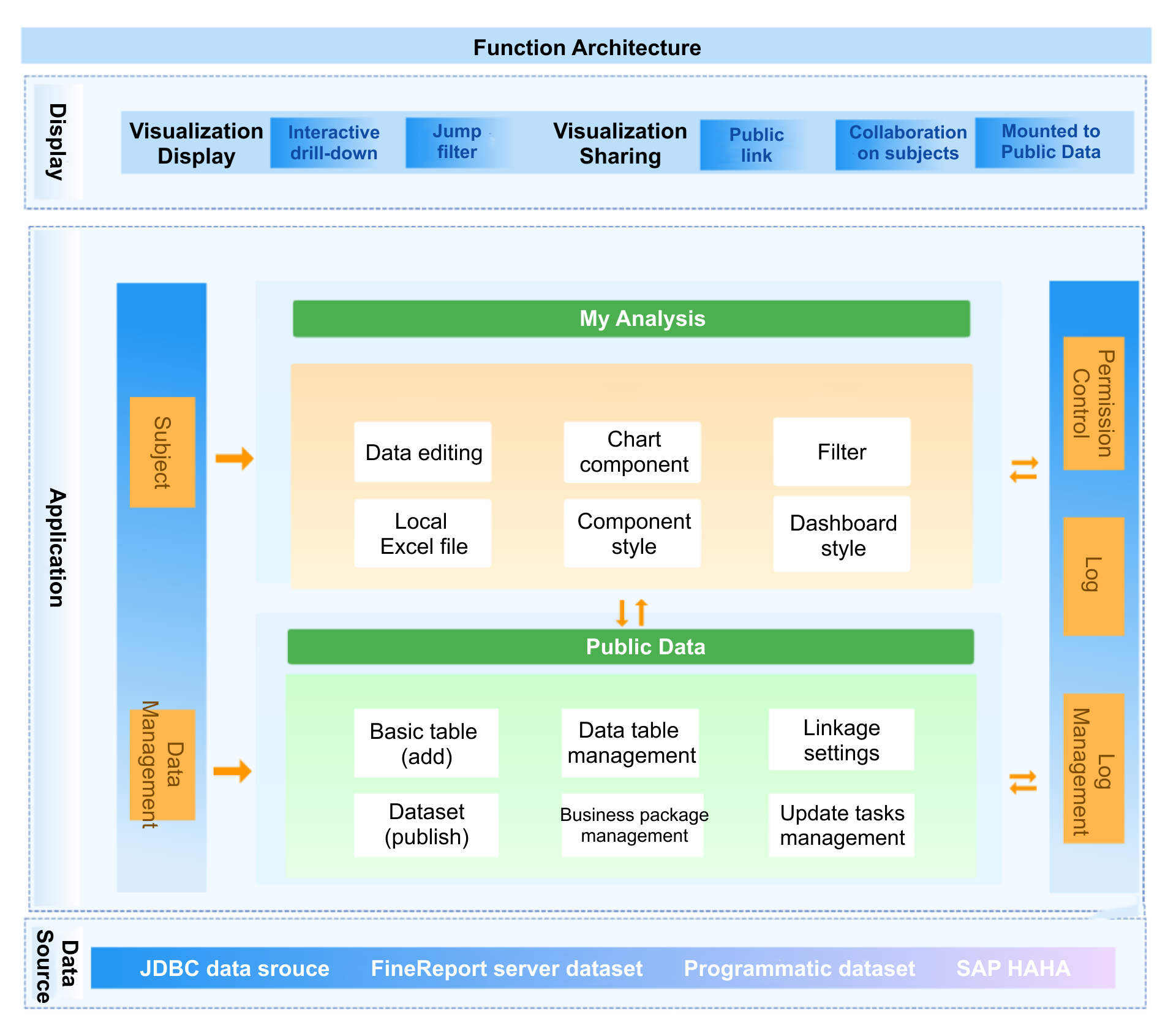
Enterprise data management software is the technology layer that helps teams operationalize data management services. It does not replace governance, ownership, or operating discipline. It enables them.
In broad terms, enterprise data management software helps organizations:
Connect to source systems
Move and transform data
Store and model data for analytics
Manage quality and lineage
Catalog and document assets
Apply governance and permissions
Monitor operations and usage
But software fits into a broader service model. IT leaders should separate four elements.
Platforms
Platforms provide broad capabilities across multiple domains such as integration, cataloging, governance, quality, and monitoring. They can reduce tool sprawl but may require stronger architecture discipline and change management.
Point tools
Point tools solve specific needs such as ETL, data quality, lineage, metadata cataloging, or MDM. They can be effective when matched to a clear problem, but they often require additional integration and operating effort.
Managed services
Managed services provide external support for implementation, administration, monitoring, or ongoing optimization. These are useful when internal teams are capacity-constrained or building maturity.
Internal operating models
This is the organizational layer: who owns standards, who supports pipelines, who approves KPI changes, and how incidents are escalated. Even the best software stack fails without this.
For BI and AI delivery, IT leaders should evaluate how well software supports trusted semantic assets and business consumption. FineBI plays a critical role here by turning prepared data into governed dashboards, reusable metrics, and self-service analysis assets. Dora then extends this model by making those trusted assets accessible through chat-based AI assistance, scheduled summaries, alerts, and follow-up workflows.
Capabilities IT leaders should evaluate
When reviewing enterprise data management software, focus on practical enterprise fit:
Scalability: Can it support growth in data volume, users, and use cases?
Interoperability: Does it integrate with existing cloud, on-prem, and hybrid systems?
Automation: Can it reduce manual work in pipeline management, quality checks, and documentation?
Governance: Does it support permissions, lineage, stewardship, and policy control?
Usability: Can engineers, analysts, and business users actually adopt it?
Semantic support: Can it help standardize KPI definitions and reusable business meaning?
Operational control: Can teams monitor reliability, incidents, and refresh expectations?
Common deployment considerations
Software selection should also account for operational reality.
Integration complexity
Many tools look strong in isolation but become difficult when connecting with legacy systems, custom applications, or mixed architectures.
Total cost of ownership
Licenses are only one component. Implementation labor, connector maintenance, governance setup, training, and support can materially affect cost.
Change management
The technology may work, but users may continue relying on spreadsheets or local reports if certified assets are hard to find or business definitions remain unclear.
BI and AI consumption path
This is often overlooked. A stack may store and govern data well but still fail to deliver value if business users cannot easily consume trusted outputs. FineBI improves the landing path through governed dashboards and self-service analytics. Dora improves it further by allowing users to ask for answers in natural language and receive chart-based, permission-aware output built on trusted BI assets.
How to evaluate enterprise data management tools and service partners
Buying tools without a clear operating model is one of the most common mistakes in enterprise data programs. IT leaders should evaluate tools and partners based on business outcomes, architectural fit, and ability to support BI and AI readiness over time.
What to look for in a modern solution stack
A modern enterprise data management stack should support the end-to-end lifecycle of trusted data. At minimum, evaluate support for:
For organizations planning AI-assisted analytics, one more criterion matters: Can the stack support governed, semantic, business-facing data consumption?
This is where the combination of FineBI + Dora becomes relevant. FineBI is the BI foundation that organizes dashboards, metrics, and semantic assets into trusted analytical objects. Dora builds on top of those assets as an enterprise Data Agent, enabling more controllable and auditable AI workflows than generic prompt-based approaches.
Questions to ask vendors and managed service providers
When evaluating partners, ask practical questions such as:
What is your implementation approach for hybrid and legacy environments?
How do you handle KPI standardization and semantic consistency?
What governance workflows do you recommend for ownership and stewardship?
How do you support role-based access, privacy requirements, and auditability?
What operating model do you expect from the client team?
How do you monitor data quality, incidents, and service levels?
How will your roadmap support BI consumption and future AI use cases?
How do you help business users adopt trusted dashboards rather than create parallel reporting?
If AI is part of the roadmap, ask more specifically:
Can AI outputs reference governed BI assets and semantic definitions?
How do permissions apply to AI responses?
Can the AI assistant produce chart-based answers, summaries, alerts, and follow-up workflows?
Is the AI layer controllable through skills-based execution rather than open-ended prompts alone?
How to shortlist the best options for 2026 planning
A useful shortlist should be based on four factors.
1. Business goals
Start with the most important outcomes. Examples include board reporting consistency, faster monthly close analysis, better supply chain visibility, or AI-ready data for recurring management workflows.
2. Architecture fit
Assess how well the solution works with your current environment, including cloud platforms, on-prem systems, existing warehouses, and BI investments.
3. Team maturity
Choose a model that your organization can realistically operate. A sophisticated stack without stewards, analysts, or governance capacity will underperform.
4. Future AI requirements
Evaluate whether the solution can support governed AI use cases, not just experimental chat. Enterprise AI needs semantic clarity, permission enforcement, auditability, and stable data access.
A strong 2026 planning approach is to prioritize platforms and partners that can connect data management + trusted BI + AI assistant execution into one practical operating path.
For IT leaders, the scenario is not simply “use AI on data.” The real scenario is: how do we let business teams access trusted insights faster without breaking governance?
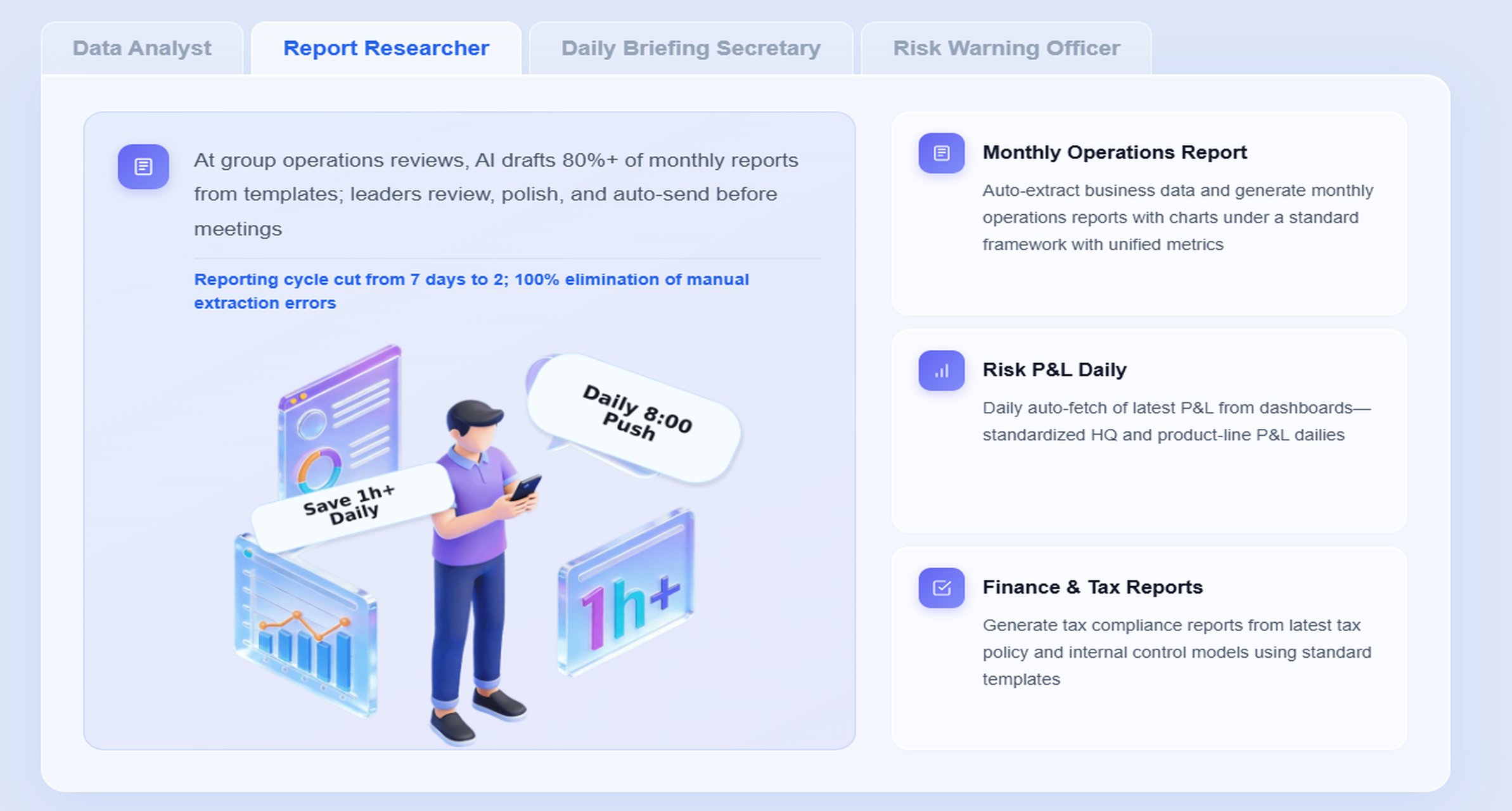
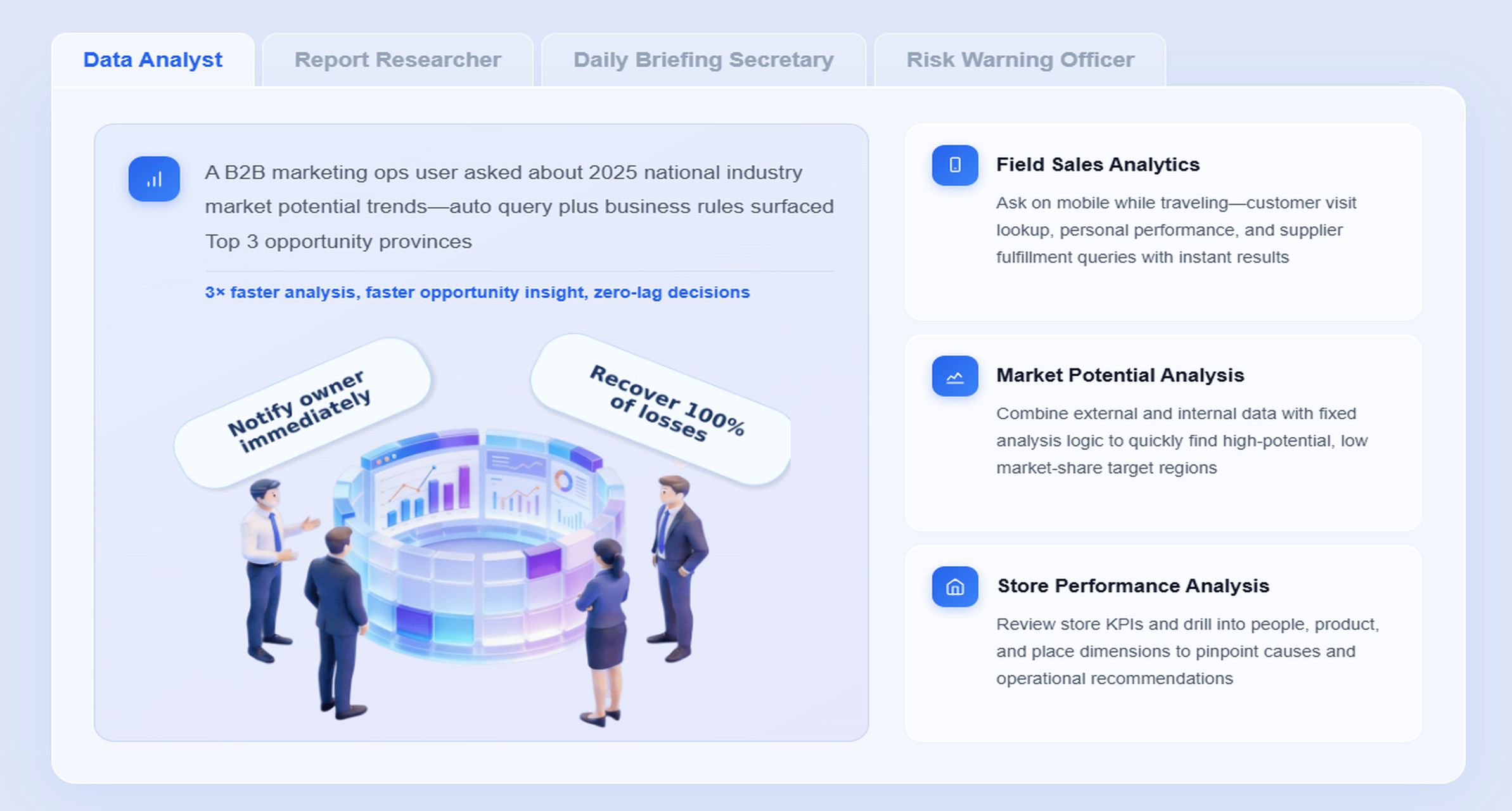
Daily Briefing Secretary for scheduled KPI summaries and meeting preparation
Risk Alert Officer for exception monitoring and owner notification
FineBI provides the trusted dashboard, governed metrics, semantic definitions, and reusable analysis assets. Dora uses that foundation to execute a controlled AI workflow.
A scenario-specific user request might look like this:
“Show me this week’s enterprise data quality status for sales and finance domains, list the biggest refresh delays, and summarize which dashboards may be affected before tomorrow’s operations review.”
In a strong enterprise setup, Dora does not guess from raw data blindly. It works from trusted BI and semantic assets.
A practical Dora workflow for enterprise data management
Retrieve trusted FineBI dashboard or analysis-subject data Dora accesses certified FineBI assets for data quality status, freshness SLA tracking, and impacted dashboards.
Understand KPI definitions, filters, business terms, and semantic rules
It interprets what “refresh delay,” “critical dashboard,” or “sales domain” means based on governed definitions rather than prompt ambiguity.
Generate chart-based answers and dashboard-style analysis views through chat
The user gets a concise answer, supporting breakdowns, and relevant trend or exception views.
Detect abnormal changes or threshold breaches when relevant
If quality failures or freshness delays cross predefined thresholds, Dora can identify the exception and summarize likely impact.
Push insights, alerts, or suggested actions to responsible users
Relevant owners can receive timely notifications for follow-up rather than waiting for a manual report.
Produce follow-up summaries for meetings or management review Dora can prepare a daily or weekly briefing that references the same trusted FineBI assets, keeping everyone aligned.
Many AI demos stop at question answering. Enterprise delivery requires more than that.
Dora helps organizations move from people searching dashboards manually to AI helping people ask, analyze, generate, push, alert, and follow up.
That matters because business users often do not want another tool to learn. They want:
A chat-based AI assistant over trusted BI assets
Faster access to approved metrics
Chart-based answers rather than text only
Scheduled summaries before meetings
Timely exception alerts
Follow-up support for recurring workflows
For IT teams, the value is also clear. Instead of building one-off reports for every question, they can focus on improving data connections, semantic layers, quality, permissions, and reusable agent Skills.
This is why Dora should be positioned as fourth-generation Agentic BI:
natural-language request
trusted semantic layer
governed query or Skill execution
answer, chart, summary, action, and follow-up
It is not a replacement for FineBI. FineBI remains the trusted BI foundation. Dora is the AI assistant layer that makes that foundation more actionable and more scalable for enterprise use.
A practical roadmap for building trusted BI and AI-ready data
A mature enterprise data management program should not start with tool sprawl or AI experimentation in isolation. It should start with business outcomes and move in phases.
Start with business outcomes and critical data domains
Begin with the reports, decisions, and AI use cases that matter most.
Then identify the critical data domains behind those outcomes, such as customer, product, order, finance, or supplier data.
This approach creates two advantages:
It focuses effort where trust matters most
It gives BI and AI initiatives a realistic landing path
For example, if weekly operations meetings depend on delivery performance, start by governing order, shipment, and exception data. Build the FineBI dashboards and semantic metrics first. Then use Dora to deliver scheduled summaries and risk follow-up.
Establish roles, standards, and operating processes
Technology alone does not create trusted data. IT leaders need clear operating discipline.
Add Dora for recurring AI-assisted workflows such as briefings, analysis requests, and exception follow-up
Expand domain by domain based on adoption and measurable value
Track progress using milestones tied to:
Adoption of certified dashboards
Reduction in manual reporting effort
Improvement in data quality issue rates
Reduced incident resolution time
Faster time-to-insight for business users
Increased usage of governed AI workflows
Avoid common pitfalls
Enterprise data management programs often struggle for predictable reasons.
Fragmented ownership
If no one owns customer or product definitions across systems, conflicts persist even with better tools.
Unclear definitions
A dashboard is not trustworthy if every department defines core KPIs differently.
Weak executive sponsorship
Data governance requires business participation, not just IT effort.
Over-engineered architectures
Complex stacks can slow delivery and increase maintenance burden. Focus on what supports trusted reporting and scalable AI use.
AI before governance
An AI assistant on top of messy, undefined, or permission-leaking data will create more noise, not more value.
Actionable best practices
The following practices help IT leaders build enterprise data management services that support both trusted BI and enterprise AI.
1. Standardize KPI definitions, synonyms, filters, and metric ownership
Document the business meaning of every critical metric. Define approved filters, dimensions, time logic, and ownership. This improves report consistency and gives Dora a stronger semantic basis for accurate natural-language responses.
2. Build a semantic layer inside the BI workflow
Do not rely on business logic being recreated in every spreadsheet or prompt. Use FineBI to create governed metrics, reusable semantic assets, and trusted dashboards. Dora can then retrieve and explain those assets through chat, which is more controllable than asking AI to infer business logic from scratch.
3. Treat data quality as part of the AI implementation
AI does not remove the need for quality controls. It makes them more visible. If data is stale or inconsistent, Dora may surface the issue faster, but the underlying fix still depends on managed quality workflows, ownership, and remediation.
4. Start with high-value recurring workflows instead of automating everything
The best early AI scenarios are repetitive, decision-supporting tasks such as daily KPI briefings, exception summaries, monthly report preparation, or threshold-based alerts. Dora is strongest when used as a digital employee for repeatable data work, not as a vague all-purpose assistant.
5. Preserve permission governance and use human review where needed
AI outputs should respect FineBI access boundaries, semantic rules, and governance controls. For sensitive workflows such as executive reporting, finance summaries, or compliance-related outputs, use human review and gradually expand approved Skills over time.
Building this manually is complex. FineBI helps teams build trusted dashboards, metrics, and semantic assets. Dora turns those assets into an AI assistant that can answer questions in chat, generate dashboard-style analysis views, push scheduled summaries, monitor anomalies, and follow up with responsible owners.
For IT leaders, this matters because enterprise data management services are not complete when the data platform is stable. They are complete when trusted data can be consistently used by business teams for reporting, analysis, and timely action.
FineBI + Dora is especially practical in this context:
FineBI provides the governed BI layer for dashboards, metric modeling, visual exploration, and semantic asset reuse.
Dora provides the enterprise Data Agent layer for natural-language interaction, governed AI workflow execution, chart-based answers, alerting, and follow-up.
Implementation services connect the two through data integration, governance setup, semantic design, Skills configuration, and rollout support.
This is important because many organizations have already invested in data platforms but still struggle with business adoption. FineBI improves trust and self-service consumption. Dora improves execution by helping users get answers, summaries, and alerts without depending on analysts for every request.
FineBI + Dora is not only a BI upgrade; it is a practical fourth-generation Agentic BI path. FineBI provides governed metrics and visual analysis. Dora provides the AI assistant layer for scenario execution, with more controlled Skills, lower token waste, faster execution paths, and more stable workflows than prompt-only agents.
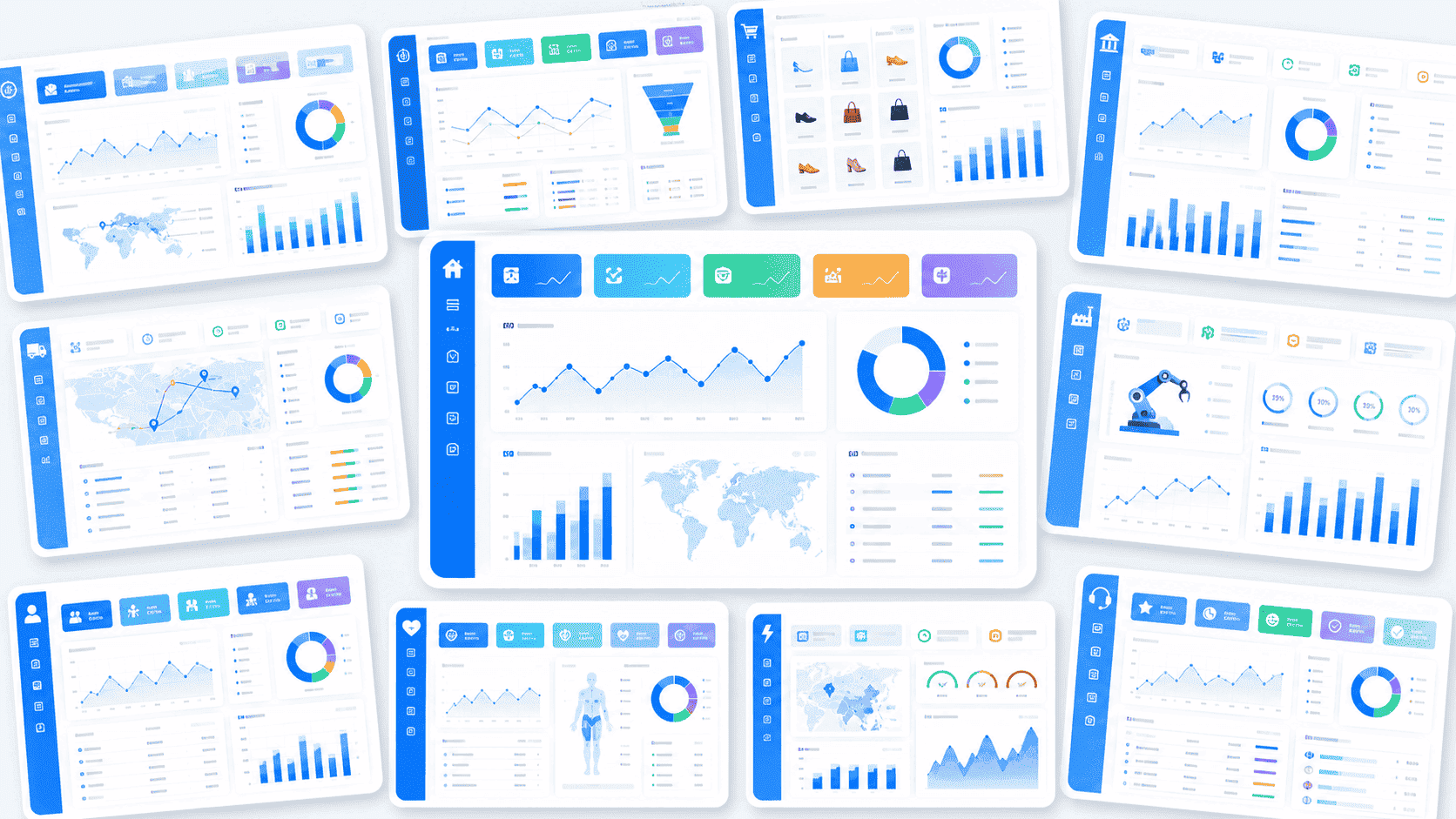
Get Ready-to-Use Dashboard Templates in Fine Gallery
The strongest Dora pitch is scenario + product + service: FineBI provides the trusted BI foundation, Dora provides the AI digital employee, and implementation service connects data, governance, semantic setup, Skills, and rollout.
If your 2026 plan includes better reporting trust, stronger governance, and enterprise-ready AI, this combination gives IT leaders a more practical path than disconnected dashboards on one side and generic AI tools on the other.
They typically include data integration, quality control, master data management, metadata, governance, security, and lifecycle management. The goal is to make enterprise data consistent, usable, and trusted across reporting, analytics, and AI.
BI and AI depend on accurate, well-defined, permission-aware data. Without strong data management, dashboards become inconsistent and AI can produce fast answers based on unreliable or noncompliant data.
Enterprise data management is the broader discipline that covers governance, integration, quality, security, and data delivery across the organization. Master data management is one part of it, focused on keeping core entities like customers, products, and suppliers consistent across systems.
They help reduce data silos, duplicate records, conflicting KPI definitions, poor data quality, and weak access controls. This improves trust in reports, supports compliance, and reduces time spent reconciling data manually.
FineBI provides trusted dashboards, governed metrics, and a consistent semantic foundation for analysis. Dora builds on that foundation by letting users ask questions in natural language and receive governed chart-based answers and scheduled insights.
Product Trial
FineReport
Pixel-perfect reports · Interactive dashboards · Easy data entry · Digital twins