API lifecycle management gives you a structured way to handle every stage of an API, from its creation to retirement. This approach helps you use APIs more efficiently, keep your data secure, and stay agile as your business grows. The table below highlights the impact of managing APIs throughout their lifecycle:
API management software lets you design, publish, and analyze APIs securely. You can protect your data, comply with regulations, and support digital transformation. Strong API lifecycle management also improves how you integrate data and make decisions.
Understanding API Lifecycle Management
What is API Lifecycle?
You interact with APIs every day, even if you do not realize it. When you use a mobile app to check the weather or send a message, you rely on APIs to connect different systems. The api lifecycle describes the journey an api takes from its first idea to its final retirement. You can think of it as a roadmap that guides how you create, manage, and eventually retire an api.
The api lifecycle includes several important stages. You start with business planning, where you identify what problem the api will solve. Next, you move to api design, where you decide how the api will work and what data it will handle. After that, you enter the development and publication stage, where you build and release the api. Monitoring and reporting come next, allowing you to track how the api performs and make improvements. Finally, you reach versioning and retirement, where you update or retire the api as your needs change.
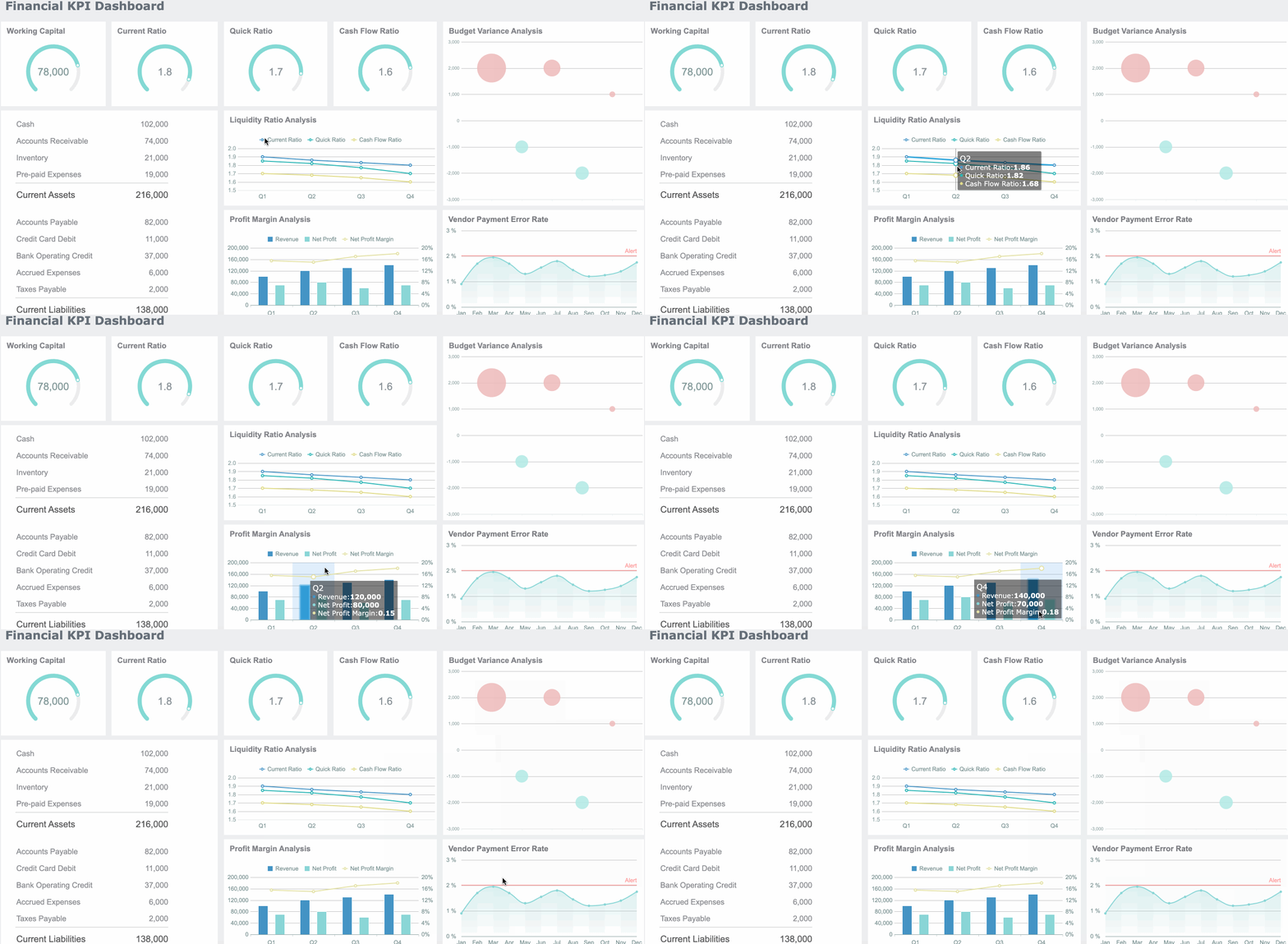
KPI dashboard created by FineBI
Tip: Managing each stage of the api lifecycle helps you keep your apis reliable, secure, and aligned with your business goals.
Here is a simple breakdown of the main stages in the api lifecycle:
- Business Planning
- API Design
- Development and Publication
- Monitoring and Reporting
- Versioning and Retirement
Each stage plays a key role in making sure your api delivers value and stays effective over time.
Why API Lifecycle Management Matters
You might wonder why api lifecycle management deserves your attention. When you manage the api lifecycle well, you gain control over how your apis evolve and support your business. This process ensures that your apis stay secure, efficient, and ready to meet new challenges.
Leading organizations define api lifecycle management as the process that guides apis through each phase, from planning and design to retirement. Each phase includes specific tasks, such as identifying business needs, coding, testing, monitoring, and eventually retiring outdated apis. By following this approach, you avoid common pitfalls and keep your apis running smoothly.
You face several challenges during api lifecycle management. These include handling different versions of apis, protecting sensitive data, keeping documentation up to date, and adapting to changing business needs. You also need to make sure your teams communicate well and follow best practices for api usage. Managing multiple apis at scale, setting clear policies, and finding ways to monetize your apis can add more complexity.
When you invest in api lifecycle management, you unlock several benefits:
- Improved api quality leads to better data integration across your systems.
- Increased agility allows you to respond quickly to new data needs.
- Scalability helps you handle growing amounts of data and users.
- Better alignment with business goals supports informed decision-making.
You can see that api lifecycle management is not just about technology. It is about making your business more efficient, secure, and ready for the future. By understanding and managing each stage of the api lifecycle, you set yourself up for long-term success.
Key Stages of API Lifecycle

You need to understand each step in the api lifecycle to manage your apis effectively. The main api lifecycle stages include planning and design, development and testing, deployment and consumption, monitoring and maintenance, and retirement. Each stage supports your business goals and ensures your apis remain reliable and secure.
Design and Planning
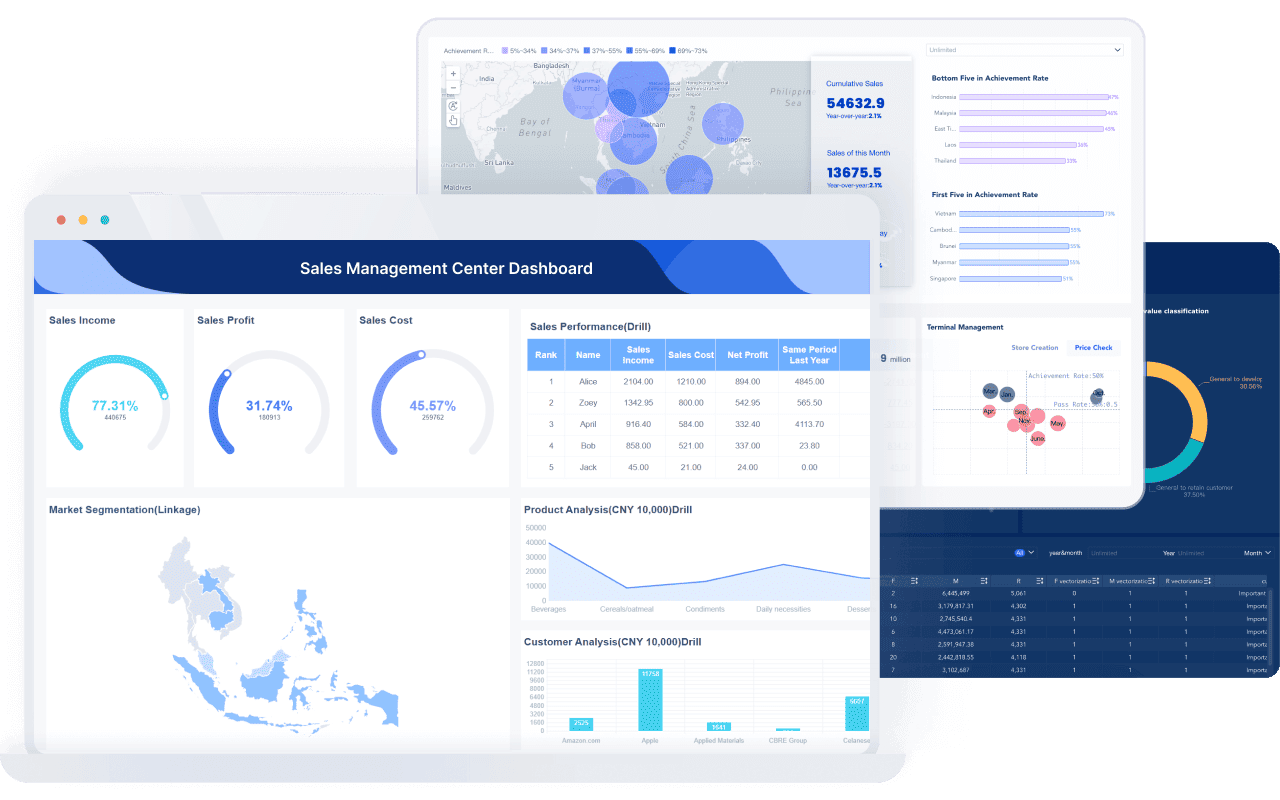
The planning and design stage sets the foundation for your api. You start by defining your business goals and outlining how the api will help you achieve them. A strong api design uses RESTful principles, supports formats like JSON or XML, and uses standard HTTP methods. During planning and design, you also create thorough documentation and set security standards. FineReport and FineBI help you at this stage by allowing you to map out data integration needs and automate workflows, making your planning and design process more efficient.
Tip: Align your planning and design with business goals and measure success using metrics like user engagement, adoption rates, and customer satisfaction.
Development and Testing
In this stage, you build your api and test it for quality. You should use automation to run tests often and catch issues early. Testing should cover validation, functionality, reliability, and security. FineReport and FineBI support this by letting you simulate data flows and check integration points, ensuring your api works as planned. Early testing during development saves time and prevents bigger problems later.
Deployment and Consumption
After testing, you deploy your api for users. Use CI/CD pipelines and strategies like canary releases to reduce risk and ensure smooth updates. FineReport and FineBI make deployment easier by providing clear api documentation, request methods, and error codes. This helps users understand how to consume your api and troubleshoot issues.
Monitoring and Maintenance
Once your api is live, you must monitor its performance. Track metrics like response time, error rate, uptime, and resource usage. FineReport and FineBI offer dashboards that let you visualize these metrics in real time. Regular monitoring helps you spot problems early and keep your api running smoothly.
Retirement
When your api is no longer needed, plan its retirement carefully. Communicate with users about deprecation timelines and offer migration paths. FineReport and FineBI help you manage this process by tracking usage and supporting versioning, so you can retire old apis without disrupting your business.
By following these api lifecycle stages, you ensure your apis stay aligned with your business needs and deliver value at every step.
Benefits of API Lifecycle Management

Productivity and Collaboration
You gain more productivity when you use api lifecycle management. Structured processes for api design, development, and deployment help you avoid confusion and wasted effort. You see a clear roadmap for each api project, which gives leaders better visibility into performance and health. Teams work together more smoothly because everyone shares a common vocabulary for api work. The table below shows how these benefits appear in your organization:
FineBI help you collaborate by letting multiple users edit analysis subjects at the same time. You also use features like the Data Alert Plugin to get instant notifications, which improves your response times in api management.
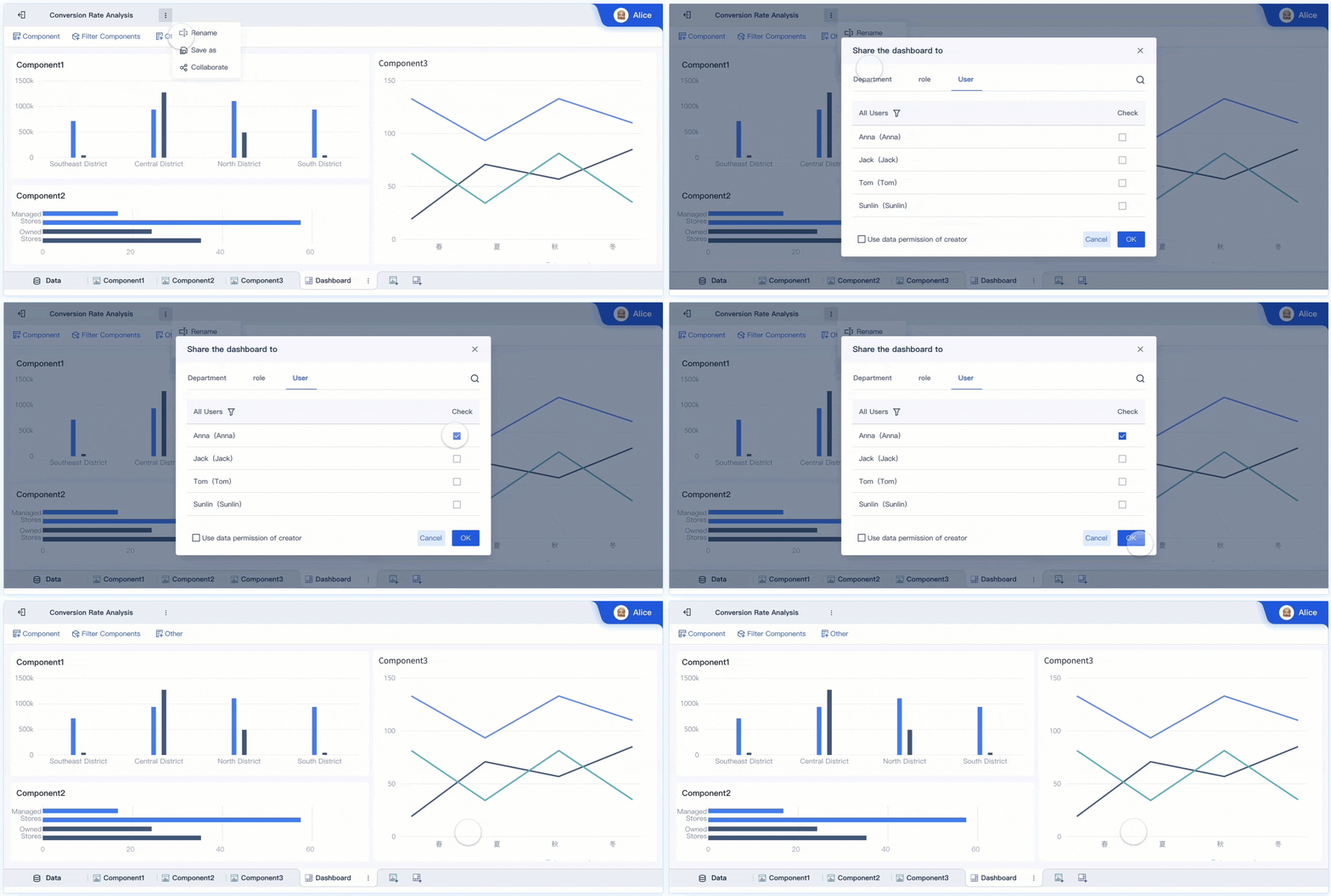
FineBI collaboration
Security and Compliance
You protect your data and meet compliance standards when you manage the api lifecycle well. You build api security into every stage of the software development life cycle. You use role-based and attribute-based access control to limit who can use each api. You enforce Zero Trust principles for every api call. You log and trace all activity for audit readiness. The table below lists key standards you should follow:
You improve scalability and performance by monitoring each api and setting clear benchmarks. You optimize queries and use indexing for apis with heavy database usage. You add caching for apis that serve static data. You use tools like FineReport and FineBI to visualize performance metrics and spot issues early. You integrate continuous monitoring into your workflow and set service level objectives for every api. You prioritize impactful optimizations to keep your apis running smoothly as your business grows.
- Integrate continuous monitoring and set benchmarks for each api.
- Optimize queries and use indexing for better performance.
- Add caching for static data to speed up api responses.
Enhanced Decision-Making
You make better decisions when you use api lifecycle management. You catalog all apis, so you understand dependencies and avoid uncontrolled growth. You require authentication for internal apis and monitor for suspicious activity. You apply uniform security policies across your organization. You govern apis with consistent practices that scale across teams. You monitor deployed apis to gauge usage patterns and make proactive decisions about infrastructure. FineBI support this by providing dashboards and analysis tools that help you track key metrics and trends. For example, BOE Technology Group used FineBI to unify data and improve operational efficiency, leading to faster and more accurate decision-making.

Full Lifecycle API Management Best Practices
You need the right tools to manage every stage of the api lifecycle. A strong api management solution supports your api-first approach and helps you deliver reliable api implementation. The table below shows the key features you should look for:
FineBI offer dashboards, integration, and monitoring features that support full lifecycle api management. You can use these platforms to improve api observability and streamline your implementation.
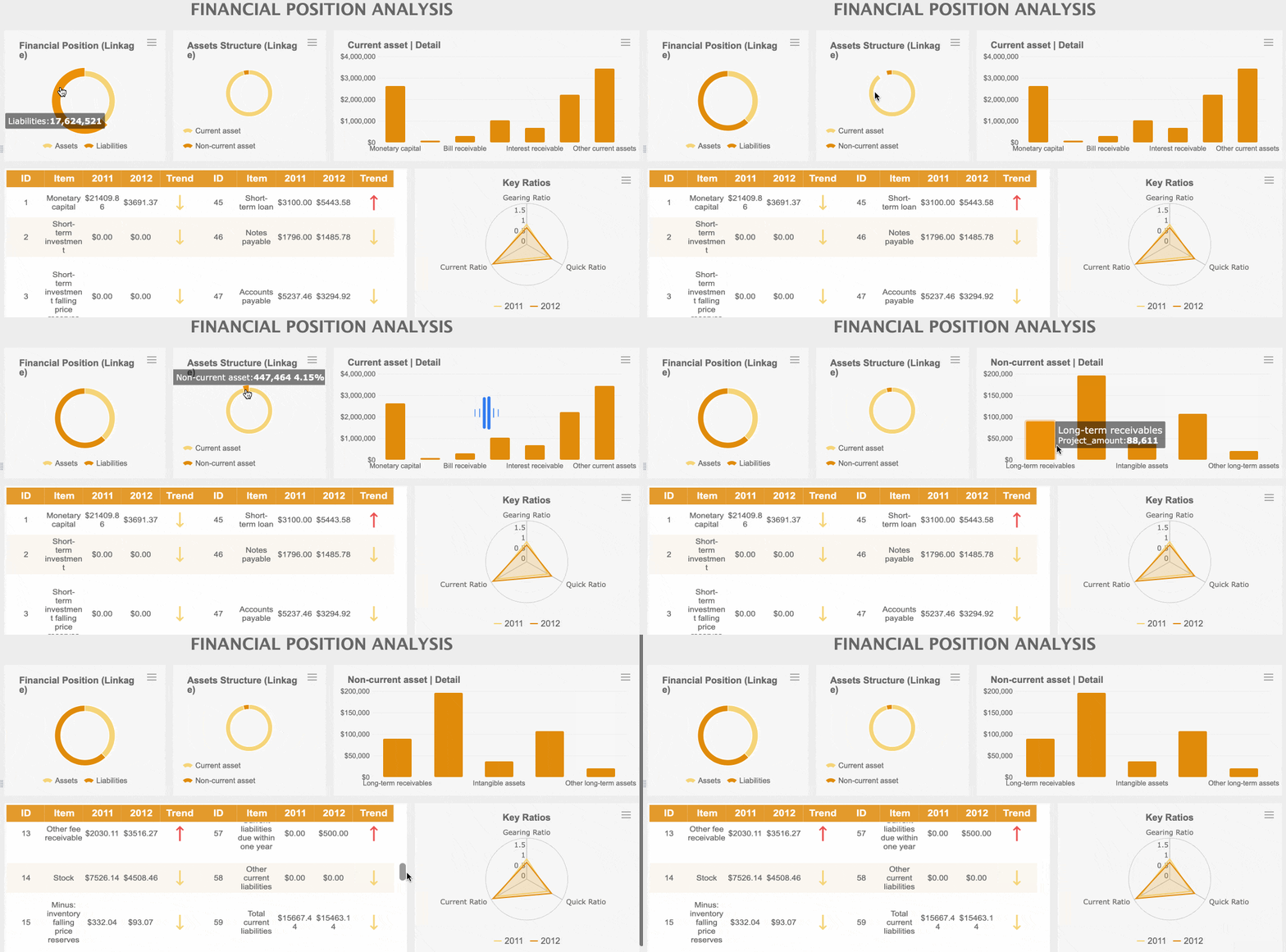
dashboard created by FineBI
Governance and Security
A strong api governance strategy ensures your apis remain secure and consistent. You set policies that guide api design, testing, and deployment. Good governance helps you automate compliance checks and enforce security standards. The table below highlights the impact of governance and security:
You should develop apis according to specifications, automate compliance, and prioritize security in your api governance strategy. FineBI help you enforce these practices by providing tools for monitoring, access control, and audit trails.
Overcoming Common Challenges
You may face several challenges in full lifecycle api management. Consistent api design and documentation can be difficult. Handling api versioning and backward compatibility requires careful planning. Monitoring api performance becomes more complex as your api portfolio grows. To overcome these issues:
- Use an api-first approach to set clear standards from the start.
- Rely on automated api testing and monitoring tools for better observability.
- Manage api implementation with strong versioning and lifecycle policies.
- Leverage FineBI for integration, monitoring, and governance.
Manufacturing companies use these best practices to improve supply chain management. For example, BOE used FineBI to unify data and boost operational efficiency. You can achieve similar results by following these strategies in your own api management solution.
Full API Lifecycle Management with FineReport and FineBI
Integration and Automation
You need strong integration and automation tools to manage the full api lifecycle management process. FineBI work together to give you a unified platform for api management. You can connect FineReport to the FineBI decision-making platform. This integration lets you handle all your api tasks in one place. You only need to log in once because user permissions and management systems are unified after integration. You can synchronize JAR packages and keep dashboard and dataset configurations up to date. This approach helps you automate many steps in the api lifecycle, from design to monitoring.
- FineReport integrates with FineBI for a unified application service.
- You use a single login because user permissions and management are unified.
- You synchronize JAR packages and maintain dashboard and dataset configurations.
Automation in full api lifecycle management saves you time. You can schedule tasks, monitor api performance, and set up alerts for issues. FineReport and FineBI help you keep your api secure and reliable at every lifecycle stage.
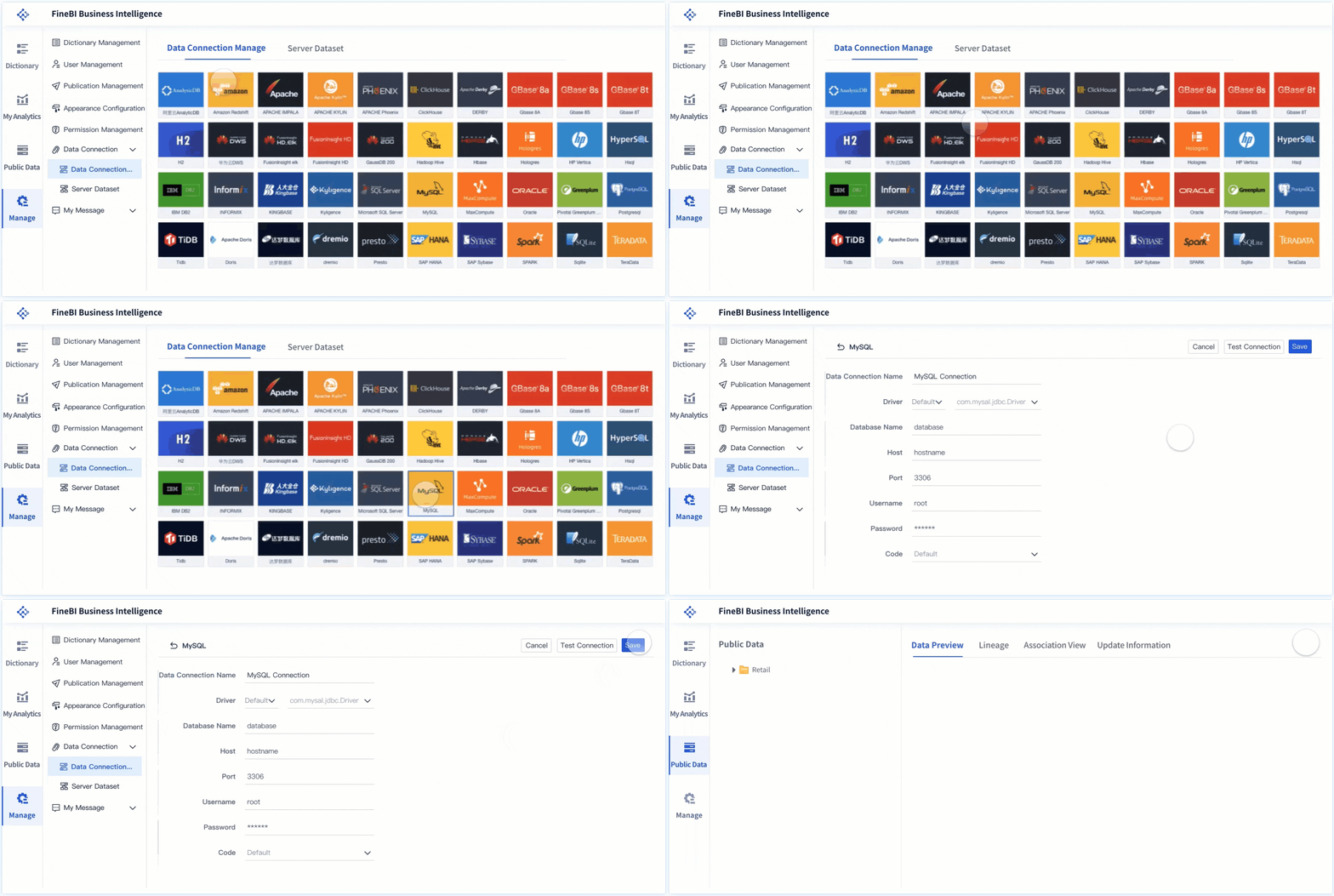
Real-World Use Cases
You can see the value of full api lifecycle management in real business scenarios. In manufacturing, companies use FineBI to connect data from supply chain systems. You can track inventory, monitor supplier performance, and manage logistics through integrated dashboards. This gives you real-time insights and helps you make better decisions. In another case, a technology company unified its data and improved operational efficiency by using FineBI for api monitoring and governance. You can apply these tools to any industry that needs strong api management across the lifecycle.
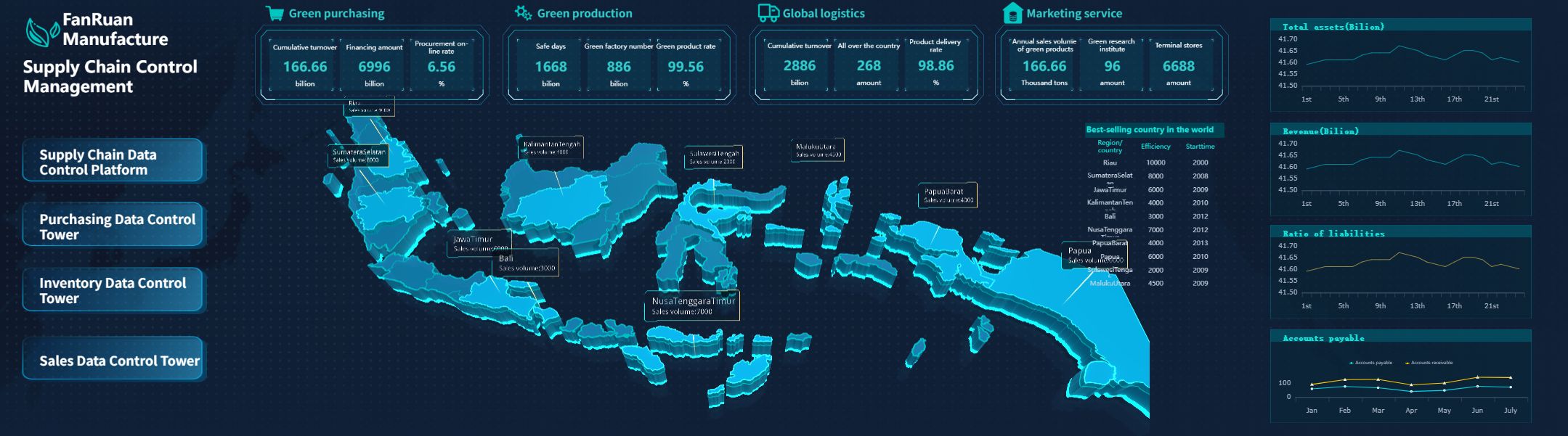
supplychain dashboard
Note: When you use FineReport and FineBI, you gain control over every api lifecycle phase. This helps you stay agile and competitive in a fast-changing market.
API lifecycle management plays a vital role in helping you drive business growth and digital transformation. Companies that excel in this area often create new revenue streams, boost agility, and reduce integration costs.
- Many organizations, like Amadeus Corporation, have unlocked innovation by adopting an API-driven approach.
- Effective management leads to faster partner onboarding and better business outcomes.
To improve your strategy:
- Document your current API landscape.
- Identify key stakeholders.
- Prioritize your requirements.
- Test modern tools such as FineBI.
- Plan for future growth.
Modern solutions turn usage data into insights, helping you make smarter decisions.