Enterprise risk moves faster than most dashboards. A board pack may show yesterday’s exposure, last week’s incident count, or a month-end compliance trend, but risk leaders still need to ask: What changed, why does it matter, who owns the response, and what should happen next?
That is where AI in risk management is shifting from simple visualization to scenario execution. With FineBI + Dora, business users can ask for analysis in chat, generate chart-based answers or dashboard-style views from trusted BI assets, and receive scheduled summaries before the next meeting. Instead of stopping at passive monitoring, teams can move toward governed AI workflows for detection, explanation, prioritization, alerting, and follow-up.
Click To Try The Dashboard
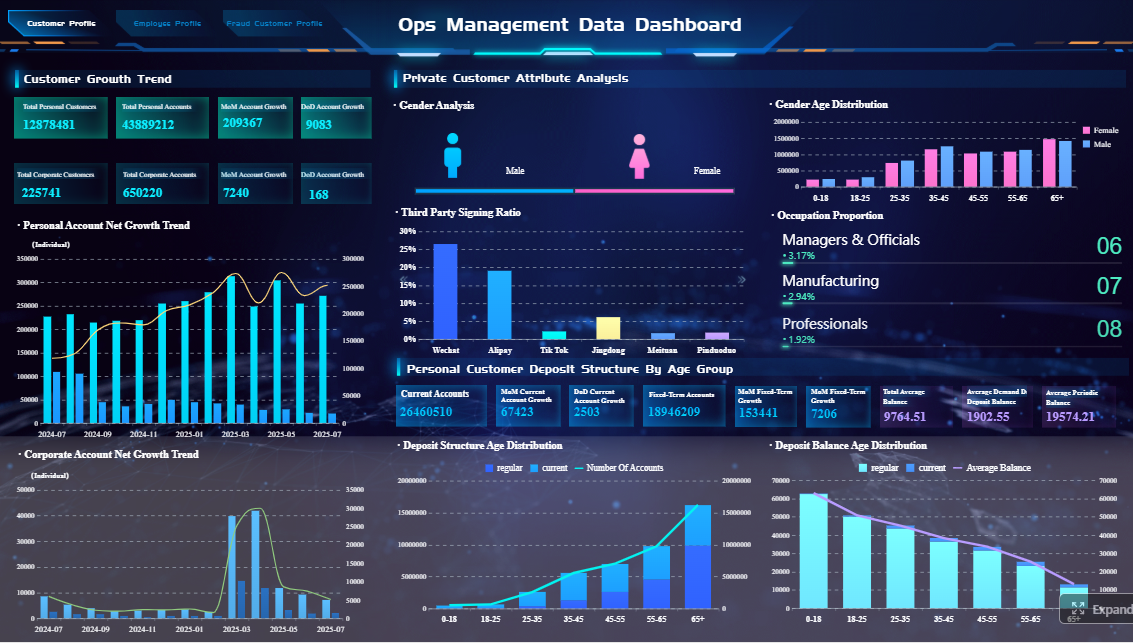
All dashboards in this article are built with FineBI
Why AI in Risk Management Is Replacing Static Dashboards
Static dashboards still matter. They provide the trusted view of risk KPIs, control status, incident trends, loss patterns, and exception counts. But in fast-moving enterprise environments, they often fall short in three ways.
First, dashboards are usually retrospective. They tell leaders what happened, but not always what is emerging right now. Second, they can be fragmented across finance, compliance, operations, cyber, procurement, and audit tools. Third, they rely on users to notice issues, interpret them correctly, and manually coordinate action.
That is why more enterprises are looking beyond visualization toward Agentic BI. In practical terms, agentic BI workflows combine:
natural-language request
a trusted semantic layer
governed query or Skill execution
an answer, chart, summary, action, and follow-up
For enterprise leaders, the value is concrete:
Speed: faster access to risk signals and supporting context
Context: KPI definitions, thresholds, history, and business ownership in one flow
Prioritization: material issues ranked instead of buried in long reporting packs
Operational follow-through: alerts, pushes, summaries, and owner reminders
FineBI provides the trusted dashboard, metric modeling, semantic assets, and self-service analytics foundation. Dora adds the enterprise Data Agent layer that helps people interact with that foundation through chat and governed AI workflows. This is the difference between “the dashboard exists” and “the organization can actually act on the dashboard.”
What Agentic BI Workflows Change in Enterprise Risk Operations
From retrospective reporting to real-time risk detection
Risk functions traditionally operate on periodic reviews: weekly incident summaries, monthly control reports, quarterly enterprise risk packs. Those outputs are still necessary, but they are too slow as a primary operating model for dynamic risk environments.
AI in risk management improves signal detection by continuously checking trusted data against business rules, historical patterns, and threshold logic across areas such as:
finance risk
operational risk
compliance risk
third-party risk
cyber and technology risk
A static dashboard may show that policy exceptions rose 18% over the quarter. An agentic workflow goes further: it can detect the spike earlier, isolate which business units are driving it, summarize possible causes, and push an exception alert to the relevant owner.
This is where FineBI + Dora becomes useful. FineBI structures the risk metrics and trend views. Dora can retrieve those governed assets, interpret KPI rules, compare time windows, and provide a chart-based answer through chat or a scheduled update. Leaders do not have to wait for an analyst to open the dashboard, export a slide, and write commentary.
From fragmented tools to coordinated intelligence
Most enterprises do not have one clean risk system. They have ERP data, compliance systems, audit logs, vendor records, treasury data, ticketing tools, security events, spreadsheets, and executive reporting packs. The problem is not lack of data. The problem is lack of coordination.
Agentic BI workflows create a more unified decision layer by connecting:
Artificial Intelligence (AI) applied to risk management becomes more useful when it works on top of governed enterprise assets rather than isolated prompts. That matters because risk decisions depend on definitions: what counts as a critical incident, how a control failure is classified, when a liquidity threshold is breached, or who owns escalation.
FineBI helps establish that governed analytics base. Dora can then act as an AI assistant or AI digital employee that uses those definitions in a more controllable and auditable workflow. This gives enterprise leaders cross-functional visibility without turning risk analysis into a free-form chatbot exercise.
From alerts to recommended actions
Risk teams are not asking for more alerts. They are asking for fewer low-value alerts and better decisions.
A mature agentic workflow can do more than notify. It can:
summarize the issue in business language
rank material threats by severity or exposure
show supporting charts and breakdowns
identify the likely owner
suggest next-step actions
generate a meeting-ready briefing
For example, a surge in aged receivables may not be just a finance issue. It may intersect with customer concentration risk, contract disputes, or regional operational disruption. Dora can help package that context by retrieving the related FineBI assets and producing a dashboard-style analysis view for the decision-maker.
That is the real upgrade in ai in risk management: not just more automation, but better landing capability in day-to-day enterprise risk operations.
A Practical Framework for Adopting AI in Risk Management
Align use cases with risk modernization goals
The best AI initiatives in risk management start with recurring, high-value workflows, not abstract innovation goals. Enterprise leaders should prioritize scenarios where delays, manual analysis, and fragmented reporting create visible business pain.
Good starting points include:
incident triage and escalation
control monitoring and exception tracking
third-party risk surveillance
executive risk briefing preparation
policy exception analysis
fraud or anomaly review support
Each of these scenarios has a clear operating value. They also fit broader risk modernization goals such as improving response time, increasing control coverage, reducing manual report preparation, and strengthening cross-functional visibility.
For executives, the key message is simple: Dora is not an AI experiment. It is a landed digital employee for recurring data work such as daily risk briefing, exception monitoring, monthly risk summary generation, and owner follow-up.
For IT teams, the opportunity is different. IT no longer has to manually build every custom report request. Its role shifts toward optimizing data connections, semantic layers, permissions, data quality, and reusable AI Skills.
Build governance with trusted standards
AI in risk management must be governed as carefully as the risks it is designed to monitor. That means adoption should map to a clear AI risk management framework and recognized guidance such as NIST.
Enterprise teams should define:
model and workflow accountability
approval rules for Skills and alert logic
explainability requirements for recommendations
access control boundaries
auditability of AI outputs
human-in-the-loop review for material decisions
This is especially important in regulated settings. Leaders should not treat AI-generated outputs as self-validating. Trusted results depend on trusted data, KPI governance, semantic setup, and review processes.
FineBI + Dora fits this enterprise requirement well because the AI layer is not separated from the governed BI layer. FineBI provides the trusted metrics, dashboard logic, permissions, and semantic definitions. Dora uses that governed foundation to produce more controllable outputs than raw prompt-only agents.
Design the data and workflow foundation
The quality of AI in risk management depends on the quality of the operating foundation. Before scaling, teams should check whether they have:
standardized KPI definitions
integrated data across core risk sources
owner and escalation mappings
threshold and anomaly rules
usable history for trend and comparison analysis
permission governance by role and business unit
This is why FineBI matters. It is the BI foundation that supports dashboards, self-service analytics, metric modeling, and trusted semantic assets. Dora becomes much more useful when it can call those governed assets reliably.
From an implementation perspective, the workflow foundation should also define:
when summaries are generated
who receives alerts
which events trigger follow-up
what users can ask in chat
what AI Skills are approved for production use
Without that design, enterprises often get fragmented AI pilots. With it, they get a practical Agentic BI workflow that can actually land.
Use Cases Enterprise Leaders Should Evaluate First
AI in risk management for finance
Finance risk is one of the strongest entry points because the business impact is visible and the data is usually structured enough to govern well.
Common scenarios include:
forecasting variance detection
fraud signal review
liquidity exposure monitoring
policy exception tracking
portfolio or receivables risk surveillance
A finance manager may already have a FineBI dashboard showing cash position, overdue receivables, exposure by customer, unusual transactions, and exception trends. The problem is that someone still has to interpret changes, prepare commentary, and escalate issues.
With Dora, the same finance team can ask for analysis in natural language, retrieve trusted dashboard assets, and get a chart-based answer with business context. A Risk Alert Officerdigital employee can monitor thresholds and push timely notifications. A Daily Briefing Secretary can prepare a morning risk summary before treasury or finance review meetings.
Core finance risk KPIs to govern
Liquidity Coverage: Ratio of available liquid resources to short-term obligations. Business value: Helps leaders assess near-term financial resilience. AI use:Dora can retrieve the metric through chat, compare it against internal thresholds, and include it in scheduled treasury briefings.
Overdue Receivables Rate: Share of receivables past the due date. Business value: Indicates cash flow pressure and collection risk. AI use:Dora can detect deterioration by region, customer segment, or owner and push exception summaries to finance leads.
Policy Exception Count: Number of transactions or activities outside approved policy. Business value: Highlights control weakness and compliance exposure. AI use:Dora can summarize exception spikes, rank them by materiality, and generate a meeting-ready review pack.
Fraud Signal Volume: Count of transactions or behaviors flagged by risk rules. Business value: Supports faster triage and targeted investigation. AI use:Dora can surface trend changes, show breakdowns by type, and route alerts to the right reviewers.
Exposure Concentration: Degree of dependency on a limited group of accounts, vendors, or assets. Business value: Reveals concentration risk that may amplify losses. AI use:Dora can retrieve the relevant FineBI analysis subject and produce a dashboard-style analysis view for executive review.
Operational and compliance risk workflows
Operational and compliance risks are often harder to manage because signals are spread across multiple systems and owners. Agentic BI workflows can help connect policy monitoring, control results, audit preparation, vendor performance, and regulatory change tracking into a more usable decision flow.
High-value scenarios include:
monitoring control failures and repeat exceptions
identifying high-risk vendors with incident overlap
preparing audit summaries from trusted dashboards
tracking policy adherence by business unit
reviewing regulatory change impact across functions
A compliance leader does not need another static heatmap alone. They need a way to ask, “Which control failures increased this month, which business units are affected, and where do we have repeat exceptions with no owner follow-up?” Dora can help answer that through governed retrieval from FineBI dashboards and semantic assets.
Core operational and compliance risk KPIs to govern
Control Failure Rate: Share of tested controls that fail or require remediation. Business value: Indicates weakening operational discipline and higher residual risk. AI use:Dora can monitor trend changes, summarize concentrations, and notify control owners.
Open Remediation Aging: Average number of days unresolved findings remain open. Business value: Shows whether risk issues are being resolved promptly. AI use:Dora can push periodic follow-up reminders and compile overdue remediation briefings.
Vendor Risk Score: Composite indicator of third-party performance, compliance, and incident exposure. Business value: Supports early intervention for supplier and ecosystem risk. AI use:Dora can retrieve vendor breakdowns, compare periods, and prepare escalation summaries for procurement and compliance leaders.
Policy Adherence Rate: Share of monitored activities aligned with internal policy rules. Business value: Helps detect compliance drift before it becomes a regulatory issue. AI use:Dora can explain which rule categories are driving decline and push exceptions to responsible teams.
Audit Finding Recurrence: Frequency of repeated findings across review periods. Business value: Signals unresolved root causes and ineffective remediation. AI use:Dora can use FineBI’s governed metric logic to identify repeat patterns and include them in management reports.
Executive decision intelligence
Executives need less dashboard hunting and more clear risk context. Static reporting packs often become long, backward-looking, and difficult to prioritize. Agentic BI enables a better executive operating model: dynamic risk briefings with supporting visuals, key exceptions, owner status, and scenario-based recommendations.
This is where the combination of FineBI + Dora is especially useful. FineBI provides the executive dashboard structure and trusted KPI layer. Dora acts as a decision support assistant that can prepare periodic briefings, answer follow-up questions in chat, and surface what changed since the last review.
An executive might ask for:
top enterprise risks by movement this month
business units with worsening control exceptions
regions with rising collections or liquidity stress
critical incidents awaiting action owner response
Instead of delegating that request to multiple teams, Dora can retrieve the governed analytics base and return a concise, chart-based response. That lowers operating friction for leaders while preserving control over data quality and access.
For enterprise risk operations, the most relevant Dora digital employees are usually:
Risk Alert Officer for threshold monitoring, anomaly detection, preliminary root-cause analysis, owner notification, and suggested action push
Daily Briefing Secretary for scheduled summaries, KPI briefings, and meeting preparation
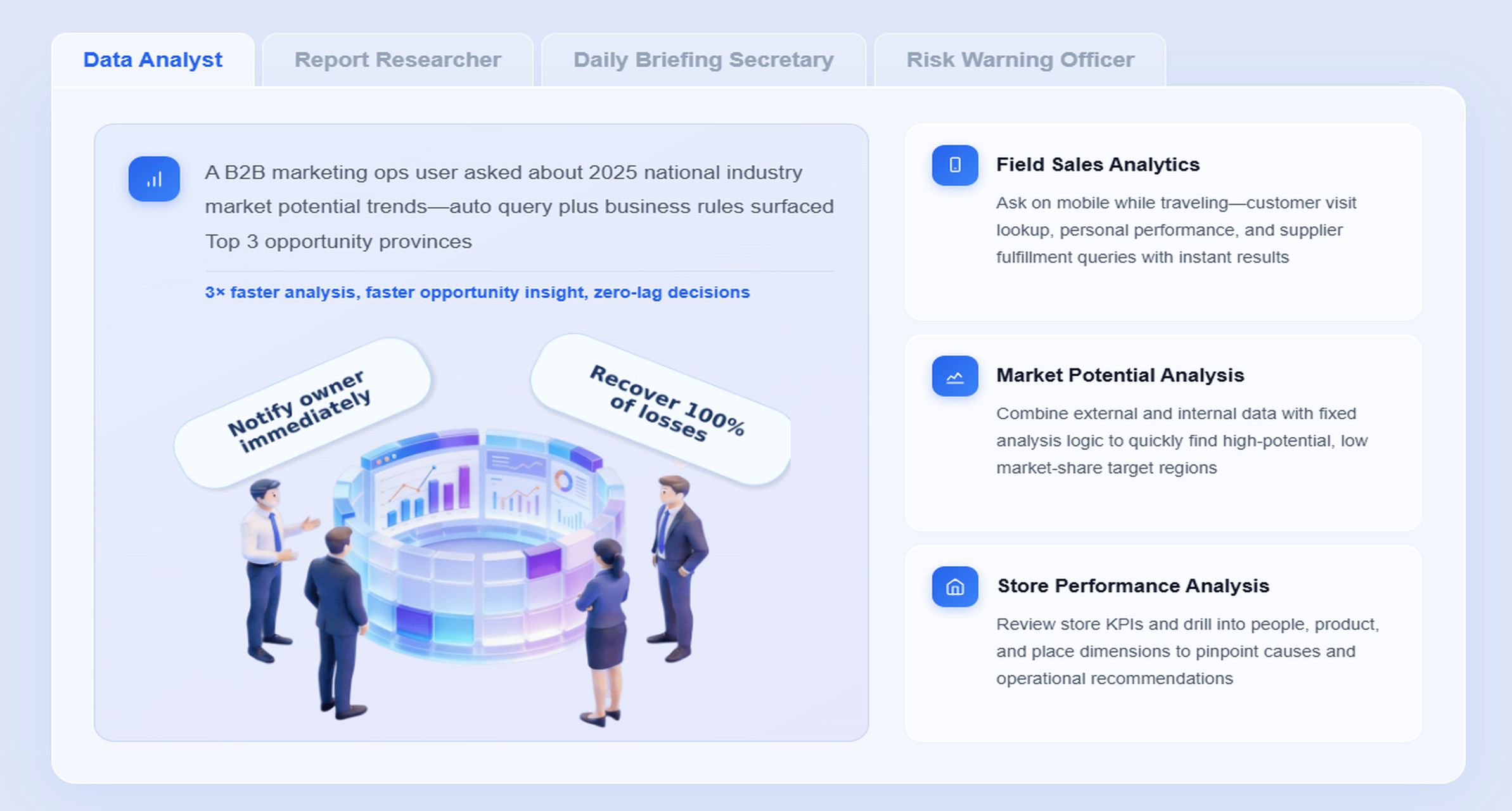
Data Analyst for natural-language data query, dashboard retrieval, and follow-up analysis
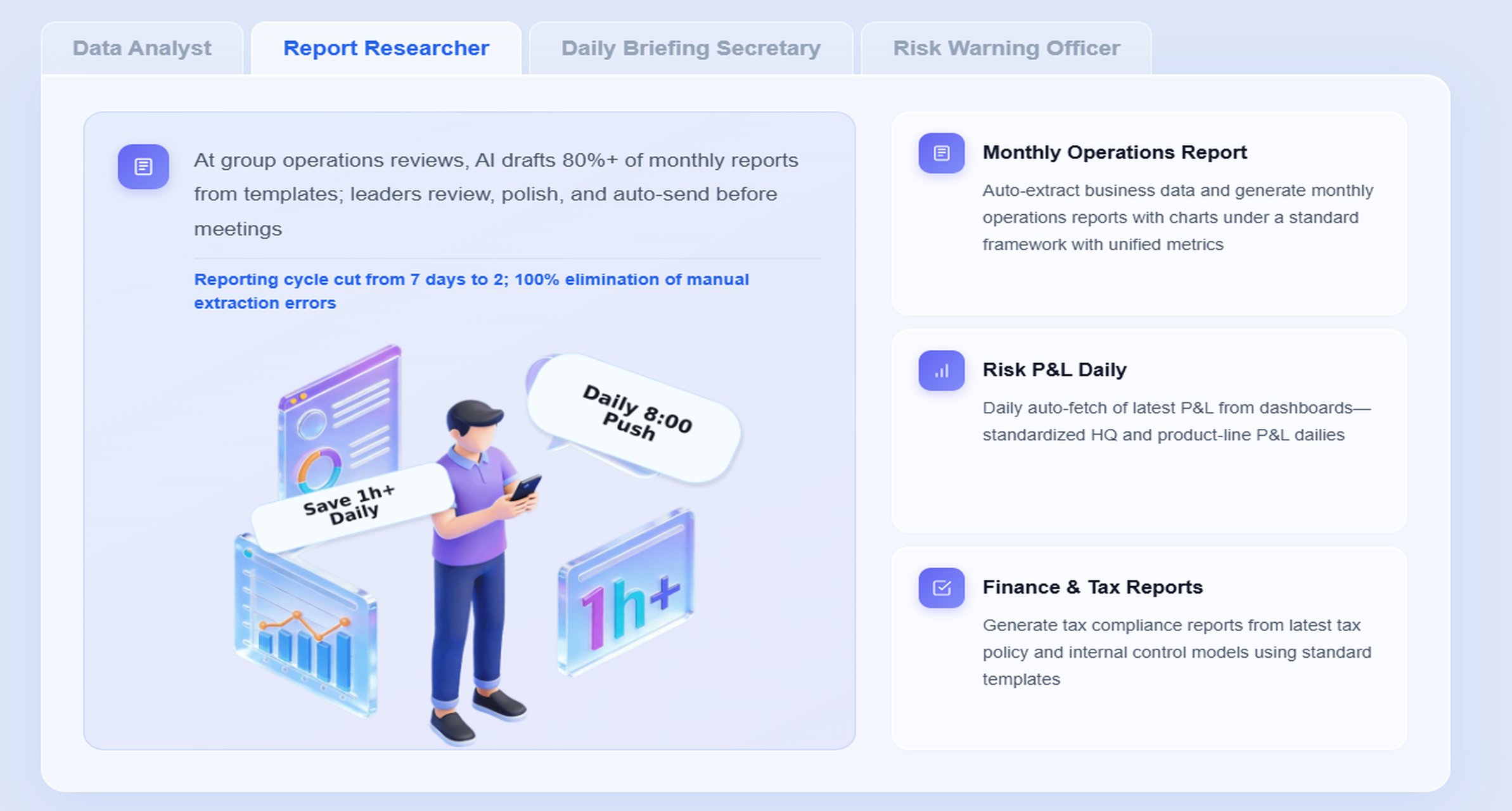
Report Researcher for structured risk report generation from trusted dashboards and templates
A common starting point is the Risk Alert Officer supported by the Daily Briefing Secretary.
A scenario-specific chat example might look like this:
“Show me this week’s top enterprise risk changes across liquidity, policy exceptions, vendor risk, and unresolved incidents. Rank the most material issues, explain what changed versus last week, and prepare a briefing for tomorrow’s risk committee.”
Here is how the governed AI workflow works in practice:
Retrieve trusted FineBI dashboard or analysis-subject data. Dora pulls the relevant risk dashboards, KPI models, and semantic assets from FineBI instead of relying on ungoverned raw prompts.
Understand KPI definitions, filters, business terms, and semantic rules. Dora recognizes what “material issue,” “unresolved incident,” “policy exception,” or “liquidity exposure” means based on the governed BI and semantic setup.
Generate chart-based answers or dashboard-style analysis views through chat.
The user receives ranked risk changes, comparisons, breakdowns, and concise narrative summaries without manually navigating multiple dashboards.
Detect abnormal changes or threshold breaches where relevant.
The Risk Alert Officer can flag unusual changes in control failures, overdue remediation, vendor exposure, or finance risk indicators.
Push insights, alerts, or suggested actions to responsible users. Dora can notify a risk owner, finance lead, or compliance manager with a timely summary and the supporting analysis context.
Produce follow-up summaries for meetings or management review.
The Daily Briefing Secretary can prepare a scheduled executive briefing, highlighting what changed, what matters, and what requires attention.
This is why Dora should be positioned as an enterprise Data Agent and not a generic chatbot. It works on top of trusted enterprise analytics, governed permissions, and reusable Skills. That gives it better landing capability for repeatable risk workflows, with more controllable and auditable execution than feature-only agent comparisons.
It also fits enterprise cost and stability needs. By working through approved Skills and governed analytics assets, Dora is designed to reduce token waste, improve response speed, and increase workflow stability compared with raw prompt-only agents. The practical benefit is not just technical elegance. It is more reliable operational use.
Why FineBI is the foundation for trustworthy risk AI
AI in risk management only works when risk terms and metrics are defined clearly. FineBI provides that foundation through:
Leaders should take a balanced view of ai in risk management. AI can improve risk operations, but it can also introduce new forms of risk if deployed carelessly.
Common concerns include:
biased or incomplete data driving weak conclusions
opaque recommendations with poor explainability
automation overreach in high-stakes decisions
inconsistent use of risk terminology across systems
privacy, access, and regulatory issues
overconfidence in AI-generated summaries
That is why AI should support decision-making, not replace governance. Human review remains essential for material risk judgments, policy interpretation, and final escalation decisions. Enterprises should also verify that AI outputs respect FineBI permission boundaries and approved data access rules.
A responsible approach includes:
using governed semantic definitions
documenting approved Skills
reviewing recommendations before action in sensitive workflows
mapping use cases to internal AI governance and risk policies
aligning adoption with recognized frameworks such as NIST
How to measure impact and readiness
The right success metrics should connect operational value with governance maturity. Useful measures include:
detection speed for emerging issues
false-positive reduction in alerts
analyst productivity in triage and reporting
control or risk monitoring coverage
response time from alert to owner action
briefing preparation time for leadership meetings
percentage of governed KPIs available to AI workflows
user adoption of chat-based analysis over manual reporting requests
A pilot is usually ready to scale when:
KPI definitions are stable
data quality is sufficient for decision support
alert ownership is clear
permissions and governance are working
business users trust the outputs
the workflow solves a recurring, measurable problem
The strongest programs scale scenario by scenario, not all at once.
Actionable Best Practices
1. Standardize KPI definitions, synonyms, filters, and ownership
Risk AI fails quickly when terms are ambiguous. Define what each metric means, who owns it, what filters apply, and what business synonyms users may ask for in chat. This improves retrieval quality and makes Dora’s outputs more consistent.
2. Build a semantic layer inside the BI workflow
Do not treat semantics as an afterthought. FineBI should hold the trusted metric and business definition layer that Dora can use during governed query and Skill execution. This is what makes natural-language analysis enterprise-ready rather than loosely interpreted.
3. Treat data quality as part of the AI implementation
If risk data is duplicated, stale, or inconsistently classified, the AI layer will amplify those issues. Validate data pipelines, reconcile key risk sources, and set ownership for ongoing quality review.
4. Start with high-value recurring workflows instead of automating everything
A good first use case is one that happens often, consumes analyst time, and requires timely coordination. Daily risk briefings, control exception follow-up, vendor risk monitoring, and finance exposure alerts are better starting points than overly broad transformation ambitions.
5. Preserve permission governance and expand AI Skills gradually
AI outputs must respect FineBI access boundaries. Start with approved Skills, use human review for AI-generated reports, and expand only after users trust the workflow. This reduces governance risk while improving adoption.
Building this manually is complex. FineBI helps teams build trusted dashboards, metrics, and semantic assets. Dora turns those assets into an AI assistant that can answer questions in chat, generate dashboard-style analysis views, push scheduled summaries, monitor anomalies, and follow up with responsible owners.
For enterprise risk teams, that matters because the work is not just analytical. It is operational. Someone must identify the issue, provide context, alert the owner, prepare the briefing, and track the next step. FineBI + Dora supports that full scenario more effectively than a dashboard-only approach.
FineBI + Dora is not only a BI upgrade; it is a practical fourth-generation Agentic BI path. FineBI provides governed metrics and visual analysis. Dora provides the AI assistant layer for scenario execution, with more controlled Skills, lower token waste, faster execution paths, and more stable workflows than prompt-only agents.
Get Ready-to-Use Dashboard Templates in Fine Gallery
The strongest Dora pitch is scenario + product + service: FineBI provides the trusted BI foundation, Dora provides the AI digital employee, and implementation service connects data, governance, semantic setup, Skills, and rollout.
For executives, this means practical ROI from recurring risk work. For IT, it means building reusable governed AI workflows instead of handling endless one-off reporting requests. For business users, it means timely metrics, chat-based answers, scheduled summaries, and exception pushes without waiting for analysts or searching through dashboards.
If your current risk process depends on static dashboards, manual interpretation, and fragmented follow-up, the next step is not to abandon BI. It is to upgrade BI into governed Agentic BI.
AI in risk management uses machine learning, analytics, and natural language interfaces to detect, assess, and respond to enterprise risks faster than manual reporting alone. It helps teams move from static dashboards to continuous, action-oriented decision support.
Agentic BI adds context, reasoning, and follow-up to trusted BI data instead of only displaying past metrics. It can surface anomalies, explain changes, identify likely owners, and deliver alerts or summaries without waiting for manual analysis.
Yes, FineBI provides the governed metrics, dashboards, and semantic layer, while Dora lets users query those assets through chat and automated workflows. This supports more controlled and auditable analysis than relying on free-form AI prompts alone.
AI can help monitor financial, operational, compliance, third-party, cyber, and technology risks by checking trusted data against thresholds, trends, and historical patterns. The exact coverage depends on the quality of connected data sources and business rules.
Leaders should focus on data quality, clear KPI definitions, governance, ownership, and human oversight before scaling AI workflows. Using a framework such as NIST AI RMF can also help keep AI-driven risk processes trustworthy and accountable.
Product Trial
FineReport
Pixel-perfect reports · Interactive dashboards · Easy data entry · Digital twins