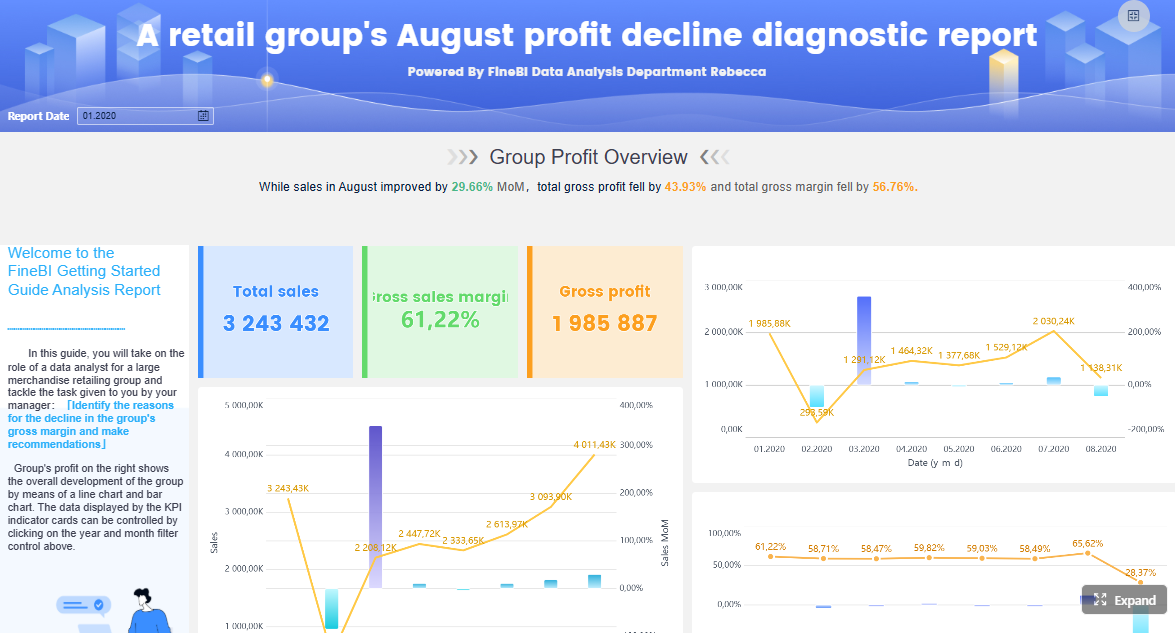
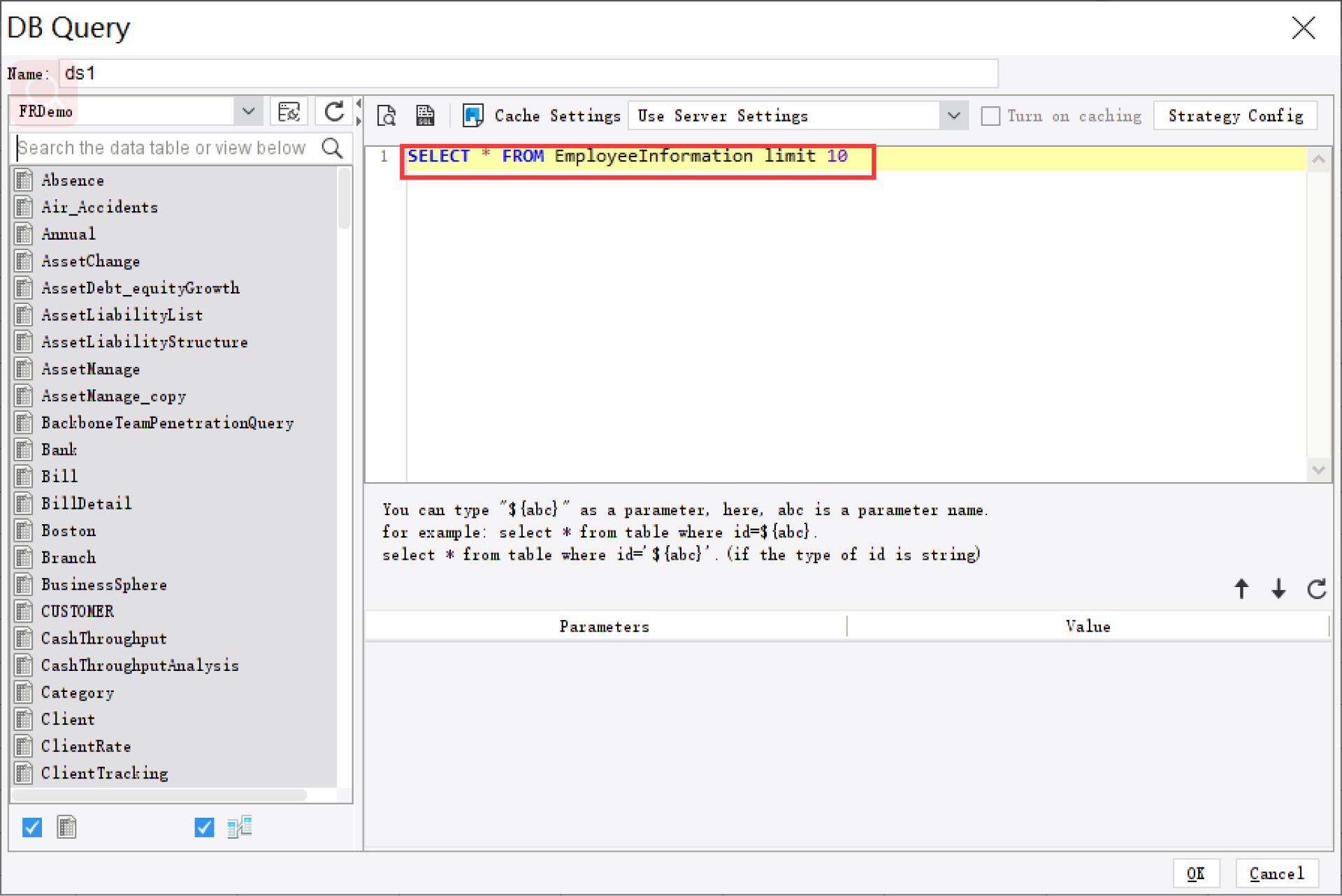
FineReport is an enterprise reporting and analytics platform that helps teams turn trusted master data into governed dashboards, pixel-perfect reports, and operational insights.
Click To Try The Dashboard
Best master data management software at a glance
Below is a quick comparison of the best master data management software options in 2026, with emphasis on governance depth, integration fit, deployment flexibility, and expected time-to-value.
Tool
Ideal use case
Deployment model
Governance depth
Integration fit
Estimated time-to-value
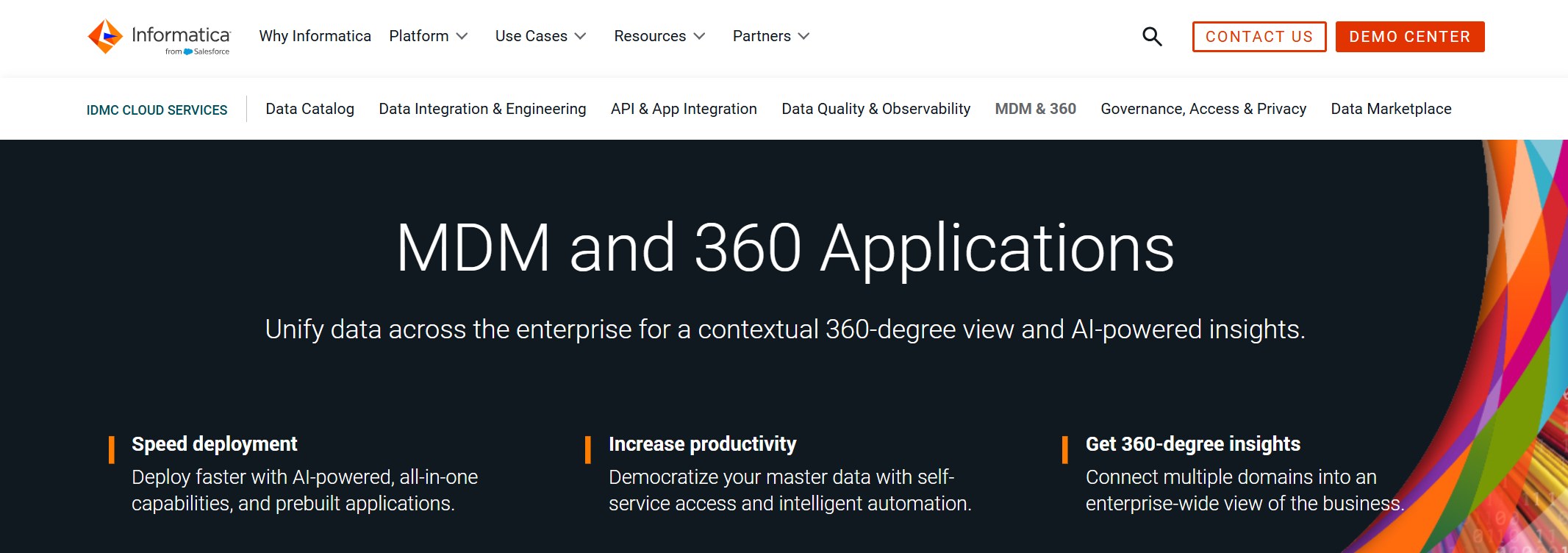
Informatica MDM
Large enterprises needing multi-domain governance at scale
Cloud, hybrid
Very high
Excellent for complex enterprise stacks
Medium to long
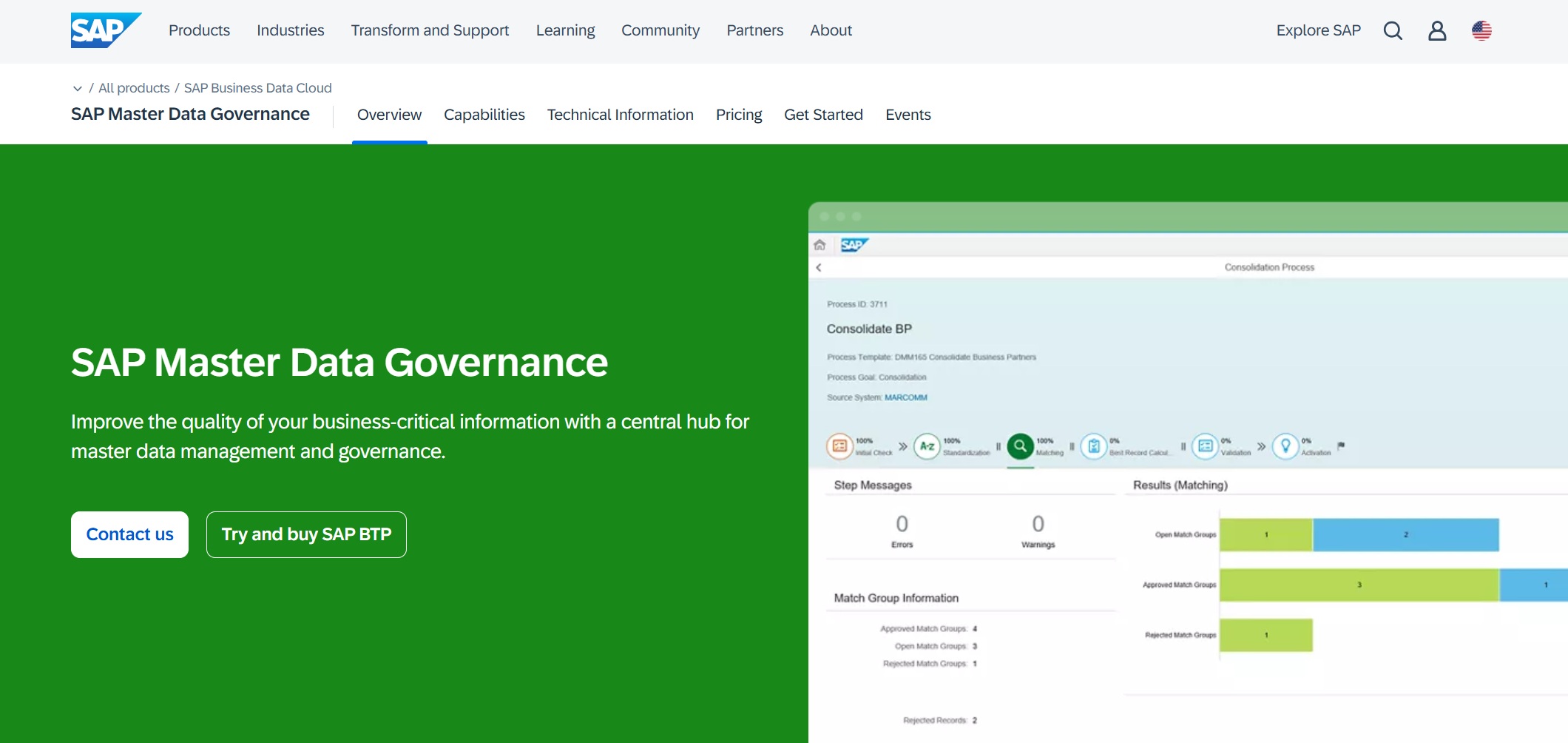
SAP Master Data Governance
SAP-centric organizations with strict process control
Cloud, on-prem, hybrid
Very high
Best with SAP ecosystems
Medium to long
IBM InfoSphere MDM
Regulated enterprises with complex matching and hierarchy needs
Cloud, on-prem, hybrid
Very high
Strong enterprise integration
Long
Reltio
Cloud-first teams needing modern, multi-domain SaaS MDM
What is master data management and why it matters in 2026
Master data management is the practice of creating and maintaining a trusted, shared record for core business entities like customers, products, suppliers, locations, and accounts.
Plain-English definition of master data management
In simple terms, MDM helps an organization answer questions like:
Which customer record is the correct one?
Which product description is the approved version?
Which supplier entry should procurement use?
Which location hierarchy should finance and operations trust?
Instead of letting every system maintain conflicting versions of the same entity, master data management software establishes a controlled, governed source of truth.
The business problems MDM helps solve
MDM is not just a data architecture project. It solves recurring operational problems across the business.
Customer data problems
Duplicate customer records across CRM, support, billing, and marketing systems
Inconsistent addresses, contacts, and account ownership
Fragmented customer history that weakens service and analytics
Product data problems
Mismatched SKUs across ERP, commerce, and supply chain systems
Inconsistent product attributes, bundles, and classifications
Slow product launches caused by manual enrichment and approval cycles
Supplier data problems
Duplicate or outdated vendor records
Inaccurate supplier hierarchies and compliance details
Poor visibility into risk, spend, and contract ownership
Location and reference data problems
Inconsistent region, branch, or facility definitions
Misaligned reporting across finance, operations, and logistics
Broken downstream analytics due to unmanaged reference values
Why governance, integration, and time-to-value matter most now
In 2026, buyers are evaluating MDM tools less on feature checklists alone and more on whether the platform can deliver trustworthy data quickly without creating a heavy long-term operating burden.
The three most important buying criteria are now:
Governance: Can the tool support stewardship, auditability, policy enforcement, and role-based controls?
Integration: Can it connect cleanly with ERP, CRM, warehouses, lakehouses, APIs, and SaaS apps?
Time-to-value: Can your team launch a useful first domain in months rather than years?
Organizations are under pressure to support analytics, AI, compliance, and customer experience initiatives simultaneously. Weak governance creates risk. Weak integration creates silos. Slow implementation delays ROI.
Signs your organization has outgrown spreadsheets and ad hoc stewardship
You likely need dedicated master data management software if several of these symptoms apply:
Teams debate which record is correct during routine reporting
Customer or product duplicates keep reappearing after cleanup efforts
Business users rely on spreadsheets to reconcile ERP and CRM mismatches
Acquisitions create long-lasting master data confusion
New system rollouts fail because source data is inconsistent
Data stewardship is informal and undocumented
Audit trails are incomplete or hard to reconstruct
BI tools expose conflicting metrics because definitions differ across systems
This is also where a reporting platform like FineReport becomes valuable. Even the best MDM initiative needs a governed way to deliver trusted outputs to business users. FineReport helps teams operationalize clean master data through dashboards, print-ready reports, and workflow-friendly data distribution.
The tools below were evaluated against three practical dimensions: governance and data quality, integration and architecture, and time-to-value.
Governance and data quality capabilities
The strongest MDM platforms support more than basic deduplication. They provide the control model needed to sustain trusted data across departments and domains.
We looked for:
Match and merge logic with configurable thresholds
Data quality validation embedded in the mastering process
Platforms that score well here are better suited for regulated environments, multi-domain governance, and enterprise-scale operating models.
Integration, interoperability, and architecture
No MDM platform succeeds in isolation. It has to fit the surrounding enterprise landscape.
We assessed:
Connectivity to ERP, CRM, data warehouses, lakehouses, and SaaS apps
API support for operational and analytical use cases
Event-driven or near-real-time data exchange
Compatibility with cloud-first and hybrid architectures
Extensibility for custom models and workflows
Ecosystem maturity and partner availability
This matters because weak interoperability often becomes the real cause of slow adoption.
Time-to-value, usability, and total cost
A powerful platform can still fail if it is too slow or costly to implement.
We compared:
Speed of initial deployment
Complexity of modeling and administration
Availability of templates, accelerators, and prebuilt connectors
Learning curve for stewards and admins
Typical dependence on external services
Likely infrastructure and operational overhead
For many buyers, the best master data management software is not the one with the longest feature list. It is the one that aligns with the team’s maturity and can deliver a successful first use case quickly.
10 best master data management software tools compared
###+ Enterprise-grade platforms for complex governance
1. Informatica MDM
One-sentence overview: Informatica MDM is a mature, enterprise-grade platform built for multi-domain master data, advanced governance, and large-scale heterogeneous environments.
Key Features:
Multi-domain MDM
Advanced match and merge
Survivorship and golden record management
Strong data quality and governance ecosystem
Broad enterprise connectivity
Hierarchy and relationship management
Pros & Cons:
Pros: Deep governance, strong scalability, broad ecosystem support, suitable for complex global enterprises
Cons: Implementation can be resource-intensive, pricing and services requirements may be substantial, steeper learning curve
Best For (Target user/scenario): Large enterprises with multiple domains, strict controls, and complex application landscapes
Informatica remains one of the safest choices for organizations that need broad MDM capability across customer, product, supplier, and reference data. It is especially strong when MDM must connect closely with data quality, governance, and integration programs already underway.
Its main tradeoff is complexity. Buyers should expect a more structured implementation approach, and success usually depends on having strong data architecture ownership.
2. SAP Master Data Governance
One-sentence overview: SAP Master Data Governance is a governance-first MDM solution designed for organizations that want strong process control, especially inside SAP-centric landscapes.
Key Features:
Central governance workflows
Native fit with SAP master data objects
Approval and change request management
Data quality and validation support
Multi-domain potential with strong SAP alignment
Auditability and process control
Pros & Cons:
Pros: Excellent for SAP environments, strong governance workflows, robust control for regulated operations
Cons: Best value often depends on SAP footprint, less attractive for highly mixed ecosystems, can require specialized expertise
Best For (Target user/scenario): Enterprises running SAP ERP and SAP-centered business processes
If your most critical master data originates in SAP, SAP MDG deserves a place on the shortlist. It is particularly effective when the priority is governed creation and change management rather than only downstream consolidation.
The downside is ecosystem concentration. Non-SAP-heavy organizations may find other platforms more flexible and faster to operationalize.
3. IBM InfoSphere MDM
One-sentence overview: IBM InfoSphere MDM is a robust enterprise platform for organizations with demanding governance, hierarchy, and matching requirements.
Key Features:
Advanced entity resolution
Complex hierarchy management
Governance and stewardship controls
Flexible deployment options
Strong support for regulated environments
Broad enterprise interoperability
Pros & Cons:
Pros: Very capable for large-scale governance, strong matching sophistication, suitable for complex data models
Cons: Longer implementation cycles, higher operational complexity, may exceed the needs of mid-market teams
Best For (Target user/scenario): Highly regulated enterprises, large institutions, and organizations with complex master data relationships
IBM is often selected when buyer requirements are driven by governance rigor, enterprise architecture standards, and difficult data entity matching. It is powerful, but it is rarely the fastest route to first value.
4. TIBCO EBX
One-sentence overview: TIBCO EBX is a model-driven MDM platform known for strong governance, reference data management, and flexibility in complex enterprise environments.
Pros: Strong governance backbone, flexible model design, good for reference and domain-heavy use cases
Cons: User experience may feel more technical than business-friendly, implementation outcomes depend heavily on design quality
Best For (Target user/scenario): Enterprises with complex reference data, policy-heavy workflows, or custom domain requirements
EBX is a strong option when standard packaged domain models are not enough. Teams that need model flexibility and governance control often rate it highly, especially for reference and hierarchical data.
Flexible MDM tools for integration-heavy environments
5. Reltio
One-sentence overview: Reltio is a cloud-native MDM platform built for modern, API-driven, multi-domain data management and relatively faster SaaS adoption.
Key Features:
SaaS-native architecture
Multi-domain MDM
API-first integration model
Real-time and event-oriented capabilities
Data unification and relationship management
Modern user experience
Pros & Cons:
Pros: Cloud-first architecture, strong for customer and multi-domain use cases, modern integration style, good agility
Cons: SaaS model may not fit every deployment policy, costs can rise with scale and services needs, some complex scenarios still require careful design
Best For (Target user/scenario): Cloud-first organizations that need modern architecture and faster iteration
Reltio is frequently shortlisted by teams modernizing away from older on-premise data management patterns. It is especially compelling where API delivery, customer 360, and cross-system orchestration matter.
6. Semarchy xDM
One-sentence overview: Semarchy xDM combines strong governance and multi-domain flexibility with a delivery approach designed to shorten implementation timelines.
Key Features:
Multi-domain modeling
Workflow and stewardship support
Data quality and matching capabilities
Flexible deployment options
Good extensibility for modern architectures
Accelerators for faster rollout
Pros & Cons:
Pros: Good balance of capability and agility, strong governance for the category, faster time-to-value than some legacy-heavy alternatives
Cons: Still requires disciplined data modeling, advanced enterprise requirements may need more design effort than expected
Best For (Target user/scenario): Organizations that want enterprise-grade MDM without the heaviest implementation footprint
Semarchy stands out for teams seeking a middle ground between strict governance and pragmatic rollout speed. It is often attractive for multi-domain programs that need to prove value early.
7. Profisee
One-sentence overview: Profisee is a practical MDM platform with strong Microsoft ecosystem alignment and a focus on manageable deployment and administration.
Key Features:
Multi-domain MDM
Stewardship workflows
Match, merge, and survivorship
Strong Azure and Microsoft integration
Hierarchy management
Business-user-friendly administration
Pros & Cons:
Pros: Good usability, strong fit for Microsoft environments, solid governance capabilities without extreme complexity
Cons: May be less appealing for organizations outside Microsoft-heavy stacks, some global enterprise scenarios may require careful scope planning
Best For (Target user/scenario): Mid-market to enterprise teams invested in Azure, Power Platform, SQL Server, or Microsoft analytics ecosystems
Profisee is a good example of master data management software that can deliver meaningful governance without always forcing a long transformation program before results appear.
8. Ataccama ONE MDM
One-sentence overview: Ataccama ONE MDM is well suited to organizations that want MDM tightly connected with data quality, governance, and observability practices.
Key Features:
Integrated data quality and MDM
Stewardship and governance workflows
Match and merge capabilities
Metadata-aware governance alignment
Hybrid deployment support
Automation-oriented administration
Pros & Cons:
Pros: Strong synergy between data quality and MDM, good for governance-led transformation, appealing for broader data trust initiatives
Cons: Buyers should validate depth for highly specialized domain use cases, platform breadth can require strong planning
Best For (Target user/scenario): Teams that see MDM as part of a larger enterprise data trust program
Ataccama is often strongest when the buying motion is not just “we need golden records,” but “we need trusted data operations across governance, quality, and stewardship.”
Fast-to-deploy options for mid-market and focused use cases
9. Stibo Systems STEP
One-sentence overview: Stibo Systems STEP is a strong choice for product-centric and multi-domain master data programs that need governance across commerce and supply chain operations.
Key Features:
Product and supplier data strength
Workflow and approval controls
Hierarchy and classification management
Multi-domain support
Omnichannel and commerce alignment
Governance-driven administration
Pros & Cons:
Pros: Strong product data capabilities, good governance for commerce-heavy organizations, supports complex product structures
Cons: Can be more than some mid-market teams need, implementation depth varies by scope, strongest value often comes in product-centric scenarios
Best For (Target user/scenario): Manufacturers, distributors, retailers, and B2B commerce teams with complex product data
Stibo is often considered where product, supplier, and classification governance directly affect operational performance and customer experience.
10. Pimcore
One-sentence overview: Pimcore is a flexible platform often used for product information and related master data scenarios where extensibility and digital experience alignment matter.
Pros: Flexible, useful for product-focused programs, attractive for digital commerce environments
Cons: Not always the best fit for deep enterprise-wide multi-domain governance, governance depth can be more limited than top-tier enterprise MDM platforms
Best For (Target user/scenario): Organizations prioritizing product data, catalog consistency, and commerce experience over heavyweight enterprise MDM
Pimcore is best viewed as a focused fit rather than a universal answer. For product-heavy environments, it can be an efficient route to value.
Which tool is best for your team
Here is the practical recommendation by scenario:
Best for large enterprises with strict governance
Informatica MDM
SAP Master Data Governance
IBM InfoSphere MDM
Choose these if you need formal stewardship, auditability, and support for complex domain relationships at scale.
Best for integration-first teams
Reltio
Semarchy xDM
Profisee
These are strong fits when modern connectivity, APIs, and architecture alignment are major decision drivers.
Best for product-centric organizations
Stibo Systems STEP
Pimcore
These platforms stand out where product hierarchies, attributes, and syndication workflows are core to the business case.
Best for faster time-to-value
Profisee
Semarchy xDM
Reltio
These are often easier to justify for phased programs that must show progress quickly.
Best by company size
Enterprise: Informatica, SAP MDG, IBM, TIBCO EBX
Upper mid-market to enterprise: Semarchy, Profisee, Reltio, Ataccama
Mid-market or focused domain programs: Pimcore, selected Stibo deployments
Once your MDM foundation is in place, a tool like FineReport can help business teams consume mastered data more effectively through governed reporting, KPI packs, supplier reports, customer dashboards, and operational distribution workflows.
How to choose the right solution for your organization
Selecting the right master data management software starts with internal clarity. Many disappointing MDM projects are caused less by product weakness and more by fuzzy scope, unclear ownership, and unrealistic rollout expectations.
Questions to ask before you shortlist vendors
Before engaging vendors, define these points internally:
Which data domains need mastering first: customer, product, supplier, location, or reference data?
Which source systems must connect in phase one?
Who owns data stewardship and business approval?
Do you need batch synchronization, APIs, or event-driven updates?
Is cloud-only acceptable, or do you need hybrid or on-prem support?
What does success look like after six months?
Do you need enterprise-wide multi-domain governance now, or one urgent use case first?
How much implementation support can your team realistically absorb?
These answers will quickly narrow the field.
Red flags to watch for during demos and trials
Vendor demos can make most tools look similar. The differences appear when you test operational fit.
Watch for:
Overpromised automation without clear stewardship controls
Match and merge features that are hard to tune
Weak workflow depth for approvals and exception handling
Limited connectors or unclear API maturity
Unclear deployment constraints
Hidden dependence on expensive services
Poor visibility into audit trails and record lineage
User experiences that require technical teams for every small change
A good demo should show how the platform handles messy, conflicting real-world records, not only polished golden record outcomes.
A practical shortlist framework
Use a simple weighted scorecard across five areas:
Ongoing stewardship effort, support model, total cost, adaptability
A practical scoring model might assign higher weight to governance and integration for enterprises, while mid-market teams may prioritize implementation effort and operating simplicity.
The best master data management software depends on your governance demands, architecture realities, and urgency to deliver business value.
Best overall choice
Semarchy xDM earns the best overall balance for many organizations in 2026 because it combines strong governance, multi-domain flexibility, and a more approachable path to implementation than some legacy-heavy enterprise alternatives.
Best for strict governance
Informatica MDM is the strongest all-around choice for organizations that need deep governance, large-scale multi-domain mastery, and broad enterprise integration support.
For SAP-centered environments, SAP Master Data Governance may be the better governance-specific fit.
Best for integration-first teams
Reltio stands out for cloud-first, API-driven architectures and teams that want modern integration patterns without centering the program on older on-premise assumptions.
Best for fastest time-to-value
Profisee is a strong option for organizations that want practical governance, especially in Microsoft ecosystems, without taking on the heaviest implementation burden.
How to turn this comparison into a pilot or proof-of-concept plan
Use this sequence:
Pick one domain with a visible business problem, such as customer duplicates or inconsistent product attributes.
Define a narrow but measurable success metric, such as duplicate reduction, faster onboarding, or improved reporting consistency.
Select 2 to 3 vendors based on architecture fit and governance needs.
Run a proof of concept using real source data, not synthetic samples.
Test stewardship workflows, survivorship logic, integrations, and reporting outputs.
Validate not just technical fit, but operating fit: who owns exceptions, approvals, and ongoing maintenance.
Plan how mastered data will be consumed downstream.
That final step is where many projects underdeliver. Clean master data only creates value when it is easy for users to access in decisions and operations. Pairing your MDM foundation with a reporting and analytics platform like FineReport can help close that gap by turning governed master data into usable dashboards, scheduled reports, and business-ready outputs.
If your team is choosing among the leading MDM tools this year, start with the smallest domain that can prove value quickly, then build from there. That approach reduces risk, speeds stakeholder buy-in, and gives your data governance program a realistic path to scale.
FAQs
Master data management software creates a trusted, shared record for core business entities such as customers, products, suppliers, and locations. It helps reduce duplicates, fix inconsistencies, and support consistent reporting and operations across systems.
Focus on governance depth, integration fit, deployment model, and expected time-to-value. The best choice depends on your data domains, existing ERP and CRM stack, and how much complexity your team can realistically manage.
Based on this comparison, Profisee, Semarchy xDM, and Reltio stand out for teams prioritizing quicker rollout. They are often a better fit when you want useful business value in months rather than a long enterprise program.
Multi-domain MDM supports several entity types in one platform, such as customer, product, supplier, and location data. Single-domain MDM is more narrowly focused, which can work well if your immediate need is limited to one business area.
Governance ensures data is stewarded, auditable, and controlled with clear policies and roles. Integration matters because even strong master records deliver limited value if they cannot connect cleanly to ERP, CRM, analytics platforms, APIs, and SaaS tools.
Product Trial
FineReport
Pixel-perfect reports · Interactive dashboards · Easy data entry · Digital twins