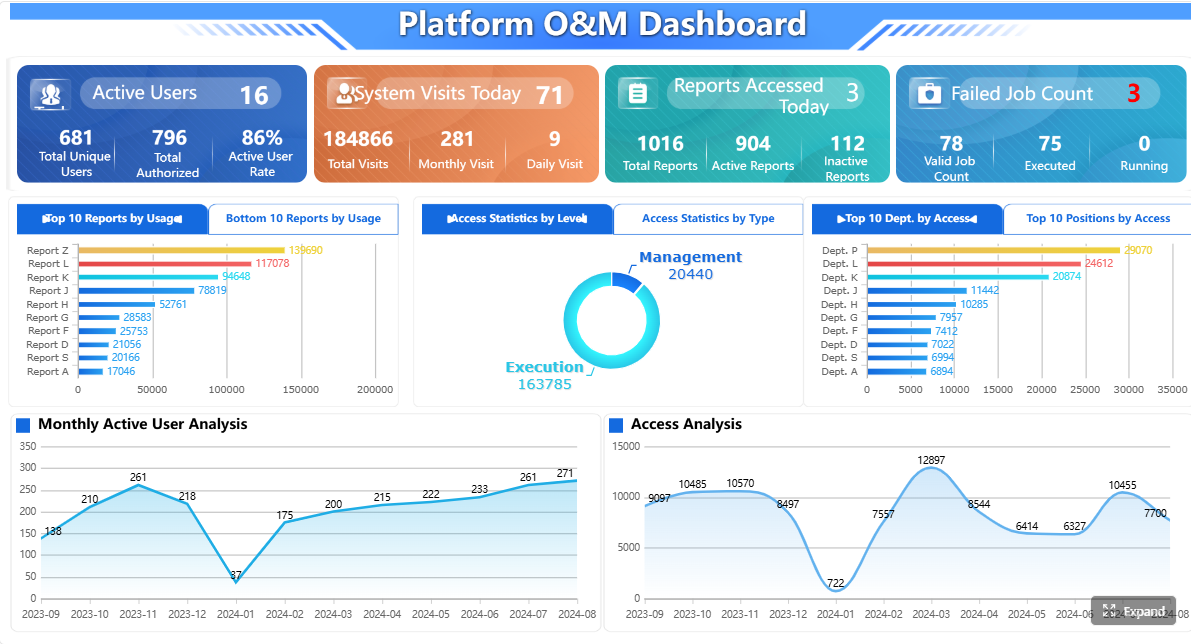
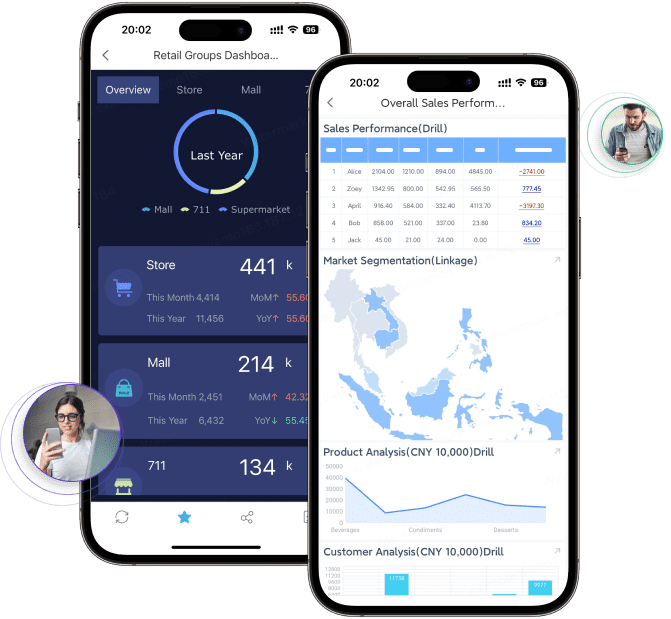
FineReport is a business intelligence and reporting platform that helps supply chain teams turn operational data into dashboards, analysis, and decision-ready insights.
Click To Try The Dashboard
The Top 10 Supply Chain Management Systems for 2026
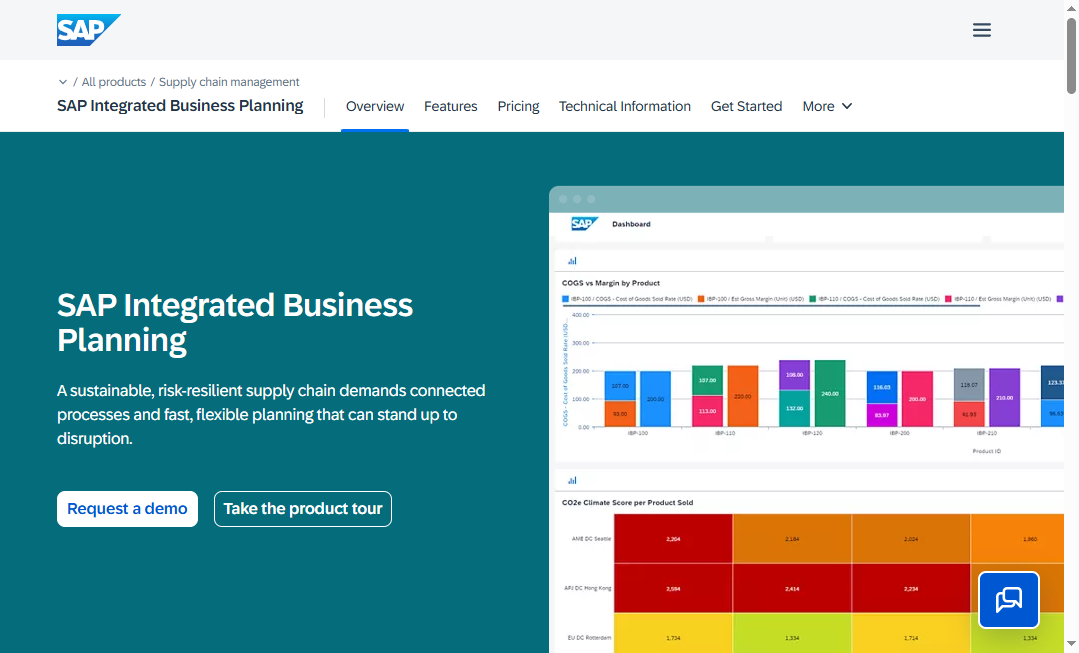
1. SAP Integrated Business Planning and Digital Supply Chain
Overview: SAP offers a broad cloud based supply chain management software ecosystem built for enterprises that need deep planning, ERP alignment, and global process control.
Key Features:
Integrated business planning across demand, supply, inventory, and sales and operations planning
Strong connection with SAP ERP environments
Supply chain control tower capabilities
Advanced analytics and scenario planning
Global process standardization support
Pros & Cons:
Pros: Broad functionality, strong analytics, enterprise-grade scalability, solid fit for large multinational operations
Cons: Longer implementation timelines, higher complexity, and heavier governance requirements for smaller teams
Best For: Large enterprises that want end-to-end planning discipline and tight integration with broader SAP operations.
SAP is often shortlisted by companies that already run core finance, manufacturing, or procurement processes in the SAP ecosystem. Its value typically comes from unified planning and the ability to standardize workflows across regions, business units, and product lines. For buyers comparing cloud based supply chain management software, SAP stands out when supply chain transformation is part of a larger enterprise architecture strategy rather than a point solution purchase.
Overview: Oracle provides a unified cloud suite that connects finance, procurement, manufacturing, inventory, and supply chain processes in one environment.
Key Features:
End-to-end supply chain and manufacturing modules
Integrated procurement, order management, and inventory management
Embedded automation and analytics
Support for complex global operations
Cloud-native updates and extensibility
Pros & Cons:
Pros: Strong suite integration, broad operational coverage, good fit for multinational process consistency
Cons: Licensing can be substantial, and rollout effort may be significant for organizations with fragmented processes
Best For: Organizations seeking unified finance, operations, and supply chain workflows on a single cloud platform.
Oracle is a strong contender for businesses that want fewer seams between supply chain execution and back-office processes. It is especially relevant when companies need shared data models across procurement, production, fulfillment, and financial planning. The trade-off is that success often depends on disciplined implementation and a clear roadmap for process harmonization.
3. Blue Yonder
Overview: Blue Yonder is a well-known supply chain platform focused on planning, fulfillment, and execution for retail, manufacturing, and distribution environments.
Key Features:
Demand forecasting and replenishment
Warehouse and transportation capabilities
Merchandising and retail planning support
End-to-end visibility and orchestration tools
AI-driven insights for supply chain decisions
Pros & Cons:
Pros: Robust forecasting, strong warehouse capabilities, solid retail and distribution relevance, broad end-to-end coverage
Cons: Return on investment depends heavily on implementation quality, integration design, and organizational fit
Best For: Retailers, manufacturers, and distributors focused on planning accuracy and fulfillment performance.
Blue Yonder is often attractive to organizations that need more than basic planning software. Its strength is in connecting demand, inventory, logistics, and execution decisions with a stronger operational lens than many planning-first platforms. Buyers should look closely at implementation partners and ecosystem compatibility, because those factors strongly influence long-term value.
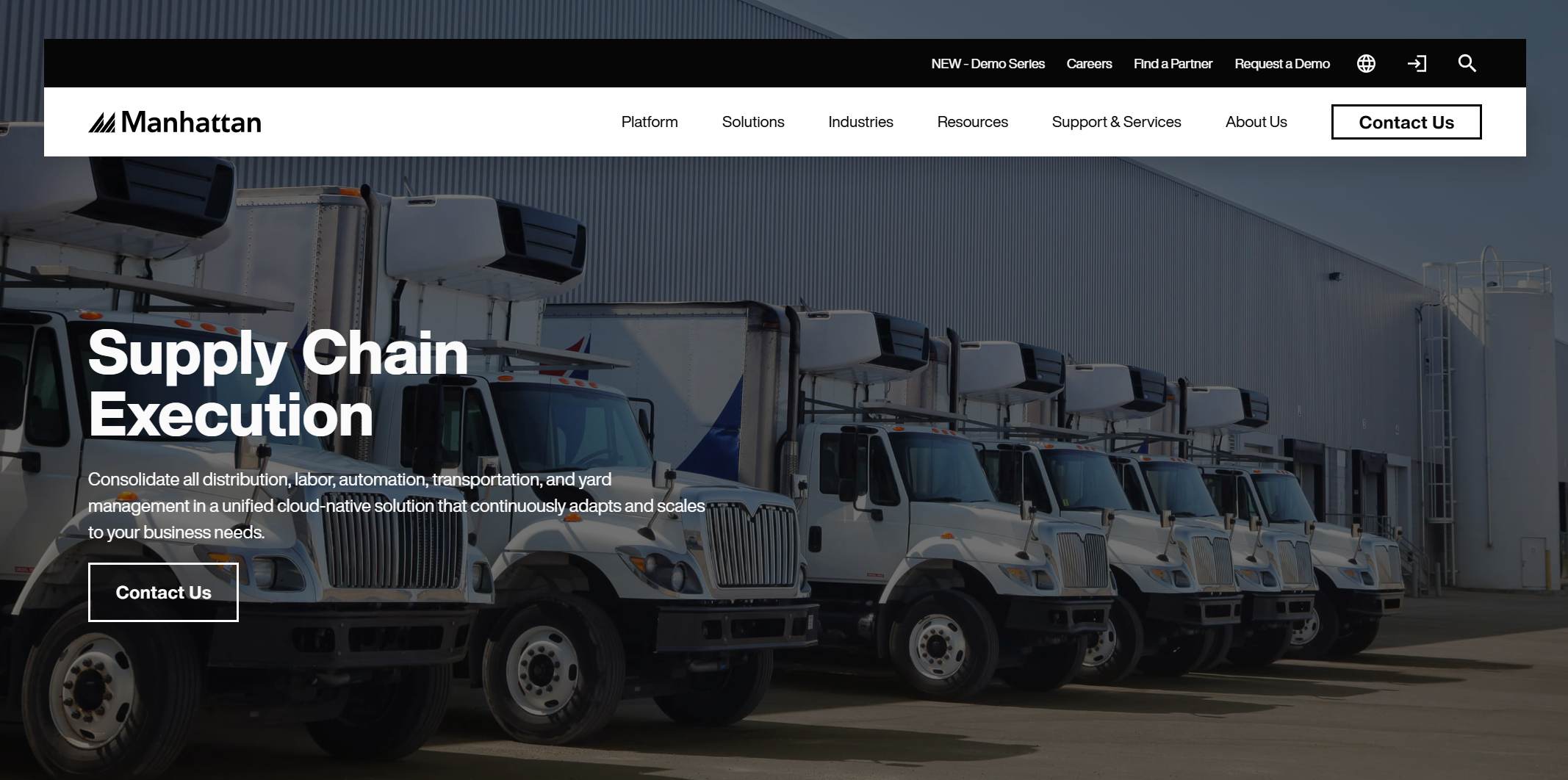
4. Manhattan Active Supply Chain
Overview: Manhattan Active Supply Chain is a cloud platform centered on warehouse, transportation, order, and omnichannel execution.
Key Features:
Warehouse management and labor optimization
Transportation and order management
Omnichannel fulfillment support
Real-time inventory and operational visibility
Unified execution workflows
Pros & Cons:
Pros: Strong execution depth, real-time visibility, excellent fit for complex fulfillment operations
Cons: More execution-focused than some planning-heavy buyers may want
Best For: Businesses with demanding warehouse, transportation, and omnichannel fulfillment needs.
For organizations where supply chain performance is defined by speed, fulfillment accuracy, and warehouse efficiency, Manhattan is a serious option. It is particularly well suited for retail, wholesale, and distribution operations that need strong orchestration across fulfillment nodes. Companies looking for highly advanced strategic planning may need to evaluate how Manhattan fits with other planning tools.
5. Kinaxis Maestro
Overview: Kinaxis Maestro is a concurrent planning platform designed for rapid scenario modeling, cross-functional collaboration, and faster decision-making.
Key Features:
Concurrent planning across demand, supply, inventory, and capacity
What-if scenario modeling
Real-time response to changes and disruptions
Collaboration tools for planners and stakeholders
AI-assisted decision support
Pros & Cons:
Pros: High responsiveness, strong collaboration, fast scenario analysis, good support for volatile supply environments
Cons: Requires process discipline, strong internal ownership, and data consistency to unlock full value
Best For: Companies prioritizing planning agility and rapid response to supply and demand changes.
Kinaxis is frequently chosen by businesses that need to compress the time between signal and action. It is especially compelling in industries with frequent volatility, constrained supply, or short planning cycles. The main trade-off is that the platform rewards organizations that already have mature planning processes or are ready to build them.
6. Infor Nexus and Infor Supply Chain Management
Overview: Infor combines network-based visibility and collaboration tools with broader supply chain capabilities for organizations operating across extended partner ecosystems.
Pros: Strong network coordination, shipment visibility, and external collaboration support
Cons: Feature fit can vary depending on which Infor products are selected and how they are combined
Best For: Organizations needing multi-enterprise visibility and network-based coordination.
Infor is particularly relevant for businesses managing global supplier and logistics networks where external collaboration matters as much as internal planning. Rather than evaluating it as one monolithic tool, buyers should assess the exact combination of Infor products under consideration. That product mix can materially affect implementation scope and long-term usability.
7. E2open
Overview: E2open is a cross-enterprise supply chain platform focused on partner connectivity, visibility, planning, and logistics coordination.
Key Features:
Multi-tier partner network connectivity
End-to-end supply chain visibility
Planning and logistics support
Data sharing across suppliers, logistics providers, and customers
Risk and disruption monitoring capabilities
Pros & Cons:
Pros: Strong ecosystem reach, broad visibility, and useful coordination across global trading partners
Cons: Platform breadth can make evaluation and prioritization more complex
Best For: Global supply networks that rely on partner connectivity and cross-enterprise data exchange.
E2open tends to resonate with organizations that need visibility beyond the four walls of the enterprise. If supplier collaboration, logistics handoffs, and network orchestration are major priorities, it deserves attention. The challenge is deciding which capabilities to deploy first, since its broad footprint can complicate selection and sequencing.
8. Coupa Supply Chain Design & Planning
Overview: Coupa extends its spend and procurement strengths into supply chain design and planning, with an emphasis on resilience, sourcing, and scenario analysis.
Key Features:
Supply chain design and network modeling
Scenario analysis and resilience planning
Sourcing and spend alignment
Supplier-oriented insights
Planning support tied to procurement strategy
Pros & Cons:
Pros: Strong scenario analysis, procurement linkage, and risk-aware planning support
Cons: Better fit for planning and procurement use cases than deep shop-floor or execution-heavy operations
Best For: Teams that want planning tied closely to sourcing, spend management, and resilience modeling.
Coupa is not always the first name mentioned in cloud based supply chain management software comparisons, but it can be highly relevant for companies where supply risk, supplier strategy, and cost visibility are central decision drivers. It is best evaluated by organizations that see procurement and supply planning as tightly connected disciplines.
9. o9 Solutions
Overview: o9 Solutions delivers AI-enabled integrated planning across demand, supply, revenue, and commercial functions.
Key Features:
Integrated business planning across multiple functions
Advanced modeling flexibility
AI and analytics support
Scenario planning and digital decision environments
Cross-functional planning for commercial and operational teams
Pros & Cons:
Pros: Flexible modeling, broad transformation potential, and strong support for integrated planning
Cons: Adoption depends heavily on governance, data readiness, and clarity around business ownership
Best For: Enterprises looking for AI-enabled planning across demand, supply, and commercial operations.
o9 is often considered by companies aiming for a broader planning transformation rather than a narrow scheduling or replenishment upgrade. Its appeal lies in flexibility and strategic ambition. That same flexibility can become a challenge if the organization lacks clean data, strong operating models, or a clear implementation scope.
10. Logility
Overview: Logility is a practical planning-focused platform for mid-market to enterprise teams seeking modernization without excessive execution complexity.
Key Features:
Demand planning and forecasting
Inventory optimization
Supply planning capabilities
Usable planning workflows
Support for phased modernization
Pros & Cons:
Pros: Practical usability, strong planning focus, and manageable complexity for many teams
Cons: May not match the end-to-end execution depth of larger platform suites
Best For: Mid-market to enterprise organizations focused on planning modernization and faster time to value.
Logility is a sensible choice for businesses that want to improve forecast quality, inventory performance, and planning processes without immediately taking on a full-scale supply chain platform transformation. It may not be the deepest option for logistics execution, but it is often easier to operationalize for teams that need progress without overwhelming change.
What to Look for in Cloud Based Supply Chain Management Software in 2026
Choosing the right cloud based supply chain management software starts with workflow clarity. Many disappointing software purchases happen because teams buy the broadest platform they can afford instead of the platform that best supports their real operating model.
First, define the workflows your team must support across:
Planning
Procurement
Inventory management
Logistics
Warehousing
Fulfillment
Supplier collaboration
A manufacturer with constrained capacity planning needs different capabilities than an omnichannel retailer focused on order orchestration and returns. A distributor may prioritize inventory positioning, transportation visibility, and supplier coordination more than plant scheduling or shop-floor execution.
Next, compare tools on a few practical dimensions:
Deployment flexibility: Can the platform support your operating model without excessive customization?
Integration depth: How well does it connect with ERP, CRM, WMS, TMS, commerce, and analytics systems?
Data visibility: Can users see exceptions, constraints, and performance signals across functions?
AI-assisted decision support: Does the software help teams act faster, or just produce more dashboards?
Cost also needs a broader lens than subscription pricing alone. Total cost of ownership includes implementation, integration, change management, partner support, user training, and ongoing administration. Some platforms look attractive in demos but become difficult to maintain if they require extensive process redesign or specialized internal talent.
Finally, prioritize systems that fit your industry, scale, and supply chain maturity. The best cloud based supply chain management software for a global enterprise is not automatically the best option for a mid-sized business with a lean IT team and a shorter transformation horizon.
Cloud supply chain management matters now because supply chains are more interconnected, disruption-prone, and data-dependent than they were even a few years ago. Businesses need systems that can adapt faster than traditional, heavily customized on-premises environments.
Key benefits include:
Improved visibility: Teams can monitor suppliers, warehouses, transportation flows, and demand signals with fewer blind spots.
Faster planning cycles: Cloud platforms support quicker scenario modeling, replanning, and exception management.
Better collaboration: Distributed teams, suppliers, and logistics partners can work from shared data and workflows.
Lower infrastructure burden: Buyers avoid maintaining as much on-premises hardware and supporting legacy upgrade cycles.
Access to innovation: Vendors can deliver ongoing updates in analytics, automation, and AI-assisted capabilities more quickly.
Common use cases include demand planning, supply planning, supplier collaboration, transportation coordination, warehouse operations, multi-node fulfillment, and control tower visibility. In practice, the strongest value often comes from improving decision speed rather than just digitizing existing tasks.
Common trade-offs buyers should expect
Even the strongest platforms come with trade-offs. Buyers should expect to balance advanced functionality against usability, onboarding time, and administrative effort.
Some common trade-offs include:
Depth versus usability: Rich enterprise capabilities can add complexity for everyday users.
Suite platforms versus specialists: Broad suites simplify architecture for some organizations, while specialized tools can provide stronger depth in planning, logistics, or manufacturing.
Flexibility versus governance: Highly configurable platforms can support transformation, but they also require clearer ownership and stronger data discipline.
Data quality is another recurring issue. No cloud based supply chain management software can fully compensate for inconsistent master data, fragmented business rules, or weak integration design. Long-term value depends not only on software selection but also on process standardization and organizational readiness.
How to Compare These Supply Chain Management (SCM) Software Solutions
Evaluation criteria that matter most
When comparing supply chain management systems, focus on fit rather than feature volume. A useful evaluation framework should cover the following:
Functional fit: Does the platform support your priorities across planning, procurement, inventory, transportation, warehousing, and supplier collaboration?
Integration readiness: Can it connect cleanly with ERP, CRM, manufacturing, commerce, and analytics systems?
Data model and visibility: Will it provide reliable cross-functional visibility, alerts, and decision support?
Implementation ecosystem: Does the vendor have strong support resources and implementation partners in your region and industry?
Roadmap alignment: Is the product evolving in ways that match your long-term operating model?
This is also where analytics should not be overlooked. Many supply chain teams need more than transactional workflows. They also need reporting that translates operational data into action. FineReport can complement supply chain software initiatives by helping organizations build dashboards for inventory performance, supplier reliability, order fulfillment, logistics KPIs, and planning accuracy, especially when decision-makers need accessible reporting across multiple systems.
Best-fit use cases by business type
Different business types should weight criteria differently.
Enterprise global operations
Usually need end-to-end orchestration
Often prioritize governance, standardization, compliance, and scalability
Likely candidates: SAP, Oracle, o9, E2open
Retail and omnichannel brands
Need forecasting, fulfillment, warehouse efficiency, and inventory visibility
Often prioritize order orchestration and real-time execution
Likely candidates: Blue Yonder, Manhattan Active, Infor
Manufacturers and distributors
Need planning accuracy, supplier coordination, inventory optimization, and logistics control
Often prioritize responsiveness and cross-functional alignment
Likely candidates: Kinaxis, SAP, Oracle, Logility
Mid-sized companies
Need manageable complexity and faster time to value
Often prioritize usability, phased adoption, and lower transformation risk
Likely candidates: Logility, selected Infor configurations, targeted Coupa use cases
Final Takeaways: Choosing the Right Platform for Your Team
The right cloud based supply chain management software is the one that best supports your business priorities, not the one with the longest feature list.
Start with the outcomes you need most, such as:
Better forecast accuracy
Stronger supplier visibility
Faster planning cycles
Improved warehouse execution
More reliable fulfillment
Lower inventory risk
Then shortlist vendors based on your operating model, data maturity, and internal implementation capacity. A platform that looks impressive in a generic demo may still be a poor fit if your team cannot realistically absorb the process, integration, and change demands.
Before committing, use:
Product demos tied to your own workflows
Pilot scenarios based on real constraints and exceptions
Reference checks from similar companies
Clear implementation and ownership plans
In 2026, supply chain leaders are not just buying software. They are choosing how decisions get made across planning, sourcing, inventory, logistics, and fulfillment. The strongest evaluation process will combine platform fit, operational realism, and a clear reporting strategy, including tools like FineReport that help turn supply chain data into practical visibility for daily execution and executive review.
FAQs
It is software delivered through the cloud that helps companies plan, execute, and monitor supply chain operations such as demand, inventory, procurement, logistics, and fulfillment. Compared with on-premises systems, it usually offers faster updates, remote access, and easier scalability.
Start by matching the platform to your main priority, such as planning, warehouse execution, transportation, or end-to-end visibility. Then evaluate integration with your ERP, implementation complexity, scalability, and fit for your industry and operating model.
The most important features usually include demand forecasting, inventory visibility, scenario planning, workflow automation, analytics, and strong integration support. Many buyers also look for AI-assisted insights, control tower views, and collaboration across suppliers and logistics partners.
Platforms like SAP, Oracle, and Kinaxis are often stronger for enterprise planning, cross-functional coordination, and scenario analysis. Tools such as Manhattan Active Supply Chain and Blue Yonder are often chosen when warehouse, transportation, and fulfillment execution are bigger priorities.
FineReport is not a full supply chain management system, but it can support supply chain teams with dashboards, reporting, and operational analysis. It is most useful when companies need better visibility and decision support across data from ERP, WMS, TMS, or SCM platforms.
Product Trial
FineReport
Pixel-perfect reports · Interactive dashboards · Easy data entry · Digital twins