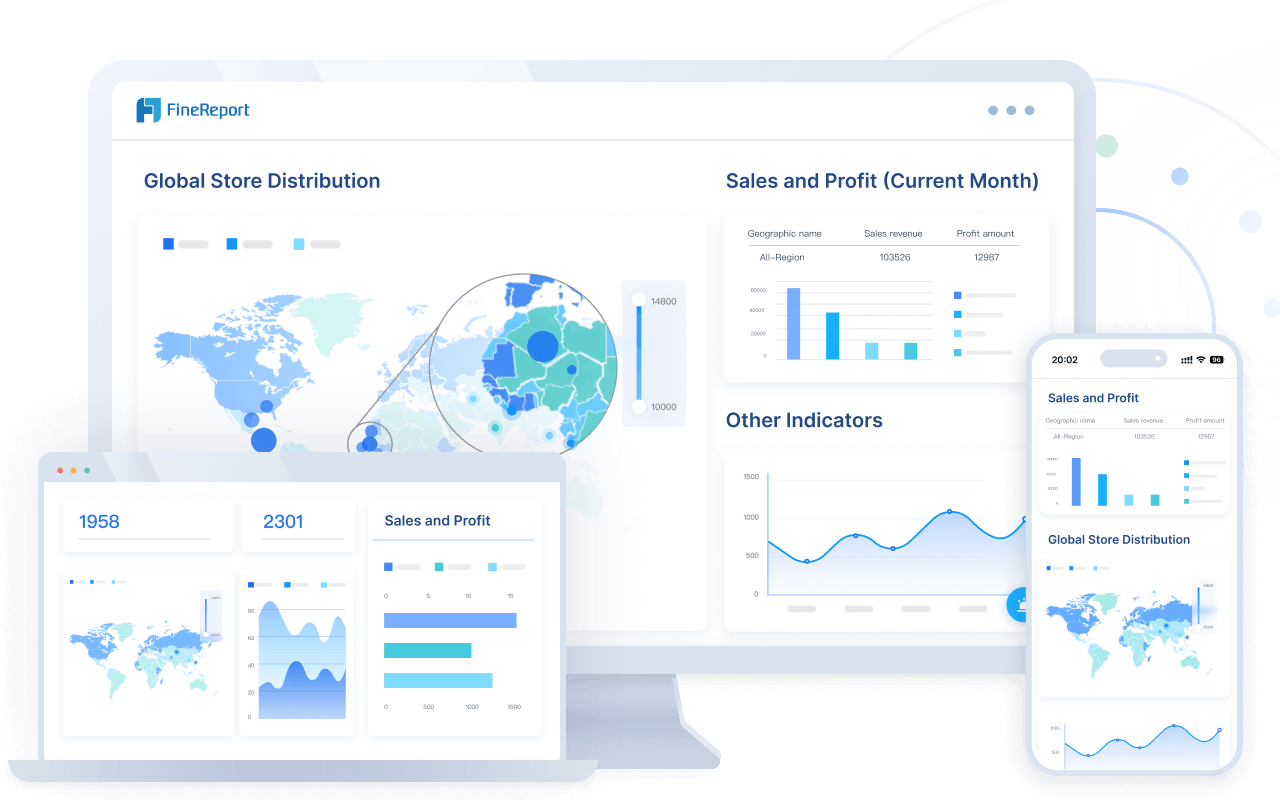
FineReport is an enterprise reporting and dashboard platform that helps HR teams turn workforce data from multiple systems into custom reports, interactive dashboards, and large-scale analytics.
Top 10 HR Reporting Software Tools Compared
Side-by-side comparison at a glance
Below is a practical shortlist of the best hr reporting software options for 2026, with emphasis on dashboards, custom reports, and enterprise analytics.
Strong interactive visuals and exploratory analysis
Can be expensive at scale; needs governed data
HR teams wanting deep visualization and drill-downs
Visier
Enterprise
Purpose-built people analytics, benchmarking, and workforce insights
More specialized and premium-priced
Strategic HR analytics and executive decision support
In broad terms:
Best for quick dashboarding: BambooHR, ADP Workforce Now
Best for advanced analytics: Power BI, Tableau, Visier
Best for enterprise-scale reporting:FineReport, Workday, SAP SuccessFactors, Oracle HCM Cloud, UKG Pro
Strengths and trade-offs of each option
1. FineReport
One-sentence overview:FineReport is a powerful reporting and dashboard platform built for organizations that need highly customized HR reporting across multiple systems.
Pros: Excellent customization, strong for complex reporting, works well when HR data lives in multiple platforms, suitable for enterprise governance
Cons: More implementation effort than basic HRIS reporting, may be more than small businesses need
Best For: Mid-market and enterprise teams that need custom reports, executive dashboards, and enterprise analytics beyond built-in HRIS limitations
FineReport stands out because it is not confined to a single HR database. If your people data is spread across HRIS, payroll, attendance, performance, and finance systems, it can consolidate that information into one reporting layer. That makes it especially useful for organizations that have outgrown native HRIS reports and need more flexible decision support.
2. BambooHR
One-sentence overview: BambooHR offers user-friendly built-in reporting for smaller HR teams that want fast access to core workforce metrics.
Key Features:
Prebuilt HR reports
Standard workforce dashboards
Employee data exports
Basic customization
Simple sharing options
Pros & Cons:
Pros: Easy to use, fast to deploy, suitable for non-technical HR users
Cons: Less capable for enterprise analytics, limited depth for cross-system reporting
Best For: Small businesses and growing companies that need practical HR dashboards without a heavy implementation
BambooHR is a strong choice when speed and simplicity matter more than analytical depth. It works well for teams that need reporting on headcount, turnover, time off, and employee records, but it is not usually the best fit for complex enterprise reporting requirements.
3. Workday
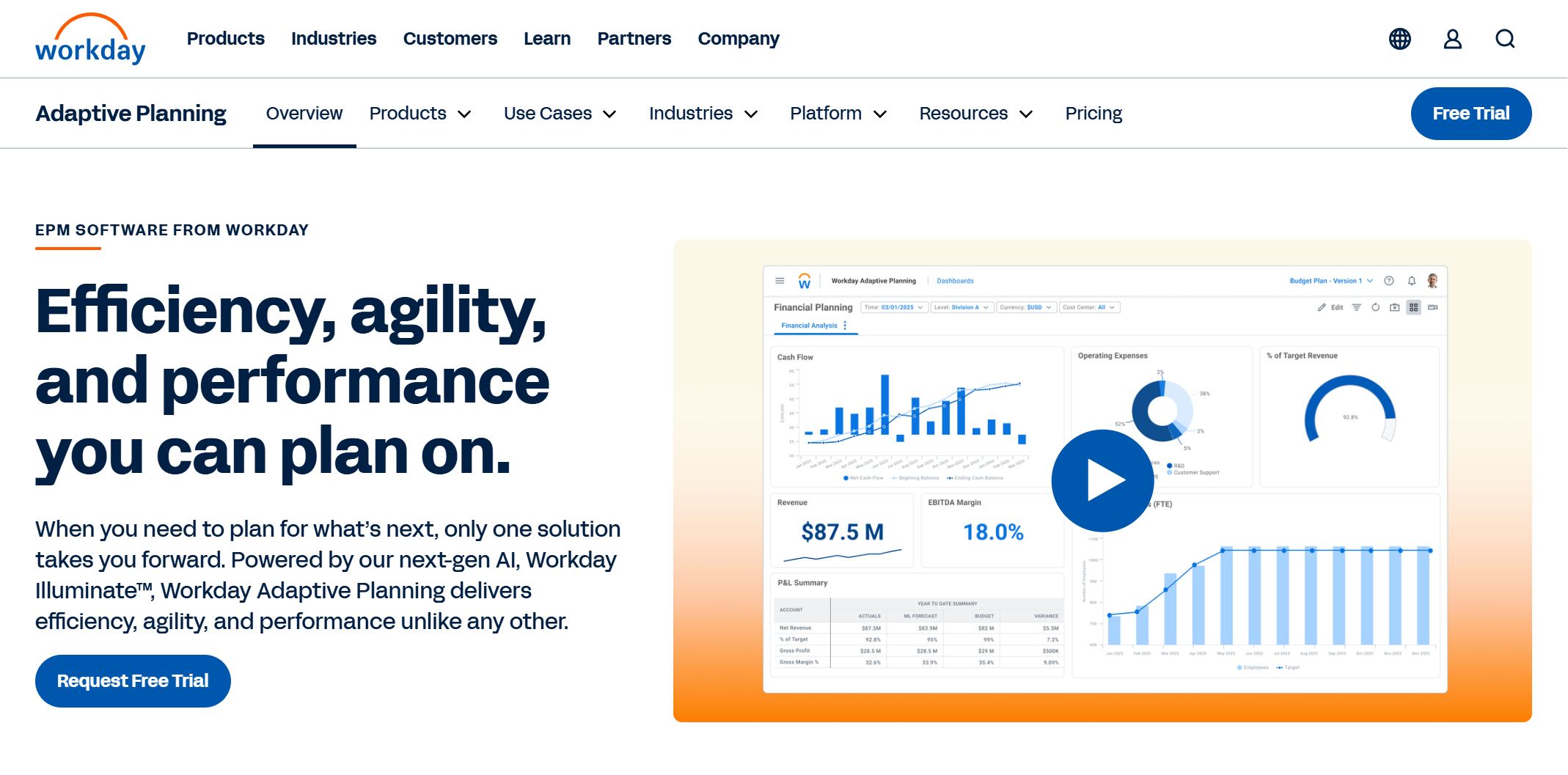
One-sentence overview: Workday combines enterprise HCM functionality with robust reporting and analytics for large organizations.
Cons: Expensive, implementation-intensive, not ideal for teams wanting lightweight reporting only
Best For: Enterprises already standardized on Workday and seeking unified HR reporting at scale
Workday is often most effective when an organization wants reporting tightly integrated with transactions, workflows, and operational HR data. For enterprises, that can reduce reliance on disconnected spreadsheets, though custom analytics may still require specialist resources.
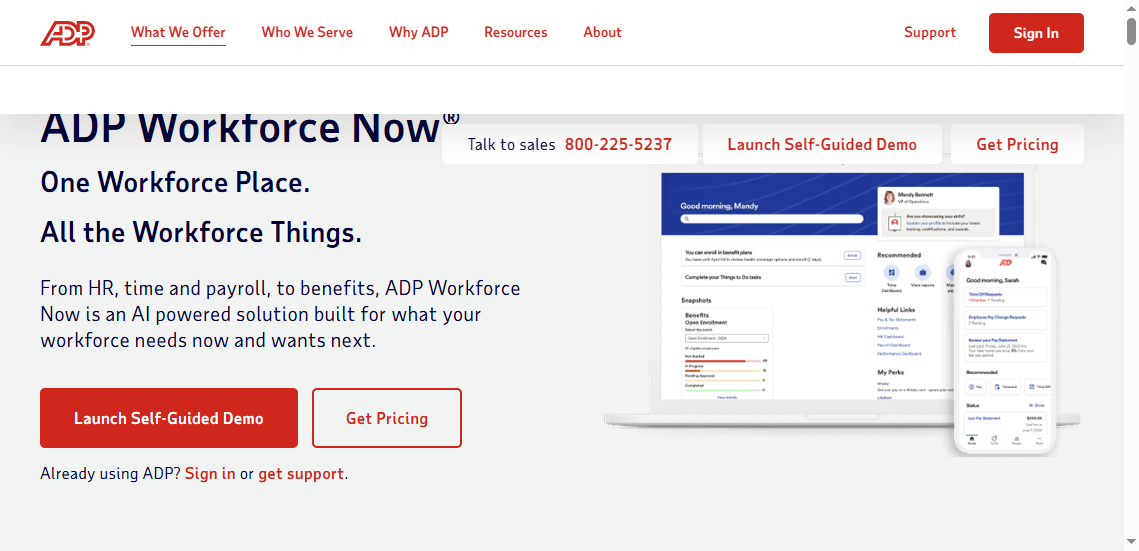
4. ADP Workforce Now
One-sentence overview: ADP Workforce Now provides HR and payroll reporting with practical dashboards for organizations that need operational visibility.
Cons: Custom reporting can be less flexible than dedicated BI tools
Best For: Companies that prioritize payroll-connected HR reporting and standard workforce reporting workflows
ADP is often selected for its operational reliability. It tends to be strongest where HR reporting overlaps with payroll, labor, and workforce administration rather than exploratory analytics.
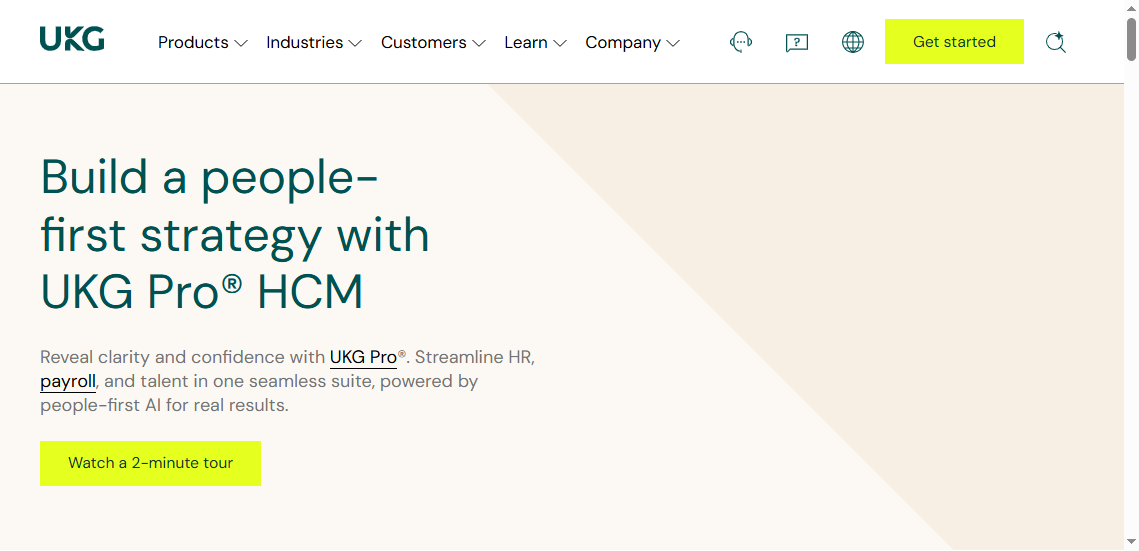
5. UKG Pro
One-sentence overview: UKG Pro delivers workforce reporting and people analytics for organizations that need visibility into labor, talent, and compliance data.
Key Features:
Workforce dashboards
HR and payroll analytics
Compliance reporting
Configurable data views
Scheduled report delivery
Pros & Cons:
Pros: Solid breadth across workforce data, useful for compliance-heavy organizations, good mid-market to enterprise fit
Cons: More complex than SMB tools, reporting setup may require experienced admins
Best For: Mid-sized and enterprise businesses seeking a balance of operational reporting and broader people analytics
UKG Pro is especially relevant for employers with sizable workforces, distributed teams, or labor reporting needs. Its value often increases when HR, payroll, and workforce management data must be analyzed together.
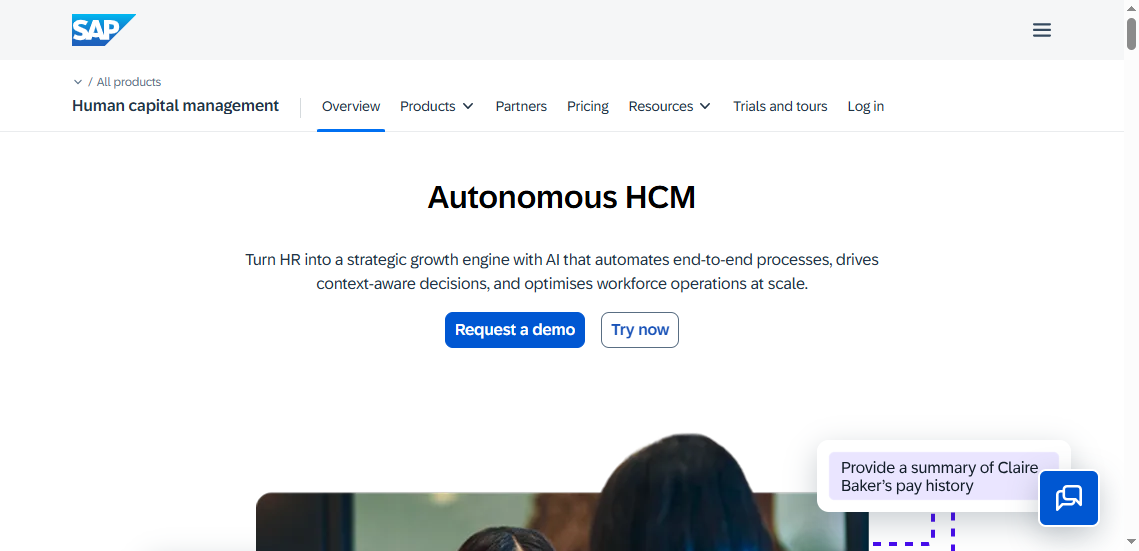
6. SAP SuccessFactors
One-sentence overview: SAP SuccessFactors is an enterprise HCM suite with global reporting capabilities for complex organizations.
Key Features:
Global workforce reporting
Analytics across talent and core HR
Enterprise permissions
Compliance support
Broad integration options
Pros & Cons:
Pros: Strong global and enterprise support, suitable for large-scale governance, broad HR domain coverage
Cons: Significant implementation effort, steeper learning curve, cost can be substantial
Best For: Multinational enterprises with mature HR operations and global reporting requirements
SuccessFactors fits organizations that need region-specific reporting, standardized governance, and integration across many HR functions. It is not the lightest tool, but it can handle complexity that smaller platforms cannot.
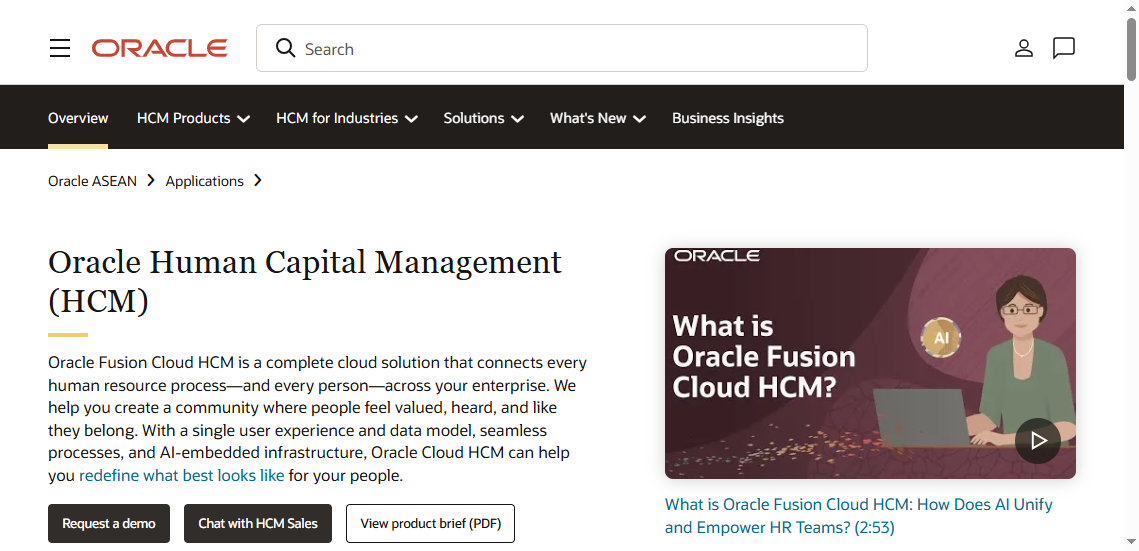
7. Oracle HCM Cloud
One-sentence overview: Oracle HCM Cloud offers broad analytics and reporting for enterprises managing complex workforce structures.
Pros: Comprehensive enterprise scope, strong analytics potential, supports large and complex organizations
Cons: Costly, implementation can be long, may require specialist technical support
Best For: Large enterprises that need extensive analytics across HR, talent, and workforce planning
Oracle HCM Cloud is typically chosen by organizations with sophisticated reporting needs and a willingness to invest in platform depth. It is better suited to strategic, enterprise-wide reporting than quick self-serve deployment.
8. Power BI
One-sentence overview: Power BI is a flexible BI platform that can power advanced HR dashboards and custom reports when connected to workforce data sources.
Pros: Strong analytics flexibility, cost-effective in many Microsoft environments, excellent for custom metrics
Cons: Requires data integration and governance, not HR-specific out of the box
Best For: Teams with analyst support that want advanced HR reporting software capabilities without buying a full HR analytics suite
Power BI is often the best choice when HR reporting depends on combining data from many systems and building a tailored analytics environment. It works particularly well for organizations that already use Microsoft tools and have internal BI capacity.
9. Tableau
One-sentence overview: Tableau is a leading analytics and visualization platform for HR teams that need rich, interactive workforce reporting.
Cons: Requires clean data and governance, can become expensive at scale
Best For: Mid-market and enterprise teams that prioritize visual analytics and cross-functional reporting
Tableau is a strong fit when the goal is not just to report metrics, but to surface patterns, trends, and exceptions clearly for decision-makers. It is often used by analytics teams supporting HR rather than standalone HR admins.
10. Visier
One-sentence overview: Visier is a specialized people analytics platform designed for enterprise-grade workforce insights and strategic HR decision-making.
Key Features:
Prebuilt people analytics models
Workforce planning insights
Benchmarking
Trend analysis
Executive-ready dashboards
Pros & Cons:
Pros: Purpose-built for HR analytics, strong strategic insights, useful for leadership decision support
Cons: Premium pricing, narrower operational scope than broader HR suites
Best For: Enterprises focused on strategic workforce analytics, planning, and leadership reporting
Visier is less about routine HR administration and more about high-level workforce intelligence. It is a particularly strong option for organizations where CHROs and HR business partners need analytics tied to planning, retention, and organizational performance.
Best HR Reporting Software for 2026: What Matters Most
Choosing the right hr reporting software starts with understanding what type of reporting problem you are trying to solve. Some teams need faster dashboards. Others need compliance reporting, scheduled exports, or enterprise analytics that combine multiple systems.
The most important use cases usually include:
Executive dashboards: High-level HR KPIs such as headcount, turnover, hiring, absenteeism, and diversity metrics
Custom reports: Flexible filtering, segmentation, and report design for specific departments, managers, or time periods
Compliance tracking: Audit-ready reporting for labor requirements, policy monitoring, and workforce documentation
Workforce planning: Trend analysis for hiring, attrition, skills gaps, and organizational capacity
Enterprise analytics: Cross-system analysis spanning HRIS, payroll, learning, engagement, and finance data
When comparing tools, focus on these evaluation criteria:
Data sources: Can the platform connect only to its native HR database, or also to payroll, ATS, ERP, and external systems?
Report flexibility: Can users build truly custom reports or only modify predefined templates?
Visualization quality: Are dashboards clear, interactive, and useful for executives and line managers?
Permissions: Can you control access by role, geography, business unit, or manager hierarchy?
Automation: Does the software support scheduled delivery, alerts, refreshes, and recurring reporting workflows?
Total cost of ownership: Look beyond license fees to implementation, training, admin time, and add-on costs
A critical distinction is the difference between built-in HRIS reporting and dedicated analytics platforms.
Built-in HRIS reporting is usually best for standard operational reporting. It is convenient because the data already lives in the system, and common HR metrics are available quickly. But it can be restrictive if you need more advanced visualizations, multi-source reporting, or tailored analytics logic.
Dedicated analytics platforms, including BI and enterprise reporting tools like FineReport, Power BI, Tableau, and Visier, offer more flexibility. They are often better for organizations that need to unify data, customize dashboards heavily, or support leadership reporting at scale.
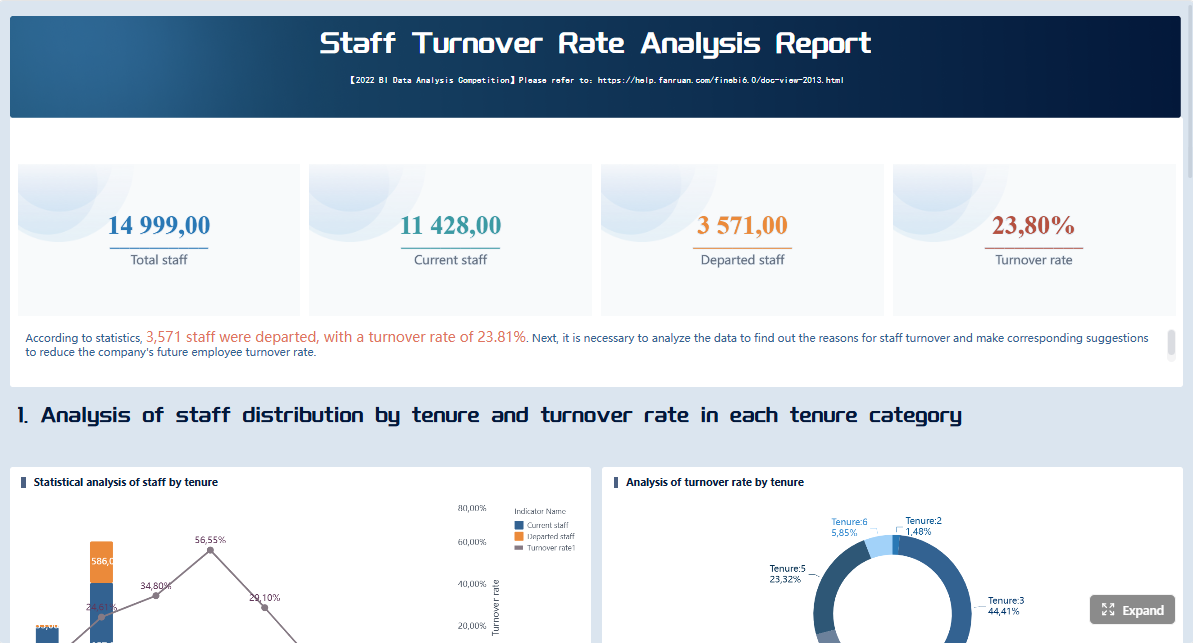
Click To Try The Dashboard
Dashboards, Custom Reports, and Analytics Features to Compare
Dashboard usability and instant insights
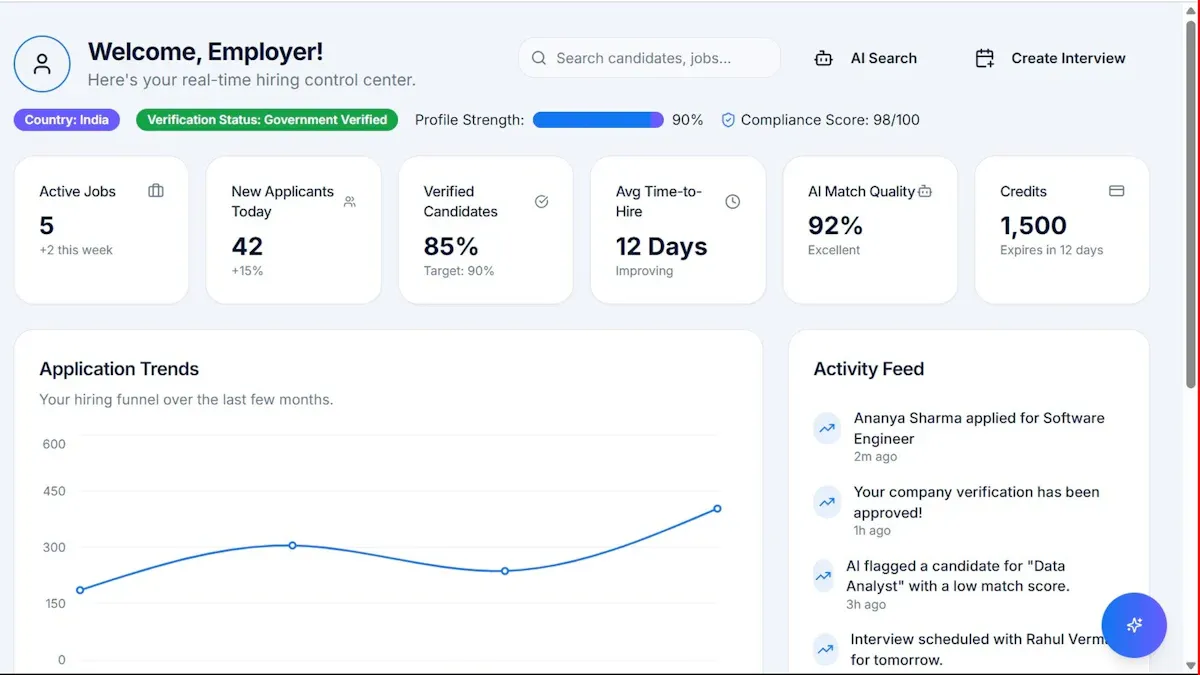
For many buyers, dashboard quality is the first practical test of any hr reporting software. If leaders cannot open a dashboard and understand the workforce story within seconds, adoption suffers.
What to look for:
Real-time or near-real-time visibility into workforce changes
Prebuilt templates for common HR KPIs
KPI tracking with filters for location, department, manager, and time period
Self-service access for HR leaders and line managers without relying on analysts
Interactive drill-downs from summary metrics into employee segments or root causes
BambooHR and ADP Workforce Now perform well for quick operational visibility. Workday, UKG Pro, and SuccessFactors offer broader enterprise coverage. FineReport, Power BI, and Tableau are stronger when dashboard design needs to be more customized or connected to multiple data systems.
For executive use, clarity matters more than feature count. The best dashboards emphasize trend lines, exceptions, comparisons, and action triggers rather than cluttered metrics.
Custom reporting and data flexibility
Custom reporting is where many platforms start to separate. A tool may offer attractive dashboards but still fall short when HR asks for a specific historical report with unique filters, formatting, and scheduled distribution.
Segmentation by role, region, tenure, or performance group
Scheduled reports sent automatically to stakeholders
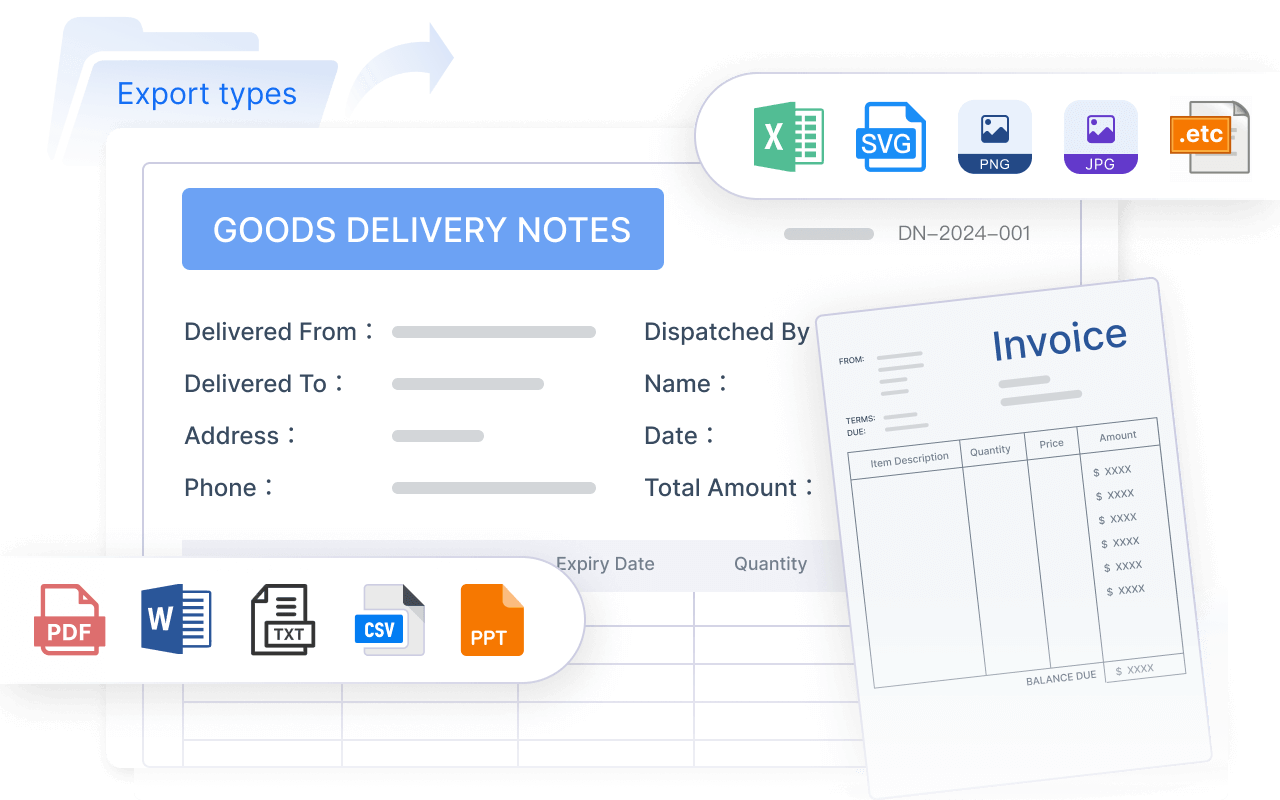
Export options for Excel, PDF, CSV, or presentation-ready formats
Historical access to past workforce data
Cross-system joins across HR, payroll, finance, and talent systems
This is where FineReport deserves serious consideration. Compared with standard HRIS reporting, it offers a much higher degree of report customization and enterprise formatting control, which is useful for organizations that need board-ready reports, compliance documentation, or highly specific management views.
Power BI and Tableau are also strong in data flexibility, though they rely more heavily on internal data preparation and analytics skills. Built-in HR suites can be easier to manage, but they often trade off flexibility for convenience.
Enterprise analytics and actionability
Enterprise analytics goes beyond reporting what happened. It helps explain why it happened, where issues are emerging, and what action leaders should consider next.
Capabilities that matter here include:
Trend analysis over time
Forecasting for headcount, hiring, and attrition
Benchmarking against internal targets or market norms
Drill-downs from enterprise KPIs to business unit or manager level
Decision support for workforce planning and organizational change
Narrative clarity that helps leaders move from insight to action
Visier is especially strong for strategic people analytics. Workday, Oracle HCM Cloud, SAP SuccessFactors, and UKG Pro provide enterprise-scale analytics within larger HCM ecosystems. FineReport is compelling when enterprises need analytics across multiple operational systems rather than only within a single vendor environment.
For large organizations, actionability is often tied to governance. The best tools do not just provide charts; they provide trusted data definitions, secure access, and repeatable reporting processes.
Strong fits often include BambooHR or ADP Workforce Now for standard operational reporting
For mid-market teams:
Balance usability with customization
Ensure reporting can grow with the business
Check whether cross-system reporting will be needed as tools expand
UKG Pro, ADP Workforce Now, FineReport, and Power BI can be strong options depending on technical capacity
For enterprises:
Prioritize data governance, permissions, scalability, and integration depth
Evaluate whether global reporting and compliance support are essential
Look beyond dashboard design to architecture, security, and support
FineReport, Workday, SAP SuccessFactors, Oracle HCM Cloud, UKG Pro, and Visier are more suitable for complex environments
HR maturity also matters. If your team is still focused on standard operational metrics, built-in reporting may be enough. If leadership expects predictive insights, cross-functional analysis, and tailored executive dashboards, a dedicated reporting or analytics platform becomes more valuable.
Questions to ask before buying
Before selecting a platform, ask direct questions that reveal real reporting limitations.
Implementation and rollout
How long will implementation take?
What internal resources are required?
Can the vendor support phased deployment?
Integration depth
Which HR, payroll, ATS, ERP, and finance systems can it connect to?
Are integrations native, API-based, or dependent on manual imports?
How often can data refresh?
Security and governance
What permission controls are available?
Can access be restricted by role, geography, or reporting line?
Is there support for audit trails and governance standards?
Admin workload
How much ongoing maintenance is required?
Can HR users create reports independently, or will IT or analysts be involved every time?
How easy is it to update metrics and dashboard logic?
Vendor support
What onboarding and training are included?
Is support responsive for reporting issues?
Are advanced features gated behind extra services or premium tiers?
Watch for these red flags:
Rigid reporting structures with little room for true customization
Limited historical data access, which weakens trend analysis
Expensive add-ons for scheduling, dashboards, permissions, or connectors
Weak export options that make leadership reporting harder
Heavy dependence on manual spreadsheets despite claims of automation
A product demo should include your actual use cases, not only generic templates. Ask vendors to show how they would handle an executive dashboard, a compliance report, and a multi-system custom report.
Visier for strategic people analytics and executive decision support
Workday, SAP SuccessFactors, and Oracle HCM Cloud for large enterprises already invested in broad HCM ecosystems
Best for budget-conscious teams:
BambooHR for smaller organizations with standard reporting needs
Power BI for businesses already using Microsoft tools and able to manage integrations internally
If your priority is quick dashboarding, shortlist BambooHR, ADP Workforce Now, and UKG Pro.
If your priority is cross-system custom reporting, shortlist FineReport, Power BI, and Tableau.
If your priority is enterprise-scale analytics, shortlist Visier, Workday, SAP SuccessFactors, and Oracle HCM Cloud.
For many growing and enterprise organizations, FineReport is one of the most practical options to evaluate because it bridges the gap between rigid built-in HRIS reports and full-scale analytics programs. It is especially well suited to teams that need to consolidate HR data, build custom management reports, and deliver governed dashboards across the business with more flexibility than standard HR platforms typically allow.
The best next step is to shortlist three tools based on your reporting maturity, request demos using real HR scenarios, and compare not just dashboards, but the full reporting workflow from data integration to executive delivery.
FAQs
HR reporting software helps teams turn employee, payroll, attendance, and performance data into dashboards, reports, and analytics for better decision-making. It is commonly used to track metrics like headcount, turnover, time off, and workforce trends.
Start with your company size, data complexity, and reporting goals. Small teams often prefer simple built-in reporting, while larger organizations usually need stronger customization, integrations, and enterprise governance.
Key features include custom report building, dashboard creation, multi-source data integration, scheduled distribution, drill-down analysis, and role-based permissions. These capabilities matter most when HR data is spread across multiple systems.
Yes, some platforms are designed to pull data from HRIS, payroll, attendance, performance, and finance tools into one reporting layer. This is especially important for organizations that have outgrown native reports in a single HR system.
HR reporting software focuses on creating operational reports and dashboards, while HR analytics software goes deeper into trends, forecasting, benchmarking, and strategic insights. Many modern platforms now offer a mix of both depending on their depth and enterprise focus.
Product Trial
FineReport
Pixel-perfect reports · Interactive dashboards · Easy data entry · Digital twins