Financial reporting valuation is the process companies use to measure assets, liabilities, equity instruments, and reporting units for compliant financial statements. For CFOs, controllers, finance directors, and audit-facing accounting teams, the challenge is not just getting a number—it is producing a defensible, well-documented conclusion that stands up to audit scrutiny, supports investor confidence, and aligns with U.S. GAAP. If your business is navigating an acquisition, annual impairment testing, or stock-based compensation, weak valuation support can create reporting delays, audit friction, and material risk.
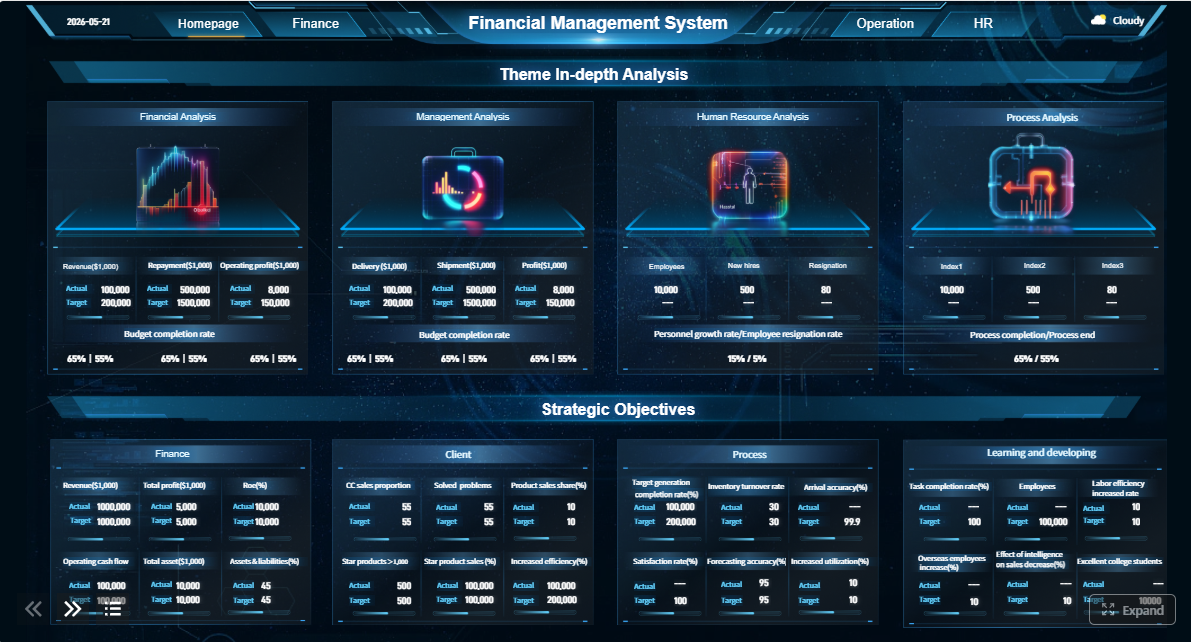 Click To Try The Dashboard
All reports in this article are built with FineReport
What financial reporting valuation means and why it matters
Financial reporting valuation sits at the intersection of accounting compliance, strategic finance, and external reporting. Its purpose is to ensure that amounts recognized in the financial statements reflect the appropriate measurement basis under applicable standards. In practice, that means management must translate complex economic realities—acquisitions, intangible assets, changing forecasts, and share-based awards—into supportable accounting values.
For enterprise finance teams, the business value goes beyond compliance. Strong financial reporting valuation processes help organizations:
- Reduce audit review cycles
- Improve consistency across periods and business units
- Support board and investor communications
- Detect impairment or pricing issues early
- Create a clear record of management judgment
Fair value, purchase accounting, impairment testing, and equity compensation are closely linked. A company may acquire a target under ASC 805, measure acquired assets and liabilities using ASC 820 fair value guidance, test the resulting goodwill under ASC 350, and later value stock options or restricted awards under ASC 718. These are not isolated exercises—they form a recurring valuation ecosystem inside the finance function.
Management typically owns the process, including scoping, data gathering, forecast development, and internal review. Auditors evaluate the reasonableness of the methods, assumptions, and conclusions. Valuation specialists are often brought in when the issues become highly judgmental, technically specialized, or time-sensitive—especially for intangible assets, contingent consideration, complex securities, and impairment analyses.
The core accounting standards behind financial reporting valuation
A strong financial reporting valuation process starts with knowing which standard governs the measurement and what each standard is trying to achieve.
Key Metrics (KPIs) finance teams should track
Before diving into individual standards, it helps to track the operational indicators that signal valuation scope, complexity, and risk.
- Valuation Date: The exact measurement date required under the relevant accounting standard.
- Fair Value Hierarchy Level: Indicates whether inputs are Level 1, Level 2, or Level 3 under ASC 820.
- Purchase Price Allocation Completion Rate: Tracks whether identified assets and liabilities have been fully measured after a transaction.
- Forecast Accuracy: Compares prior projections to actual performance to assess reliability of management assumptions.
- Discount Rate: Reflects risk and time value of money in income-based valuation methods.
- Royalty Rate: Used in relief-from-royalty analyses for trade names, brands, and certain technology assets.
- Customer Attrition Rate: Measures expected loss of customers over time in customer relationship valuations.
- Volatility Assumption: A critical input in option-pricing models for ASC 718 valuations.
- Impairment Headroom: The excess of fair value over carrying amount for a reporting unit or asset.
- Audit Review Cycle Time: Measures how long it takes auditors to review and clear valuation-related workpapers.
ASC 820: Fair value measurement
ASC 820 provides the overarching framework for measuring fair value under U.S. GAAP. It defines fair value as an exit price—the price that would be received to sell an asset or paid to transfer a liability in an orderly transaction between market participants at the measurement date.
That definition matters because it moves finance teams away from internal bias. The question is not “What is this worth to us?” but “What would market participants pay or require under current market conditions?”
ASC 820 also introduces key concepts such as:
- Highest and best use for nonfinancial assets
- Market participant assumptions rather than entity-specific intentions
- Principal or most advantageous market
- Observable versus unobservable inputs
The fair value hierarchy is one of the most important practical features of ASC 820:
- Level 1 inputs: Quoted prices in active markets for identical assets or liabilities.
- Level 2 inputs: Observable inputs other than direct quoted prices, such as market yields, comparable pricing, or broker quotes.
- Level 3 inputs: Unobservable inputs based on management estimates and valuation models.
In practice, many financial reporting valuation assignments involving intangible assets, private-company equity, contingent consideration, and goodwill testing rely heavily on Level 3 inputs. That is where documentation quality becomes critical.

ASC 805: Business combinations
ASC 805 governs how companies account for acquisitions. At closing, the acquirer must recognize identifiable assets acquired, liabilities assumed, and any noncontrolling interest, generally at fair value. The residual amount becomes goodwill.
This sounds straightforward, but purchase accounting often becomes one of the most resource-intensive finance projects after a transaction. Teams must evaluate:
- Working capital adjustments
- Tangible asset fair values
- Assumed liabilities
- Deferred revenue considerations
- Contingent consideration or earnouts
- Identifiable intangible assets
Common valuation areas under ASC 805 include:
- Customer relationships
- Trade names and brands
- Developed technology
- In-process research and development
- Noncompete agreements
- Earnouts and contingent payments
Each asset class can require a different method. Customer relationships may use a multi-period excess earnings method. Trade names may use relief-from-royalty. Technology may require income or cost-based approaches. Earnouts often require scenario analysis or option-based models depending on payout structure.
ASC 350: Goodwill and intangible asset impairment
ASC 350 addresses the accounting for goodwill and certain intangible assets after initial recognition. Once goodwill is booked in a business combination, it is not amortized for most entities under standard GAAP treatment. Instead, it must be assessed for impairment at least annually, and more frequently if triggering events occur.
Typical triggering events include:
- Declining financial performance
- Loss of key customers
- Adverse industry changes
- Higher discount rates
- Market capitalization declines
- Reorganization of reporting units
Companies must evaluate goodwill at the reporting unit level. The analysis often begins with a qualitative assessment—commonly called “step zero”—to determine whether it is more likely than not that fair value is below carrying amount. If the qualitative screen does not provide enough support, management proceeds to a quantitative test.
The difference between the two approaches is practical:
- Qualitative assessment: A narrative and analytical evaluation of whether indicators suggest impairment risk.
- Quantitative testing: A direct comparison of fair value to carrying amount using valuation methods.
Indefinite-lived intangible assets also require annual impairment review, while long-lived assets may require testing when triggering events arise under related guidance.
ASC 718: Stock compensation
ASC 718 governs share-based payment accounting. It requires companies to measure stock options, restricted stock, performance awards, and other equity-based compensation at fair value on the grant date, with compensation expense recognized over the relevant service or vesting period.
For public companies, valuation inputs may be easier to benchmark. For private companies, the process is usually more judgmental because there may be no active market for the underlying shares.
Common financial reporting valuation issues under ASC 718 include:
- Valuing common stock for private company option grants
- Estimating volatility
- Determining expected term
- Assessing probability of performance conditions
- Applying discounts for lack of marketability where relevant
- Analyzing complex capital structures with multiple share classes
The assumptions that most affect value are usually:
- Volatility
- Expected term
- Risk-free rate
- Dividend yield
- Underlying equity value
- Discount for lack of marketability, when applicable in private-company analyses
When capital structures include preferred shares, liquidation preferences, or other rights, scenario-based methods such as option-pricing models or probability-weighted expected return methods may be necessary.
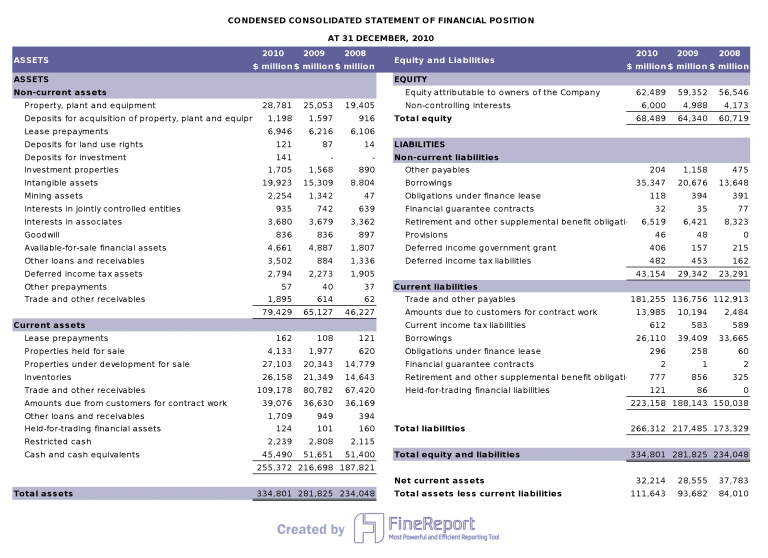
Common financial reporting valuations and when companies need them
The need for financial reporting valuation usually arises after a business event, a periodic reporting requirement, or a change in facts and circumstances. The most efficient finance teams identify these triggers early and map them to the correct accounting standard.
Valuations after mergers, acquisitions, and recapitalizations
Transactions are one of the most common triggers. If a company acquires a business, merges reporting structures, or executes a recapitalization that changes ownership economics, finance will likely need valuation support.
These situations often trigger:
- Purchase price allocation analyses
- Opening balance sheet adjustments
- Fair value measurement of contingent consideration
- Valuation of acquired intangible assets
- Support for debt and equity instruments issued in the transaction
Timing is a major challenge. Transaction teams often focus on legal close and integration, while accounting teams must quickly stand up a valuation workstream that satisfies quarter-end or year-end reporting.
Valuations for goodwill, indefinite-lived intangibles, and long-lived assets
Impairment work is recurring and highly sensitive to market conditions. Annual testing is common, but triggering events can force interim analysis with little notice.
Companies typically need support when they must:
- Perform annual goodwill testing
- Assess indefinite-lived intangibles such as trade names
- Evaluate long-lived assets after adverse changes
- Respond to declining forecasts or market multiples
- Prepare audit-ready support for assumptions and methods
In these cases, the quality of management forecasts and the consistency of assumptions across finance, FP&A, and valuation models often determine whether the audit proceeds smoothly.
Valuations for equity compensation and complex securities
Fast-growing private companies, venture-backed issuers, and pre-IPO businesses often require regular equity valuations. Option grants, restricted awards, profit interests, and complex securities all create a need for robust financial reporting valuation support.
Typical use cases include:
- Common stock valuations for private-company grants
- Grant-date fair value analyses for stock options
- Scenario-based allocations among preferred and common shares
- Complex security valuation for warrants or convertibles
- Pre-transaction and post-transaction capitalization updates
This area becomes more complex when a company is raising capital frequently or approaching a liquidity event.
Cross-border and entity-specific considerations
Cross-border structures can affect the scope and documentation required in a valuation analysis. Even when U.S. GAAP governs the financial reporting outcome, local legal entities, tax structuring, transfer restrictions, and regulatory requirements may affect assumptions and data availability.
Finance teams should evaluate:
- Jurisdiction-specific documentation standards
- Local statutory reporting needs
- Tax structure impacts on cash flow assumptions
- Foreign exchange considerations
- Local management incentives or restrictions
- Different audit expectations across regions
For multinational groups, centralized valuation governance can significantly reduce inconsistency.
How the valuation process works in practice
A reliable financial reporting valuation process is not just about methodology. It is about sequencing the work correctly so that management, auditors, and specialists can move efficiently.
1. Scope the assignment correctly
Start with the basics:
- What is the reporting purpose?
- Which accounting standard applies?
- What is the valuation date?
- Which assets, liabilities, or equity interests are material?
- Is this a recurring or one-time analysis?
Scoping errors early in the process create rework later. A seasoned consultant will always lock scope before building models.
2. Gather complete and audit-ready data
Most valuation delays are caused by incomplete inputs, not by technical modeling. The required data set usually includes:
- Management forecasts
- Historical financial statements
- Legal agreements
- Purchase agreements
- Cap tables
- Prior financing documents
- Customer data
- Market evidence and guideline transactions
- Prior valuation reports, if relevant
The quality of source data has a direct effect on the credibility of the conclusion.
3. Select the right valuation methods
The method should match the asset, liability, or instrument being measured. Common approaches include:
- Income approach: Discounted cash flow, excess earnings, relief-from-royalty
- Market approach: Guideline public company multiples, transaction multiples
- Cost approach: Replacement or reproduction cost, often used for certain tangible or early-stage assets
- Option-pricing approaches: Used for complex securities, contingent consideration, and some equity allocation problems
The goal is not methodological complexity for its own sake. The goal is an approach that fits the facts and can be defended.
4. Develop and support assumptions
This is where most of the professional judgment sits. Finance teams must support assumptions such as:
- Discount rates
- Forecast growth
- EBITDA margins
- Royalty rates
- Attrition rates
- Contributory asset charges
- Volatility assumptions
- Marketability discounts
- Probability weightings in scenarios
Assumptions should be internally consistent, externally benchmarked where possible, and clearly reconciled to budgeting and strategic planning materials.
5. Document conclusions for management and auditors
A strong report should allow a reviewer to understand:
- What was valued
- Why the valuation was required
- Which standard applies
- What methods were considered and selected
- Which assumptions were used
- How the conclusion was reached
The best reports do not overwhelm reviewers with theory. They provide transparent logic, clean exhibits, and direct linkage between source data and final conclusion.

When to hire a valuation firm for financial reporting
Not every engagement requires a third-party specialist, but many do. The key question is whether internal teams have the capacity, technical depth, and documentation discipline to produce an audit-ready result on time.
Signs internal teams may need outside support
You should consider outside support when the valuation is highly judgmental or the reporting timeline is compressed. Common indicators include:
- Limited in-house valuation experience
- Complex intangible assets or contingent consideration
- Multi-class capital structures
- New acquisition accounting requirements
- Annual impairment testing under deteriorating conditions
- Significant auditor scrutiny from prior periods
- Tight quarter-end or year-end deadlines
- Cross-border assets or reporting units
In these situations, external specialists often reduce total cycle time by preventing rework and improving audit readiness.
What to look for in financial reporting valuation services
Not all providers are equally prepared for financial reporting work. The strongest firms combine valuation skill with practical knowledge of audit expectations.
Look for a provider with:
- Experience under ASC 820, ASC 805, ASC 350, and ASC 718
- Familiarity with audit review standards and documentation expectations
- Industry-specific expertise
- Experience valuing complex capital structures
- Clear project management and milestone discipline
- Defensible reporting that management can explain confidently
A good advisor does more than deliver a model. They help management anticipate reviewer questions and close issues early.
Questions to ask before selecting an advisor
Before hiring a valuation firm, ask direct questions:
- What methodologies do you typically use for this type of assignment?
- What data will you need from management?
- What is the expected turnaround time?
- How do you coordinate with auditors?
- Who will actually perform the work?
- How do you handle changes in scope?
- What assumptions usually require the most support?
- Can you provide reports that are structured for efficient audit review?
The answers will tell you whether the firm is practical, technical, and responsive enough for financial reporting valuation work.
Practical tools, deliverables, and recurring challenges
The difference between a smooth valuation cycle and a painful one usually comes down to preparation, governance, and repeatable tooling.
A useful valuation for financial reporting toolkit
Every finance team should maintain a working toolkit that supports recurring valuations. At a minimum, it should include:
- A scoping checklist by accounting standard
- Forecast package templates
- Legal document request lists
- Cap table and share class summary files
- Assumption support memos
- Market data logs
- Auditor Q&A trackers
- Review and approval workflow templates
- Reporting calendar with valuation deadlines
- Governance notes documenting management judgments
A practical toolkit should also define ownership. FP&A may own forecasts, legal may own transaction documents, accounting may own standard selection, and tax may need to review structure-specific assumptions.
Common mistakes and how to avoid them
The same issues show up repeatedly in financial reporting valuation projects. The most common are:
- Inconsistent forecasts across departments
- Weak support for discount rates or royalty rates
- Outdated market data
- Incomplete legal documentation
- Misalignment between valuation date and source inputs
- Unclear treatment of nonoperating assets or liabilities
- Poor linkage between narrative conclusions and model outputs
To avoid them, establish a formal review process before the report reaches auditors. That internal checkpoint should test consistency, completeness, and supportability.
How to prepare for audit review and year-end deadlines
The most efficient audit reviews are planned, not improvised. Finance teams should align early with auditors on scope, timing, and technical issues.
Best practices include:
-
Hold a pre-kickoff alignment meeting
Confirm the standard, valuation date, scope, and expected deliverables before modeling begins. -
Lock management forecasts early
Avoid last-minute changes unless there is a documented business reason and all downstream models are updated. -
Pre-clear judgmental assumptions
Discuss areas like discount rates, volatility, attrition, and marketability with advisors and, where appropriate, with auditors in advance. -
Maintain a centralized support file
Keep legal documents, source data, market evidence, and assumption memos in one controlled repository. -
Build review time into the reporting calendar
Leave room for management review, specialist revisions, and auditor follow-up before filing deadlines.
These are the habits that separate reactive teams from disciplined finance organizations.
Build a scalable financial reporting valuation workflow with FineReport
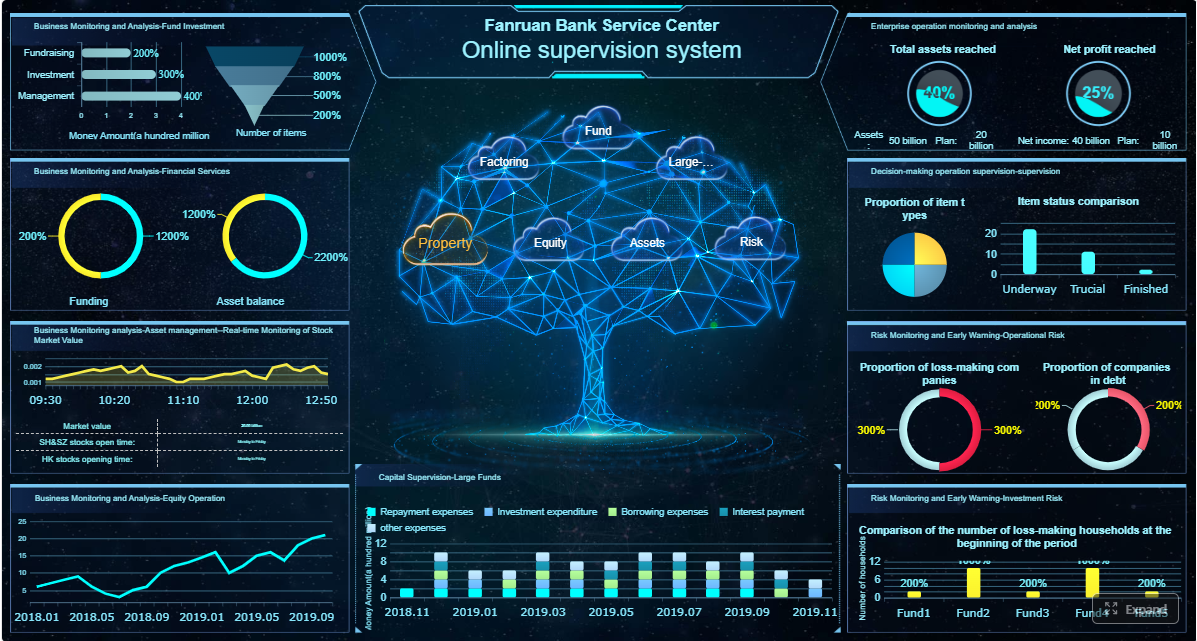
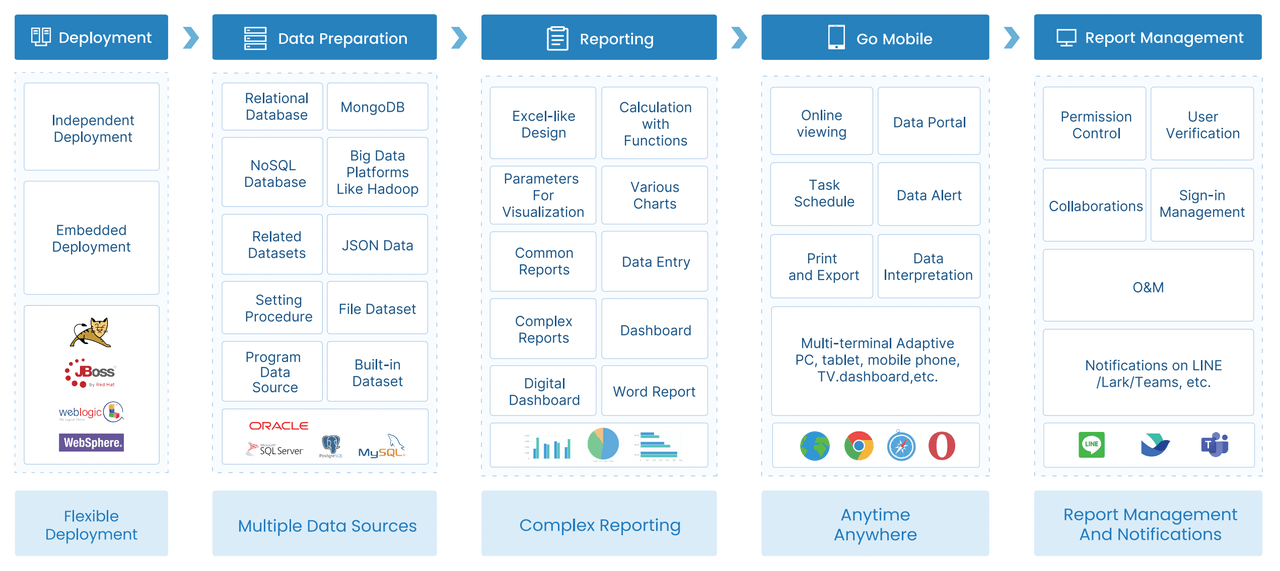
At scale, financial reporting valuation is as much a workflow problem as a technical accounting problem. Finance leaders need visibility into valuation status, assumptions, deadlines, supporting documents, and auditor questions across multiple entities and reporting cycles. Building this manually is complex; use FineReport to utilize ready-made templates and automate this entire workflow.
FineReport helps teams turn fragmented spreadsheets, review notes, and source files into a centralized reporting environment. With the right dashboard structure, you can monitor:
- Purchase price allocation progress by transaction
- Fair value hierarchy classifications
- Reporting unit impairment headroom
- Equity compensation grant schedules
- Assumption approvals and review status
- Audit request resolution timelines
- Year-end valuation calendar milestones

Get Ready-to-Use Dashboard Templates in Fine Gallery
For enterprise finance teams, that means better control, faster reporting cycles, and cleaner coordination between accounting, FP&A, legal, auditors, and valuation specialists. Instead of chasing version control issues and email-based approvals, you can standardize the entire process in one reporting layer.
If your organization is managing recurring financial reporting valuation requirements under ASC 820, ASC 805, ASC 350, or ASC 718, the winning approach is clear: define the trigger, standardize the workflow, document assumptions rigorously, and automate the reporting layer wherever possible.
FAQs
Financial reporting valuation is the process of measuring assets, liabilities, equity instruments, or reporting units for financial statements under U.S. GAAP. It helps companies produce supportable values that can withstand audit and regulatory review.