For multinational enterprises, esg reporting regulations in 2026 are no longer a narrow sustainability issue. They are a cross-border compliance, governance, and data-management challenge that directly affects filings, financing, supply-chain access, audit readiness, and board oversight. If you lead legal, finance, sustainability, internal audit, or operations, the core problem is clear: disclosure obligations are expanding across jurisdictions, but the underlying data, controls, and accountability structures inside many companies are still fragmented.
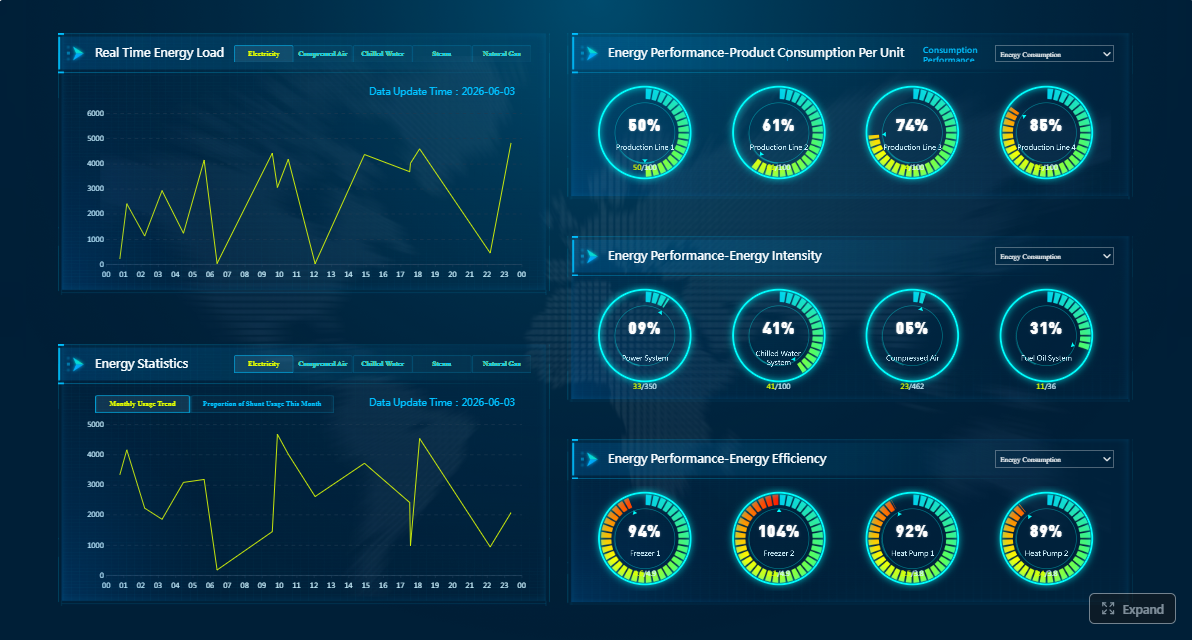 Click To Try The Dashboard
All reports in this article are built with FineReport
ESG reporting regulations in 2026: what multinationals need to know first
The 2026 compliance landscape is defined by interconnected reporting obligations. A parent company may face one set of climate, governance, and risk disclosures in one market, while subsidiaries, branches, listed entities, or major operating units trigger separate obligations elsewhere. Even where rules differ, regulators and stakeholders increasingly expect consistent explanations of governance, targets, risks, emissions, and value-chain impacts. That means companies can no longer manage ESG reporting as a series of isolated local exercises.
The business risks of fragmented disclosure are substantial. First, there is enforcement exposure: inconsistent statements across filings can trigger regulator questions, assurance issues, or legal challenges. Second, there is investor scrutiny: capital providers increasingly compare reported metrics across jurisdictions and expect a coherent narrative. Third, there is operational inefficiency: teams waste time rebuilding the same datasets, revalidating the same numbers, and reconciling competing definitions between finance, sustainability, procurement, and legal.
A practical compliance map helps multinational teams move from reactive filing to structured execution. The goal is simple: determine what applies, who owns each obligation, which data is required, what evidence supports it, and how reporting workflows can be standardized across regions without ignoring local legal differences.
Key Metrics (KPIs) multinational teams should track first
- In-scope entity count: Number of legal entities, subsidiaries, or branches subject to mandatory ESG or climate disclosures.
- Jurisdiction coverage rate: Percentage of operating jurisdictions mapped to applicable disclosure rules and deadlines.
- Disclosure gap rate: Share of required data points not currently supported by reliable internal data.
- Assurance readiness score: Degree to which reported metrics have supporting documentation, controls, and review trails.
- Value-chain data completeness: Percentage of supplier or downstream data available for required disclosures.
- Control ownership coverage: Portion of disclosure requirements with a named owner and approval process.
- Reporting cycle timeliness: On-time completion rate for data collection, validation, sign-off, and filing.
- Policy alignment index: Extent to which internal ESG, risk, procurement, and governance policies match public disclosures.
- Restatement risk indicator: Number of reported metrics with unresolved methodology conflicts or weak evidence trails.
- Board oversight cadence: Frequency of formal board or committee review of ESG reporting obligations and risks.
The global ESG reporting landscape and the major regulatory systems shaping 2026
In 2026, global ESG reporting is shaped less by one universal rulebook and more by a network of major regimes that influence reporting design worldwide. Multinationals must understand both mandatory local obligations and the broader standards that investors, lenders, customers, and assurance providers use to judge disclosure quality.
The EU, U.K., and other cross-border frameworks setting the pace
The European environment continues to exert outsized influence on multinational reporting design. For many companies, European rules set the most detailed expectations on governance, strategy, risk management, metrics, targets, and value-chain transparency. Even where scope thresholds or implementation timing evolve, the operational message is unchanged: enterprises need more structured sustainability data, stronger controls, and more defensible materiality processes.
The U.K. remains important because many multinationals operate under U.K. company, listing, or financial reporting expectations that emphasize climate risk governance, decision-useful disclosures, and increasing alignment with globally recognized reporting structures. Beyond Europe, frameworks influenced by international baseline standards are driving more consistency in how companies report climate-related risks, opportunities, and management responses.
For enterprise reporting design, the practical implication is this: build once for interoperability where possible. Companies should aim for a reporting architecture that can support multiple outputs, including statutory filings, annual reports, investor communications, supplier responses, and assurance procedures.
The critical state of ESG reporting in the U.S.
The U.S. remains one of the most complex environments for esg reporting regulations because the federal picture is unsettled, while state-level mandates, sector pressure, and litigation sensitivity continue to rise. Many companies still face strong stakeholder expectations for climate and governance transparency, even where federal mandates are delayed or disputed.
State activity matters because it can impose disclosure duties on large companies doing business in a state regardless of headquarters location. California remains especially significant for climate-related reporting due to its economic reach and broad applicability thresholds. At the same time, companies must navigate a politically polarized environment in which one audience may demand more ESG disclosure while another challenges perceived overstatement, selective messaging, or unsupported claims.
That creates a practical risk management issue. U.S. reporting strategy must balance:
- legal defensibility,
- consistency with international filings,
- caution around forward-looking statements,
- and rigorous documentation for climate, governance, and public claims.
For multinational counsel and reporting teams, the U.S. is less about waiting for one definitive answer and more about building a disclosure process that can withstand scrutiny from regulators, investors, plaintiffs, and counterparties.
Where global ESG reporting regulations are converging and where they still differ
Despite fragmentation, there are several areas of convergence across major regimes.
Common areas of convergence
- Governance accountability: Regulators increasingly expect clear board and management oversight.
- Strategy disclosures: Companies must explain how sustainability and climate issues affect business models and planning.
- Risk management: Enterprises are expected to show how ESG risks are identified, assessed, and managed.
- Metrics and targets: Quantitative reporting is becoming more central, especially for emissions and workforce-related issues.
- Value-chain transparency: Upstream and downstream impacts are receiving greater attention.
- Assurance expectations: Limited assurance is becoming more common, with a trend toward stronger assurance over time.
Persistent areas of divergence
- Materiality approach: Some regimes prioritize financial materiality, while others require a broader impact lens.
- Scope thresholds: Revenue, employee count, listing status, and local presence can alter applicability.
- Disclosure depth: Some jurisdictions require highly granular topic-level reporting; others remain principle-based.
- Timing and phase-in: Reporting calendars and effective dates vary widely.
- Enforcement style: Some regulators focus on formal filing compliance, while others emphasize anti-greenwashing or market conduct.
The takeaway is pragmatic: convergence helps standardize internal systems, but differences still require a jurisdiction-by-jurisdiction compliance overlay.
Understanding ESG reporting obligations for enterprises in different jurisdictions
The hardest part of ESG compliance is rarely writing the report. It is determining exactly who is in scope, what must be disclosed, when it is due, and what level of evidence is needed to support each statement.

How to identify which entities, subsidiaries, and operations are in scope
Multinationals should start with legal structure, not sustainability ambition. Applicability usually depends on a combination of:
- parent and subsidiary relationships,
- local incorporation or branch presence,
- revenue thresholds,
- employee counts,
- listing status,
- sector classification,
- and whether the company is deemed to be doing business in a jurisdiction.
This analysis must be performed at the entity level, not only at consolidated group level. A common failure point is assuming the parent’s reporting position automatically determines local obligations. In reality, subsidiaries may have standalone obligations, and local operations may create indirect obligations through procurement, due diligence, or customer contract requirements.
A strong scoping exercise should answer:
- Which entities are directly in scope now?
- Which entities are likely to become in scope under phased implementation?
- Which entities are indirectly affected because they supply data to an in-scope affiliate or customer?
- Which jurisdictions require separate local filing, publication, attestation, or board approval?
Core ESG reporting requirements companies should map in 2026
Most multinational reporting obligations can be organized into a core set of disclosure domains. This structure helps compliance teams create one operating model that supports multiple frameworks.
Governance
Describe board oversight, management responsibility, committee structures, escalation pathways, and policy accountability.
Strategy
Explain how ESG matters affect business model resilience, capital allocation, planning, and operational priorities.
Risk management
Show how sustainability and climate risks are identified, assessed, integrated into enterprise risk management, and monitored.
Metrics
Disclose the quantitative indicators required by applicable rules, such as emissions, energy, workforce, safety, diversity, supply-chain, or governance metrics.
Targets
Report enterprise commitments, interim milestones, transition plans, and progress against stated objectives.
Value-chain disclosures
Address material impacts, dependencies, or risks in upstream suppliers, logistics, contractors, distributors, customers, and product use where required.
Internal controls and evidence
Document methodologies, assumptions, source systems, validation checks, review processes, and retention of supporting records.
Timing, assurance, and enforcement: the details that often create compliance gaps
Many organizations underestimate the operational burden of deadlines and assurance. Filing dates may sit months after year-end, but the heavy lifting starts much earlier. Data collection windows, management review, legal review, internal audit testing, and external assurance all compete for time.
Key risk areas include:
- late definition changes for metrics,
- weak source documentation,
- inconsistent calculation methods across regions,
- inability to evidence management review,
- and disconnected reporting calendars between finance and sustainability teams.
From an enforcement perspective, regulators and stakeholders often focus on what companies fail to control:
- unsupported claims,
- missing disclosures,
- internal inconsistency,
- unexplained changes in methodology,
- and optimistic targets without credible governance or implementation detail.
For 2026, enterprises should treat ESG reporting with the same discipline applied to financial close processes: formal controls, sign-offs, issue logs, and auditable evidence.
Building a practical multinational compliance map
A compliance map converts legal complexity into an operating model. It should tell each function what is required, where the data comes from, who approves it, and what controls support it.

Create a reporting inventory and gap assessment
Start by inventorying every relevant disclosure output:
- statutory reports,
- annual report sections,
- stock exchange disclosures,
- climate statements,
- website disclosures,
- customer questionnaires,
- lender requests,
- and supplier transparency submissions.
Then compare current disclosures against applicable legal and stakeholder requirements. This gap assessment should identify:
- required disclosures not currently made,
- disclosures made without sufficient evidence,
- duplicate metrics using conflicting definitions,
- manual data dependencies,
- and missing policy or governance documentation.
A seasoned consultant’s advice: do not assess gaps only at the narrative level. Assess them at the data-point and control level. A disclosure is not truly covered unless the number, methodology, owner, review step, and evidence trail are all defined.
Design governance, controls, and ownership across functions
Effective ESG compliance is cross-functional by design. One team cannot own the entire process. The most resilient operating model assigns clear responsibilities across the enterprise.
Typical ownership model
- Legal: interprets applicability, reviews claims, manages regulatory risk.
- Finance: aligns reporting calendar, controls, consolidation, and assurance support.
- Sustainability: defines methodologies, coordinates topic expertise, drafts disclosures.
- Procurement: gathers supplier and value-chain data, supports due diligence.
- HR: provides workforce, diversity, training, and labor-related metrics.
- Internal audit: tests controls, identifies weaknesses, supports readiness.
- Operations: supplies site-level environmental and process data.
- Board or committees: oversee risk, strategy, and disclosure accountability.
Best practice is to establish a formal RACI model for every major disclosure domain. If ownership is vague, delays and inconsistency are inevitable.
Align data systems, evidence trails, and reporting workflows
The most common enterprise bottleneck is not policy. It is data architecture. ESG disclosures often draw from ERP systems, EHS tools, HR platforms, procurement systems, spreadsheets, emails, consultant files, and local site records. Without standardization, each reporting cycle becomes a manual reconciliation exercise.
To improve reliability, companies should standardize:
- master definitions for key metrics,
- data submission templates,
- approval workflows,
- calculation rules,
- exception handling,
- and retention of supporting evidence.
A mature reporting workflow should include:
- Data request issuance by entity and owner.
- Source submission with supporting documentation.
- Validation checks and exception review.
- Functional sign-off.
- Legal and finance review.
- Consolidation and narrative drafting.
- Assurance preparation.
- Executive and board approval.
When ESG reporting services can accelerate compliance readiness
External support adds value when internal teams face compressed timelines, regulatory uncertainty, or weak control maturity. This is especially true for:
- scope assessments across multiple jurisdictions,
- materiality and disclosure mapping,
- methodology design for complex metrics,
- assurance readiness reviews,
- legal interpretation of high-risk claims,
- and technology implementation for data collection and reporting.
Use external advisors selectively. The objective is not to outsource accountability. It is to accelerate capability building where specialized expertise or independent challenge improves defensibility and speed.
What comes next: regulatory shifts and strategic decisions for 2026 and beyond
2026 is not the endpoint. It is the year many multinationals realize ESG reporting has become a repeatable enterprise reporting function that will keep evolving.
Regulatory shifts in ESG: what comes next for companies?
Expect continued movement in four areas.
1. Rule revisions and scope adjustments
Some jurisdictions will streamline, defer, or narrow aspects of implementation, while others will expand industry-specific obligations. Companies should avoid overreacting to headlines and instead maintain a dynamic compliance tracker.
2. Higher assurance expectations
Even where limited assurance is the current norm, the direction of travel is toward stronger control environments, better data quality, and more formal testing.
3. More supply-chain scrutiny
Value-chain transparency will remain a pressure point. Enterprises will need better supplier engagement, better data requests, and stronger due diligence integration.
4. Greater accountability for claims
Anti-greenwashing risk will continue rising. Any public target, transition statement, or sustainability claim should be traceable to evidence, governance, and credible assumptions.
What is ESG reporting? A practical primer for leadership teams and operating managers
ESG reporting is best understood as an enterprise-wide disclosure and decision-support function. It combines regulatory compliance, risk management, operational data governance, and stakeholder communication. It is not just a sustainability report. It is a structured process for converting environmental, social, and governance performance into decision-useful, auditable information.
For leadership teams, that means ESG reporting must connect to:
- strategic planning,
- internal controls,
- capital allocation,
- supply-chain oversight,
- legal review,
- and board governance.
For operating managers, it means local data quality, documentation discipline, and timely sign-off now have direct regulatory significance.
How to turn compliance into a durable reporting strategy
The strongest multinationals will use 2026 to move from project mode to operating model. The practical playbook is straightforward:
- Map scope precisely across legal entities and jurisdictions.
- Standardize core metrics and methodologies across the group.
- Build formal governance and controls with named owners.
- Create one evidence-backed reporting workflow that supports multiple outputs.
- Prepare early for assurance and enforcement scrutiny.
These actions reduce risk, lower reporting costs over time, and improve the credibility of every external statement.
Build the compliance map faster with FineReport
Building this manually is complex; use FineReport to utilize ready-made templates and automate this entire workflow.
FineReport helps enterprise teams centralize ESG data collection, standardize metrics across regions, monitor filing readiness, manage sign-offs, and present compliance status in executive dashboards. Instead of relying on disconnected spreadsheets and email chains, teams can build a structured reporting environment with reusable templates, workflow visibility, and auditable evidence trails.
This matters for multinational ESG compliance because reporting is not just about publishing a document. It is about orchestrating data, controls, approvals, and deadlines across jurisdictions and functions. FineReport gives legal, finance, sustainability, and operations teams one place to track progress and reduce reporting friction.

Get Ready-to-Use Dashboard Templates in Fine Gallery
After you have defined your scope, controls, and KPI architecture, the next step is execution at scale. That is where dashboard-driven compliance management becomes a competitive advantage.
In 2026, companies that treat esg reporting regulations as a strategic reporting capability, not a fragmented compliance burden, will be in a far stronger position to meet legal obligations and maintain stakeholder trust. If your current process still depends on manual consolidation, inconsistent definitions, or local spreadsheets, now is the time to modernize the workflow.
FAQs
The most important rules are the ones that apply across your group structure, including parent-company, subsidiary, listing, and state-level obligations. In practice, multinationals need to map EU, UK, US, and other local requirements together rather than treating each filing separately.
In the US, the federal picture remains uncertain, but mandatory requirements still exist through state laws and sector-specific obligations. Many large companies are preparing for California climate disclosure rules even without a broad federal mandate.
Start by reviewing legal entities, revenue thresholds, listing status, operating jurisdictions, and local business activity. A multinational should build an entity-by-entity scope map so each reporting obligation is assigned to the correct company and owner.
Focus first on governance, emissions, climate risk, reporting deadlines, control ownership, and supporting evidence for key disclosures. Supplier and value-chain data should also be prioritized because it is often the biggest gap in multinational reporting.
Regulators, investors, and auditors increasingly expect ESG disclosures to be supported by clear evidence, review trails, and consistent methods. If controls are weak, companies face a higher risk of filing errors, restatements, and credibility issues.





The Author
Yida Yin
FanRuan Industry Solutions Expert
Related Articles

Best Lawn Care Reporting Software Compared: 8 Tools for Scheduling, Invoicing, and Performance Tracking
$1 is an $1 and dashboard platform that helps lawn care businesses turn scheduling, invoicing, crew, and revenue data into clear $1. Best lawn care reporting software at a glance Below is a quick comparison of the best l

Yida YIn
Jun 25, 2026

Hong Kong Financial Reporting Standards Explained: 9 Practical Rules Finance Teams Need to Know
Hong Kong $1 standards matter because they determine how your business recognises revenue, values assets, reports risk, and withstands audit scrutiny. For finance teams, controllers, and compliance leaders, the challenge
Yida YIn
Jun 25, 2026

What Are Regulatory Reporting Services? A Practical Guide for Financial Institutions
$1 services help financial institutions collect, validate, format, and submit required data to regulators in a controlled, repeatable way. For banks, insurers, asset managers, fintechs, and enterprise compliance teams, t
Yida Yin
Jun 25, 2026